Your Humans Approve 97% Of What The AI Does. That's Not Oversight.
Anthropic just measured it: developers approve 97% of the permission prompts AI agents ask them. Here's how to build oversight that actually works.
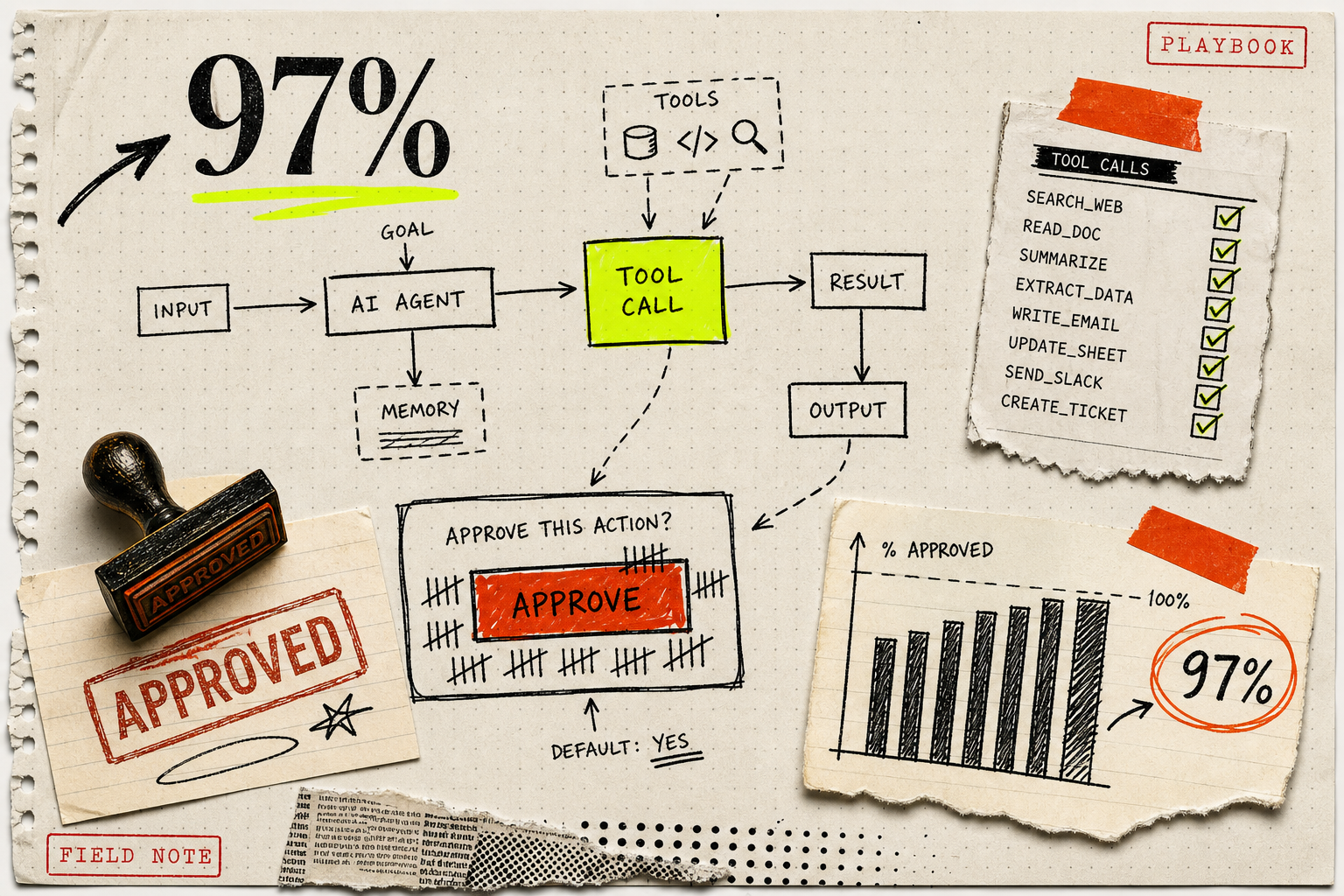
Anthropic just published the number every operator running AI agents needs to sit with. In Claude Code, developers approve 97% of the permission prompts the agent asks for.[1]
That's the number. Not "we caught 40% of dangerous actions." Not "the human overruled the AI 12% of the time." Ninety-seven percent green-lit. Which means the human isn't in the loop — the human is a rubber stamp with a keyboard shortcut.
If you're building AI agents for your business and telling yourself you're safe because "there's always a human approving before it does anything," this post is for you. That belief is comforting. It's also mostly false. And the fix isn't more approvals — it's fewer, sharper ones.
Why humans approve almost everything
Approval fatigue is not a character flaw. It's a math problem.
An AI agent doing real work — reading emails, drafting replies, updating records, calling APIs — fires 20 to 200 tool calls per task. If every call needs a human "yes," the human has two options: read every prompt carefully and get nothing done, or click through them and get some work done. Everyone picks option two. Anthropic's own usage data shows the pattern clearly: experienced Claude Code users auto-approve more than 40% of actions and only interrupt about 9% of turns.[2] The rest is a stamp.
The Forbes Tech Council put it bluntly last week: "human-in-the-loop" as one-approval-per-action is a model built for AI assistants, not autonomous agents. The volume of decisions scales too fast for a person to actually evaluate.[3] Anthropic isn't hiding this — they explicitly shipped an "auto mode" in Claude Code that puts a second AI model in charge of reviewing the first one's actions, because they measured that manual approval was already broken.[1]
Here's the trap. When you tell your business "we have oversight," you mean "a human looks before the agent acts." What actually happens is: the human sees 143 prompts before lunch, learns which shapes are safe, and starts pattern-matching. By 11 a.m., they're approving the 144th based on the last 143 being fine — not on whether this one is fine.
That's not oversight. That's Russian roulette with a really long track record.
What the enterprise numbers actually say
Anthropic's public autonomy study found that across the population of Claude agents running in the wild, 80% of tool calls come from agents with at least one safeguard (restricted permissions, human approval, or both), 73% have a human in the loop in some form, and only 0.8% run with no safeguards at all.[4] Sounds great — until you overlay the 97% approval rate. Most of those human-in-the-loop deployments are approval theater.
Meanwhile, one industry breakdown puts enterprise AI agent failure rates at around 80% — and the failures aren't model failures. They're governance failures: messy production data, no permission tiering, no audit trails, and yes, humans approving everything by reflex.[5]
Even in supervised code review, autonomy has shifted the ratio. Vercel's analysis of coding-agent adoption found the share of pull requests receiving at least one human review dropped 21 percentage points, from 89% to 68%. Substantive review — where a human actually left a comment — fell from 39% to 21%.[6] The humans are still nominally in the loop. They're just not looking anymore.
The four gates that actually work
Here's the shift: stop putting a human on every action. Put a human on the four things that are actually load-bearing.
Gate 1 — Money leaves the building. Any tool call that spends money, sends payment, refunds a customer, or commits to a contract. No exceptions, no thresholds low enough to auto-approve. If the agent wants to charge $3 to a card, it asks. This is a boring gate. It's the one that keeps you out of court.
Gate 2 — Something goes to a real person by name. External emails, DMs, SMS, tickets, comments on a customer record — anything a named third party will see with your brand on it. Not "some approvals for outreach" — every one, until you've watched 1,000 of them and you know the failure modes.
Gate 3 — Irreversible writes. Deleting rows, closing accounts, updating a CRM field that overrides a human's earlier input, publishing content, changing a live config. Anything you can't undo in one click needs a hand on it.
Gate 4 — The agent asks for a permission it hasn't had before. If a customer-support agent that has read access to Stripe suddenly wants write access, that's not a normal approval. That's an escalation, and it gets a different queue — probably a slower, senior one.
Everything else — reading, searching, summarizing, drafting internally, running analytics, retrieving files — runs without a prompt. Because if you make a human bless 143 reads, they will bless the 144th write, too.
The permission tier model
Underneath the four gates, the design pattern is tiered permissions. One recent enterprise governance write-up called it out directly: agents that operate with minimum permissions and require explicit human approval only for elevated access "report fewer incidents involving data exposure," compared to the flat-permission approach that most current deployments still use.[7]
Tier 1 (auto): read-only, internal-only, reversible. Tier 2 (logged, no gate): internal writes to systems the agent owns. Tier 3 (gate + queue): external comms, money, irreversible writes. Tier 4 (gate + senior queue): new permissions, cross-domain access, anything above a spend cap.
Ninety-five percent of what the agent does lives in Tiers 1 and 2. Nobody sees a prompt. The five percent that matters gets a real human, awake, reading it. That's oversight. Everything else is a productivity tax on both sides.
How to install this in a week
Start with an audit, not a policy. Log every tool call your current agent makes for 72 hours. Tag each one by the four gates above. You'll almost certainly find that the human is approving 143 Tier-1 reads and 4 Tier-3 writes with the same click energy — which means the writes are getting the attention of a read.
Then move the reads to auto and add a hard block on the writes until an approval comes in via a separate channel (Slack DM, email, whatever forces a context switch). The context switch is the whole point. Approval fatigue lives in a single-window UI where every prompt looks identical. Break the pattern and you get the human back.
Finally, sample. Even in the auto-approved reads, pull a random 2% for weekly review. Not to catch fires — to catch drift. Agents change behavior when their inputs change. If yesterday's harmless "read customer profile" is today's "read customer profile including SSN," you want to know before the compliance email finds you first.
The real question
Every operator I talk to says the same thing when I bring this up: "But if we auto-approve most actions, aren't we just trusting the model?" Yes. That's what you were doing at 97% approval, too. The difference is now you're doing it on purpose, with logs, tiers, and a smaller number of real decisions that a real human actually sees.
If you'd rather build the loop than argue about it, that's what the audit call is for. Thirty minutes, no pitch — I'll tell you exactly which of your agent's tool calls should be Tier 1 and which should be Tier 3, and where your current 97% is hiding.
-
How we built Claude Code auto mode: a safer way to skip permissions↩
Developers approve 97% of Claude Code permission prompts; Anthropic shipped auto mode because manual approval was already broken.
-
How Much Autonomy Should You Give Your AI Agents? A Human-in-the-Loop Playbook↩
Experienced Claude Code users auto-approve 40%+ of actions and interrupt only 9% of turns.
-
AI Agent Governance: Moving From Human Approval To Runtime Authorization↩
One-approval-per-action is a model built for assistants, not autonomous agents; decision volume scales too fast for humans to actually evaluate.
-
Measuring AI agent autonomy in practice↩
80% of tool calls come from agents with at least one safeguard, 73% have a human in the loop, 0.8% run without safeguards.
-
Why AI Agents Are Failing In Enterprise Deployments↩
Enterprise AI agent failure rates around 80% are governance failures — messy data, no tiering, no audit trails — not model failures.
-
How to evaluate AI coding agents in 5 criteria↩
PR review coverage fell 21 points (89% to 68%) and substantive review fell from 39% to 21% as coding-agent adoption grew.
-
What are the enterprise AI agent governance best practices for 2026?↩
Tiered permission models with explicit approval only for elevated access report fewer data-exposure incidents than flat-permission deployments.
Ready to build your own AI system?
Book a Free Audit Call →Keep Reading
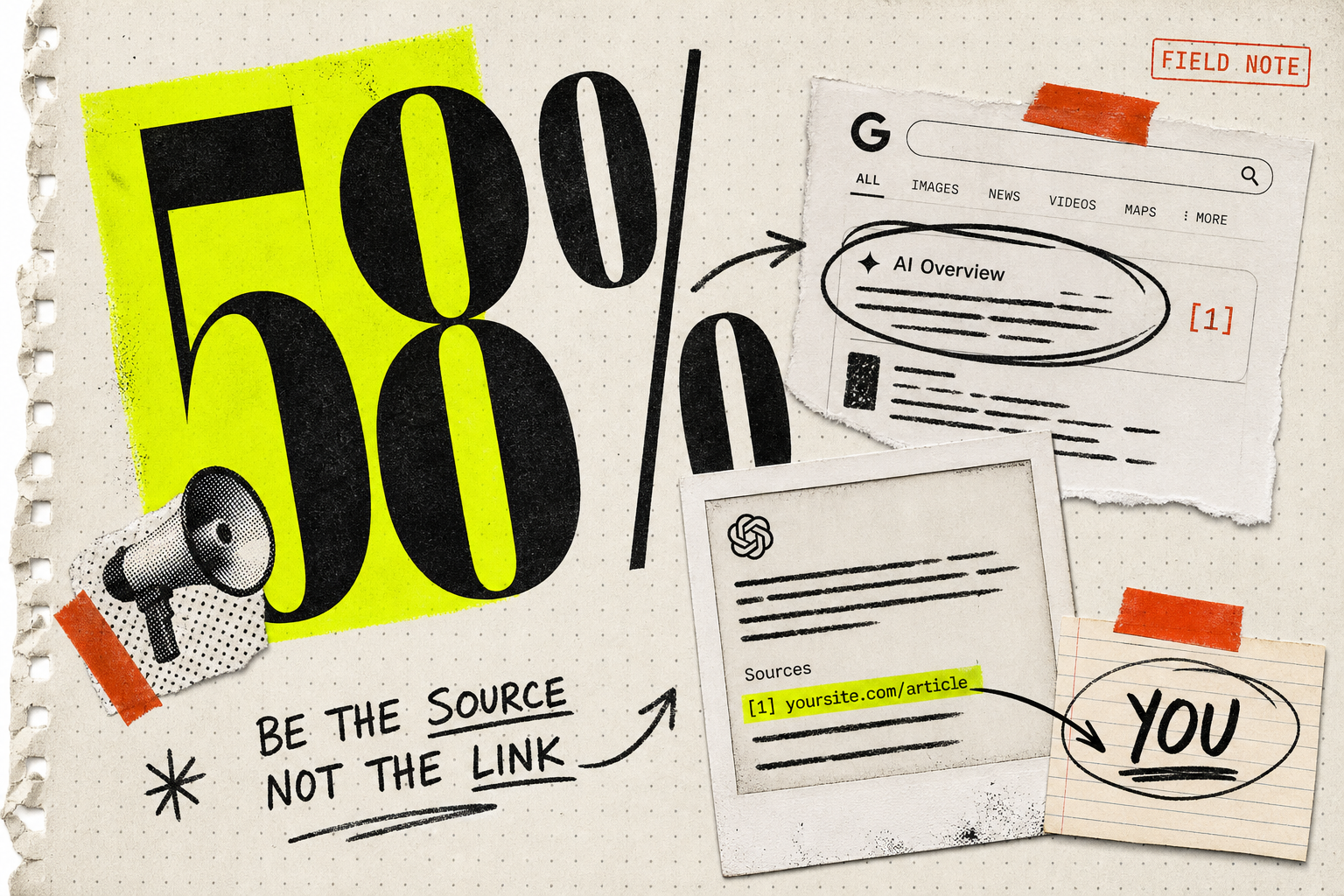
How To Get Cited By ChatGPT And Google AI Overviews
Position-one Google clicks are down 58% because of AI Overviews. The new game is getting cited by ChatGPT and Perplexity. Here's the 5-part playbook.
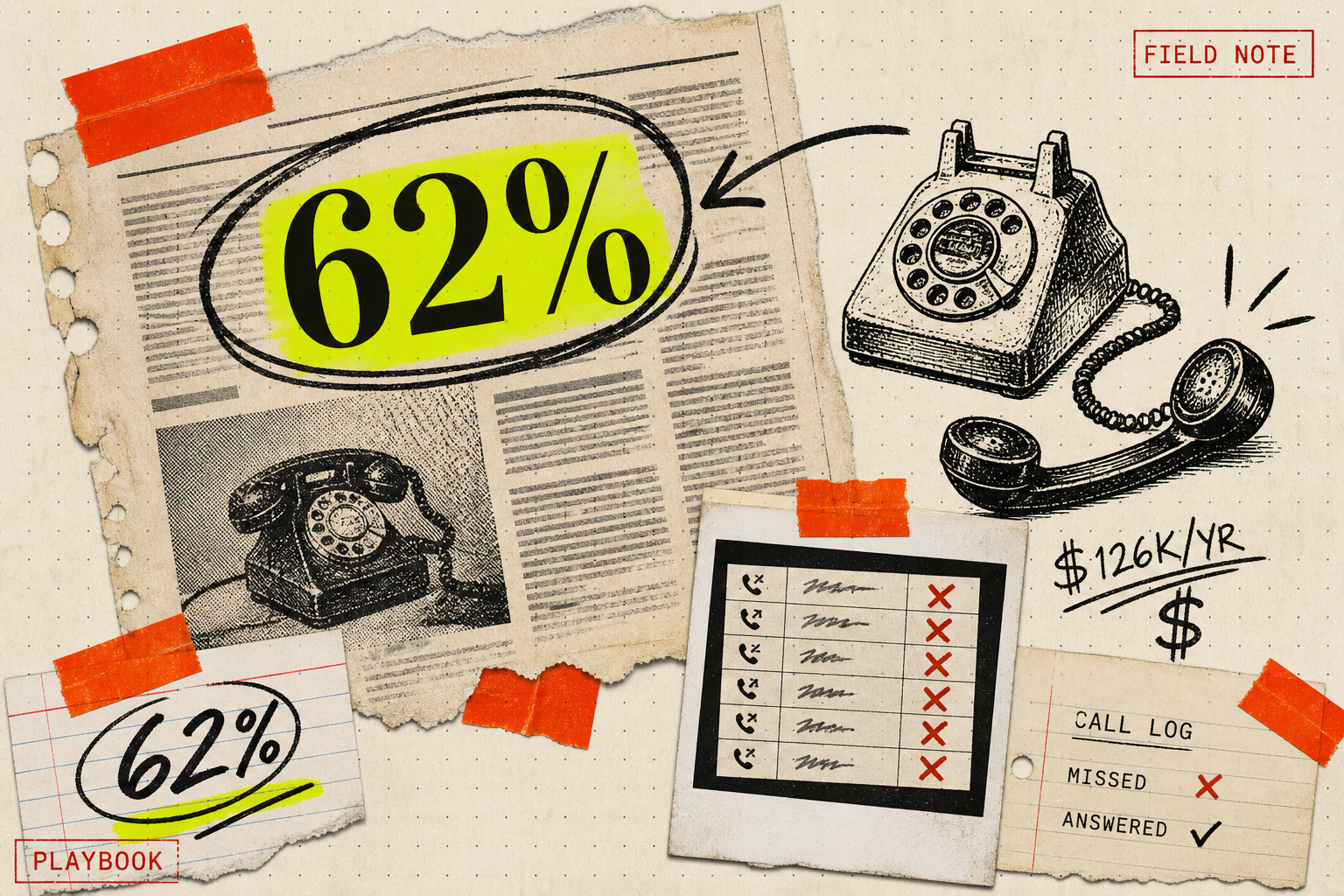
Your Business Misses 62% Of Its Phone Calls. Here's The Fix.
Small businesses miss 62% of inbound calls — a $126K/year leak on average. Here's the AI voice receptionist stack that plugs it, with real costs and a rollout plan.
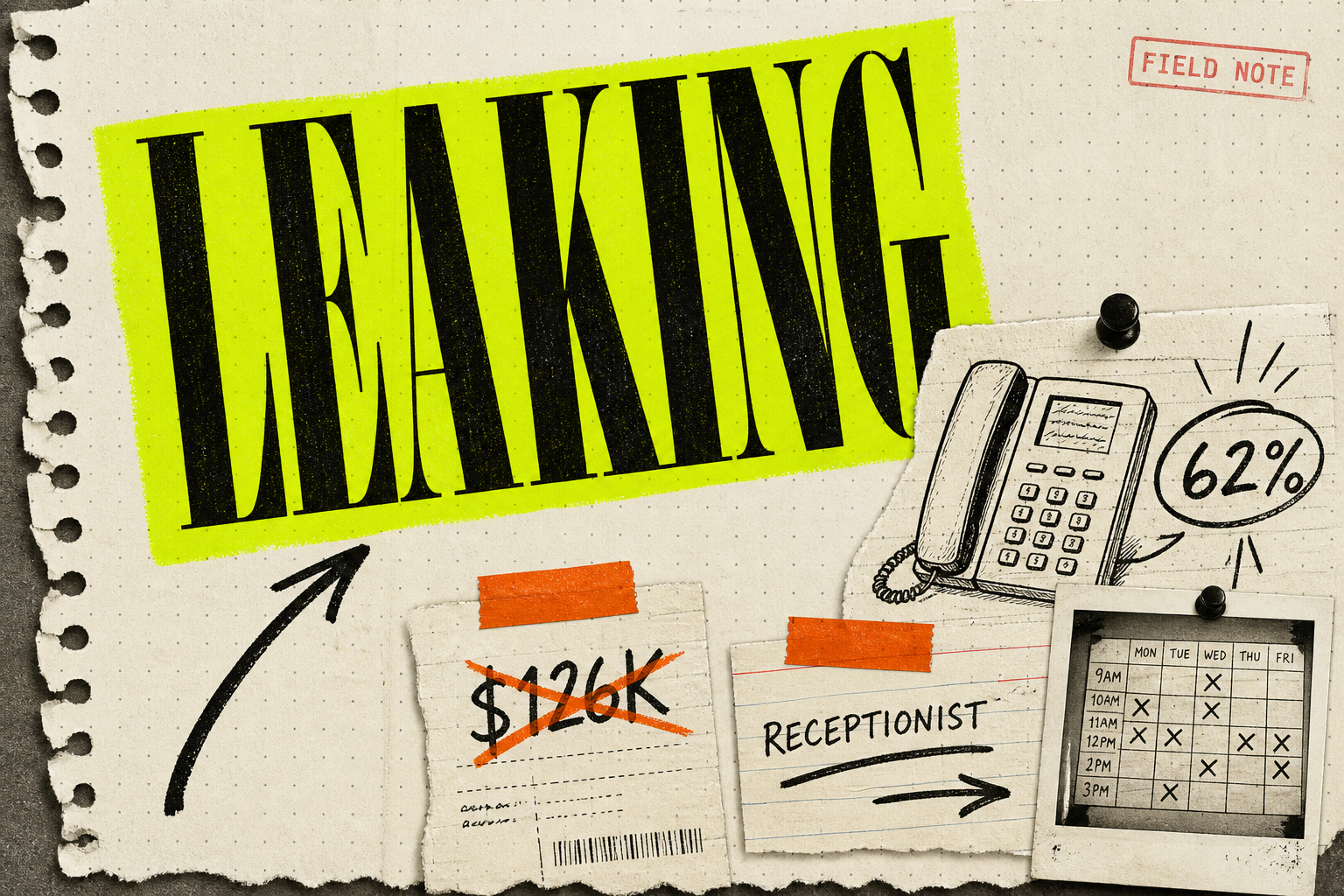
Your Business Misses 62% Of Its Calls. An AI Receptionist Fixes It.
Small businesses miss 62% of inbound calls and lose $126K a year to voicemail. An AI voice receptionist fixes it for under $300/mo. Here's the build.