Your Business Misses 62% Of Its Calls. An AI Receptionist Fixes It.
Small businesses miss 62% of inbound calls and lose $126K a year to voicemail. An AI voice receptionist fixes it for under $300/mo. Here's the build.
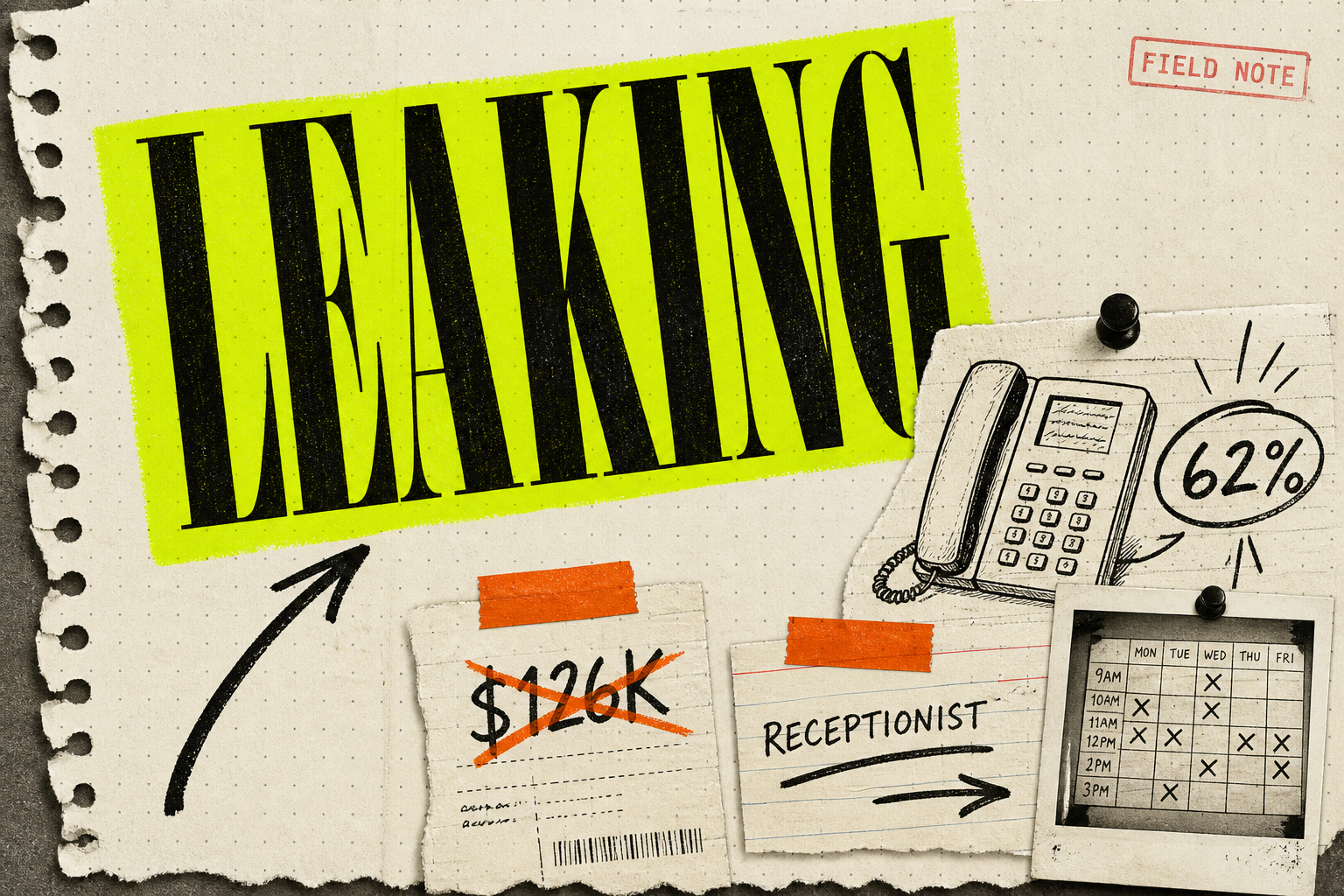
The average small service business misses 62% of inbound calls and loses about $126,000 a year to voicemail nobody returns[1]. If that number surprises you, that's the problem. Nobody's looking at it.
You already have a website. You already have Google Ads pointing at a phone number. The lead pays a click, hits the number, gets voicemail — and 85% of them never call back[1]. That is the most expensive leak in a $2M–$20M service business, and it's cheaper to fix than it's ever been.
I'll say the quiet part first: most operators still think an AI voice agent means a Salesforce-scale IVR project. It doesn't. In 2026 you can stand one up in a weekend for the cost of a decent SaaS subscription. The stack is boring on purpose.
Why This Is Actually The Fire
Look at what "missed call" costs before you look at solutions.
- Small businesses miss 62% of incoming calls. Average annual loss: $126K per business. Home services runs 40–60% miss rate. Healthcare 34%. Legal 35%[1].
- 43% of callers hang up after a single minute on hold[2].
- When an AI answers in under 2 seconds, abandonment drops to 4.2%. When callers wait 30+ seconds, it jumps to 23.7%[3].
- Phone leads convert at 10–15x the rate of web form leads. Every missed call is a disproportionately expensive loss[4].
Stack those together: the highest-converting lead source in your funnel is the one you're systematically ignoring. That's not a marketing problem. That's a plumbing problem.
What The Category Actually Looks Like In 2026
Voice AI is not a lab demo anymore. Inbound voice agents — receptionists, support lines, bookers — already account for 52.1% of 2025 voice AI revenue[5]. This is the beachhead. Meanwhile the broader voice AI market is compounding at ~45.8% CAGR through 2030[5].
Three things happened in the last 18 months that made this real for small operators:
- Latency crossed the human threshold. Retell and Vapi both land around 500–700ms response time out of the box[6]. Anything under ~800ms sounds like a person taking a breath. Two years ago you could hear the seams.
- Per-minute cost collapsed. Retell publishes $0.07/minute base, Vapi lands in the $0.10–0.30 range all-in[7]. A 5-minute booking call costs 35 cents. Your bookkeeper doesn't pick up that cheap.
- The tooling turned into Legos. Vapi, Retell, Bland, Synthflow, Leadlock — pick one. Every serious platform now has native calendar integrations, CRM webhooks, and no-code function calling. You don't need an engineering team. You need an afternoon.
The Forrester Total Economic Impact study on AI appointment scheduling puts average ROI at 318% within six months[8]. That's not a vendor claim — that's the reference case business buyers cite when they're arguing with their CFO.
The Build I'd Actually Ship On A Weekend
For a $5M home services or hospitality operator, this is the minimum stack:
Voice platform. Retell if you want fast time-to-live, low tuning cost, and HIPAA if you care about it. Vapi if you want the cheapest per-minute and are willing to tune a bit[6]. Either works. Don't get religious.
Model. GPT-4.1 or Claude 4 Sonnet as the reasoning model. Both handle interruption and turn-taking cleanly at this point. Don't use a 2023-era model to save $0.01/minute — it will misbook and cost you an $800 job.
Voice. ElevenLabs Flash for cost, ElevenLabs Turbo v3 if you want warmer prosody. Pick one voice, name the agent, keep it consistent — callers should think it's the same person answering every time.
Telephony. Twilio number forwarded from your existing business line during after-hours (or 24/7 if your current front desk is already choking).
Booking. Direct Google Calendar or Cal.com integration for the demo build. For a real deployment, wire into whatever the operator already uses — Jobber, ServiceTitan, Housecall Pro, Mindbody, OpenTable. All of them have APIs.
Escalation. Every agent gets a warm-transfer number and a "text me the details" fallback. AI books 80% of the easy ones. It hands off the hard ones. Don't fight this — pretending the agent handles 100% is how the horror-story reviews get written.
Total build cost: one weekend if you know what you're doing, one workweek if you don't. Ongoing: $50–150/month platform fee plus per-minute usage. For a business taking 500 inbound calls a month averaging 3 minutes, that's ~$150 in usage. Under $300 all-in. Against a $126K leak.
The Failure Modes Nobody Tells You About
Every YouTube tutorial ends at "the demo works." That's when the real work starts.
Failure 1: Hallucinated bookings
The agent confidently books "next Tuesday at 3pm" for a slot that doesn't exist. Fix: the agent must call a check_availability function before it confirms anything. Never let the model narrate calendar state from memory.
Failure 2: The transfer black hole
Caller asks something complex, agent tries to transfer, no human picks up, caller hangs up angrier than if they'd hit voicemail. Fix: if no human is available, the agent captures the details and texts them to the owner within 60 seconds. Silence is the enemy.
Failure 3: Voice uncanny valley
People will forgive a bot if it's obviously a bot and it's fast. They won't forgive a bot that pretends to be a person and fumbles. Have the agent say "This is an AI assistant for [business name]" in the first breath. It costs you 2 seconds and buys you all your trust budget.
Failure 4: No logs
You launched a system that talks to your customers unsupervised. Log every call transcript, tag every booking, review the first 100 calls yourself. If you can't audit it, you don't own it.
The Math I'd Show A Client
Take a $3M home services operator. 800 inbound calls per month. Missing 55% of them at ~$180 average job value.
- Missed jobs per month: 800 × 0.55 = 440
- Convert at 15% (real phone-lead close rate): 66 lost jobs
- Revenue leak: 66 × $180 = $11,880/month, ~$142K/year
Deploy a receptionist that recovers 40% of those (a conservative baseline — vendor case studies claim 60%+[9]):
- Recovered jobs: 26/month
- Recovered revenue: $4,680/month, ~$56K/year
- Cost: ~$3.6K/year all-in
- Net: $52K+/year at ~15x ROI in year one
You can argue the recovery rate. You can't argue the leak.
Where This Is Going
The interesting part isn't the receptionist — it's what happens once the agent is answering every call. You now have a structured log of every inbound customer conversation you've ever had. Intent, urgency, geography, offer, objection, close. That data is what actually powers everything downstream: better paid media, better outbound, better retention. The receptionist is the wedge. The intelligence is the prize.
The operators who ship this in 2026 spend the next two years compounding the data advantage. The ones who wait spend 2026 watching Google Ads bills climb while their conversion rate quietly drops.
What I'd Do This Week
Pick one line — your main booking line — and run a 30-day test with an AI receptionist during your busiest hours only. Not 24/7 yet. Not every line. Just the leaky one. Measure booked appointments before and after. If the number doesn't move by 10%+ in 30 days, you built it wrong. Rip it out and stop reading blogs like this one.
If it does move — and it will, because the baseline is that bad — that's when you scale it.
If you'd rather I built this for your business than build it yourself, that's what I do. Book a free 30-minute audit and I'll tell you exactly what your leak is, what your version of this would look like, and whether it's worth the weekend.
-
62% of Business Calls Go Unanswered: The $126K Cost↩
62% miss rate, $126K annual loss, 85% no callback, industry breakdown
-
8 metrics to evaluate call center voice AI↩
43% of callers abandon after one minute on hold
-
50+ Voice AI Statistics & Market Data (2026)↩
4.2% abandonment when AI answers under 2s vs 23.7% at 30s+ (ContactBabel)
-
Missed Call Statistics 2026: Revenue Loss Benchmarks↩
Phone leads convert at 10-15x web form rate
-
AI Voice Agent Statistics 2026: Market Share & Use Cases↩
Inbound voice = 52.1% of 2025 voice AI revenue; 45.8% CAGR
-
Vapi vs Retell AI: voice agent latency comparison (2026)↩
Retell/Vapi ~500-700ms latency; measured per-minute cost
-
AI Voice Agent Cost per Minute (2026)↩
Retell $0.07 base, Vapi $0.10-0.30 all-in per minute
-
AI Appointment Scheduling ROI and Benefits↩
318% average ROI within six months per Forrester TEI
-
Best AI Voice Agent Platforms for Small Business in 2026↩
Synthflow reports 60% scheduling boost, 2.5x booked appointments in case studies
Ready to build your own AI system?
Book a Free Audit Call →Keep Reading
74% Of AI Chatbots Get Pulled After Launch. Yours Will Too.
Three out of four AI customer service chatbots get pulled offline after launch. Here's what breaks first and the boring layer that keeps the 26% alive.
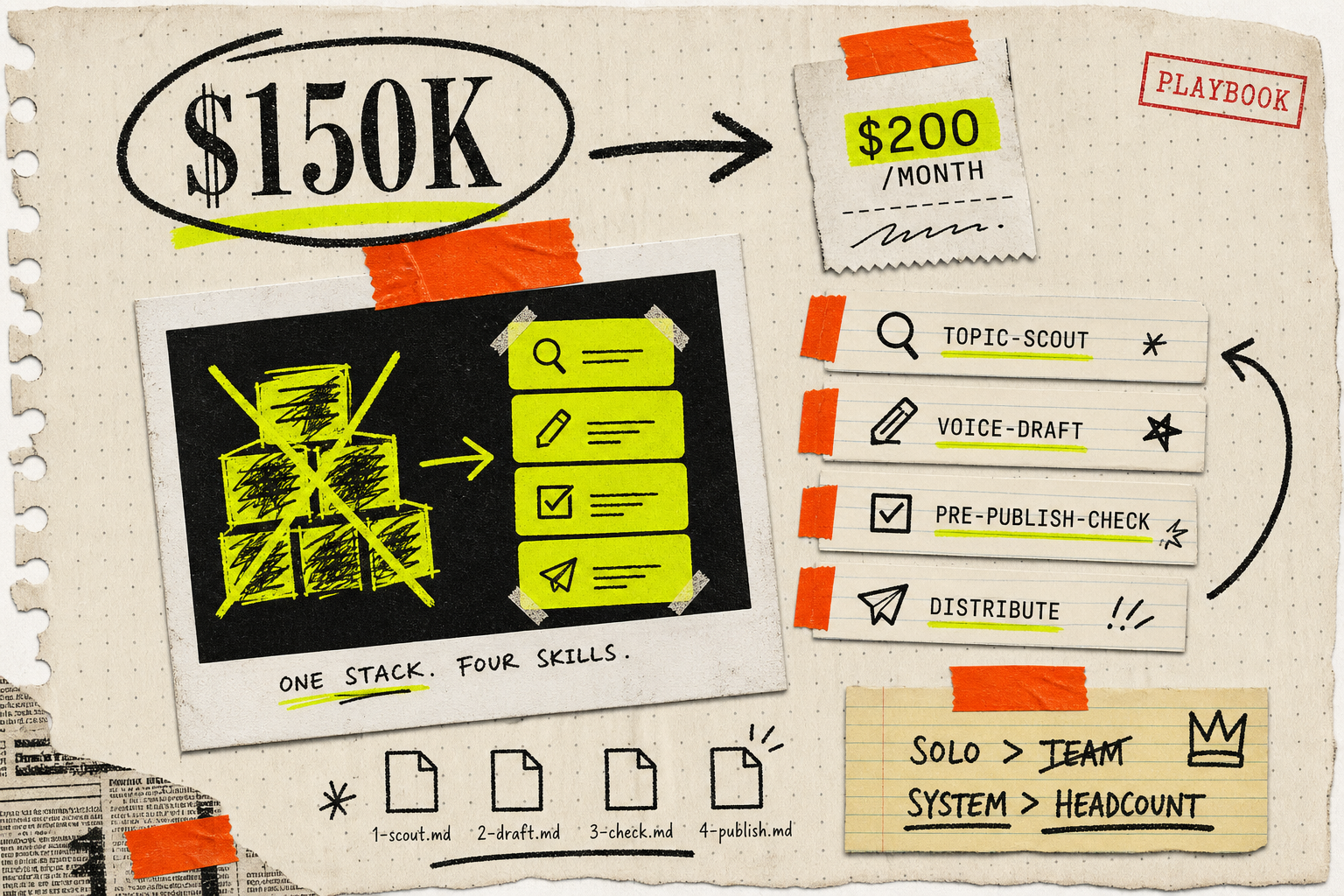
Your $150K Content Team Is A Claude Skill Now
A $150K in-house content team is a 2019 answer. Here's the 4-Skill Claude stack — topic-scout, voice-draft, pre-publish-check, distribute — that ships daily for $200/mo.
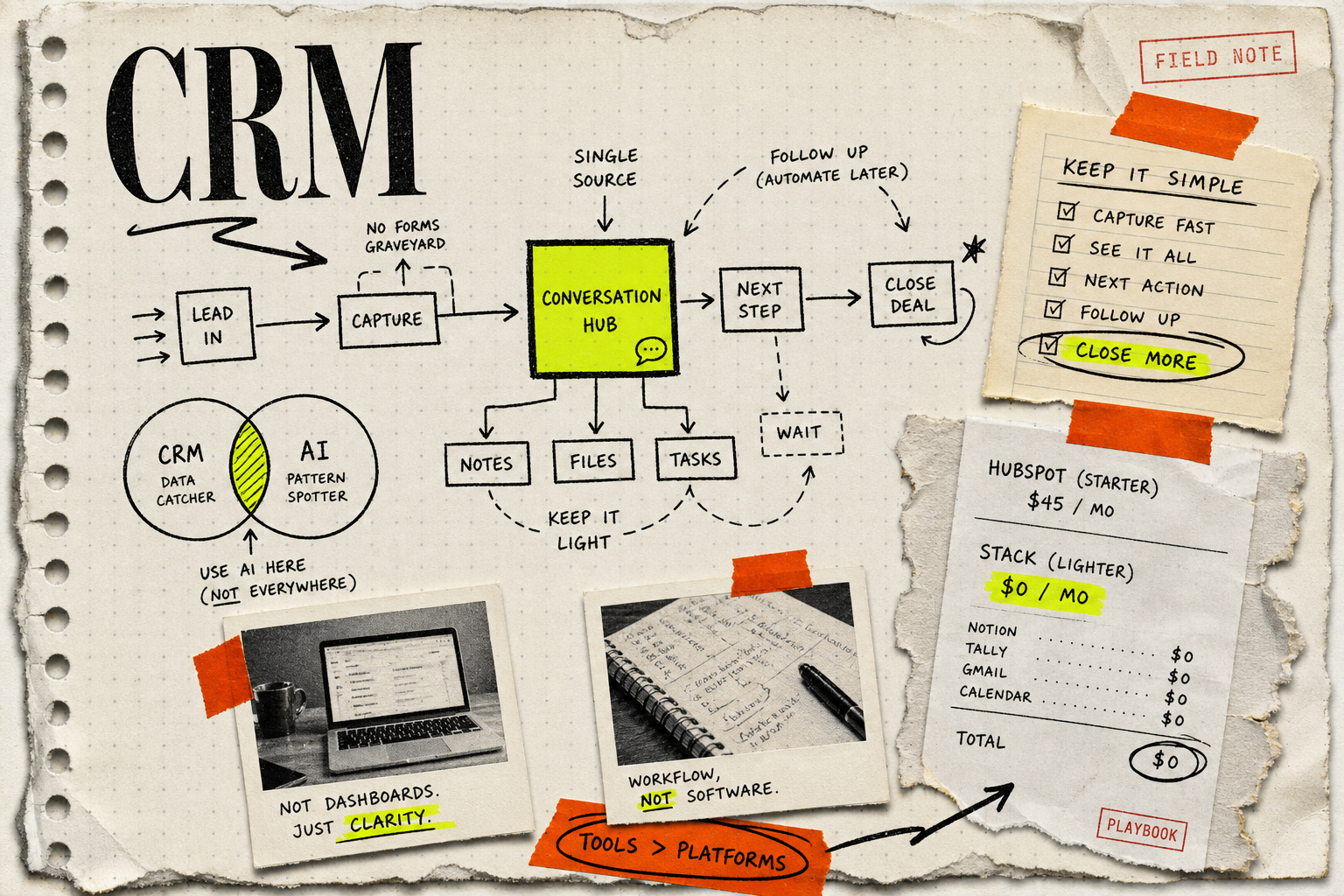
The Best AI CRM For Small Business Is Not A CRM
Most 'AI CRM' pitches are dashboard candy priced like autonomous agents. Here's what a $2M-$20M business actually needs to buy, and what to skip.