Your Business Misses 62% Of Its Phone Calls. Here's The Fix.
Small businesses miss 62% of inbound calls — a $126K/year leak on average. Here's the AI voice receptionist stack that plugs it, with real costs and a rollout plan.
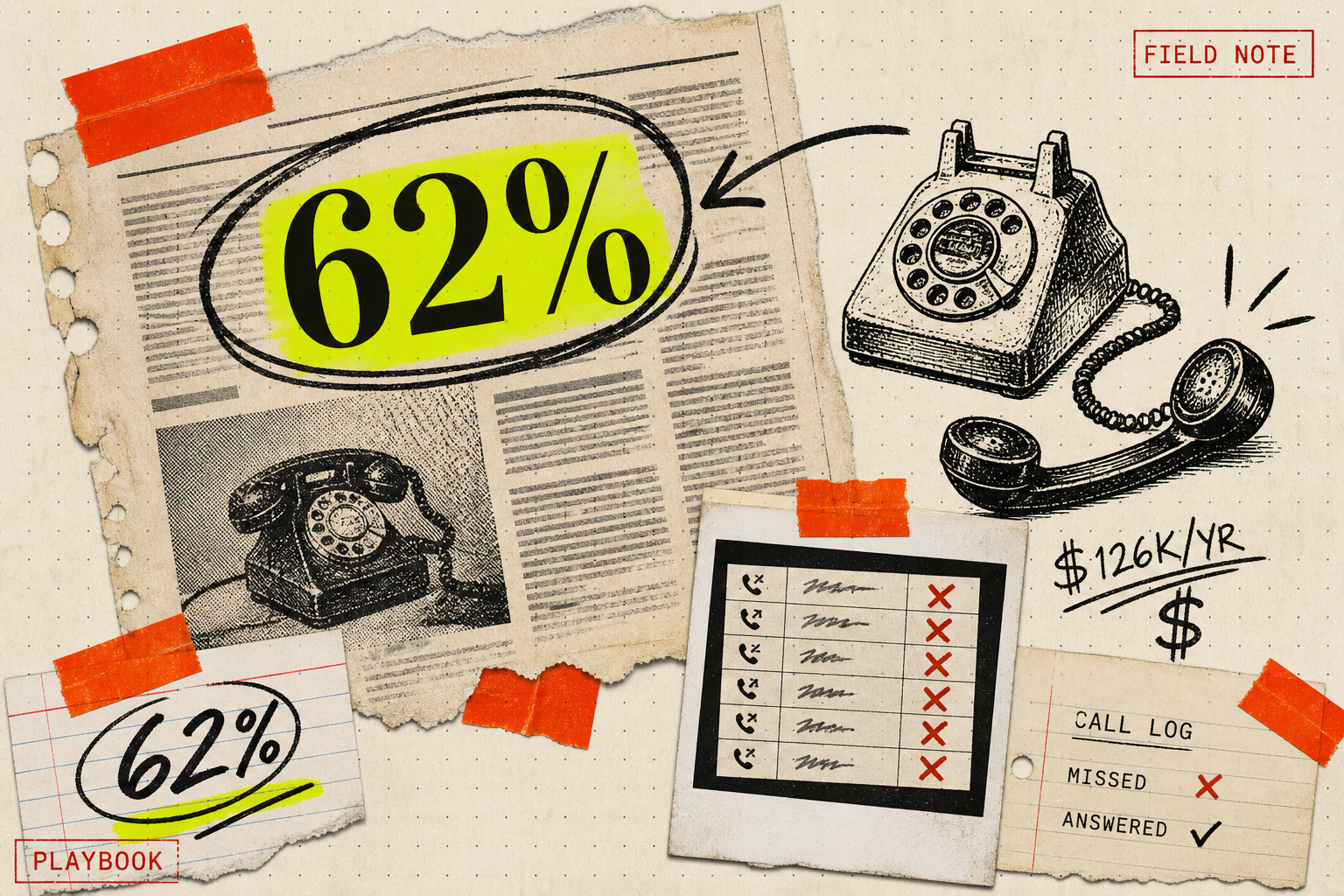
Your business misses 62% of its inbound calls. That's not a marketing hook — it's a 411 Locals study of 85 businesses, and the number has been quoted in industry reports for three years running[1]. If you run a service business doing $1M to $20M in revenue, unanswered calls are quietly siphoning six figures out of your P&L. Davinci Virtual pegs the average annual loss at $126,000 per SMB[2]. Aircall's data says 85% of callers who hit voicemail never call back[1]. Both numbers are worse than most owners think.
I'm going to show you what to do about it — specifically, how to wire an AI voice receptionist that answers every call, books appointments, qualifies leads, and hands off to a human when it should. The tech is finally good enough. The economics are ridiculous. And most of the businesses I talk to are still one flaky front-desk hire away from losing another quarter of pipeline.
The problem is bigger than "we missed a call"
Home services, legal, healthcare, and hospitality get hit hardest. Aira's 2026 breakdown shows healthcare missing 34% of calls, legal 35%, home services 40-60%[3]. NextPhone analyzed 347,000 calls across US SMBs and found a business doing 500 calls a month loses ~50 buying-intent calls per month to after-hours voicemail alone. At a $500 average job value, that's $25,000 in monthly revenue evaporating[4].
Three things are actually happening:
- Speed to lead is broken. PCN's 2026 study found 77% of customers expect an immediate response when they call, and nearly 80% still consider the phone the most important channel to reach a business[5]. Your competitors' phones ring five times and go to voicemail too — the buyer just calls the next one on the list.
- The receptionist is a bottleneck. One person can't cover 8am-8pm, weekends, Spanish, English, and a call queue during a rush. Which means every hire is a compromise on hours, language, or price.
- After-hours is where the money is. In every dataset I've looked at, evening and weekend calls have the highest close rate — because that's when homeowners and small business owners are actually free to think about hiring you. And it's exactly when nobody's answering.
You can hire more people. You can buy a call center. Or you can do what the smarter operators are already quietly doing.
What "AI voice receptionist" actually means in 2026
Two years ago, voice AI sounded like a call-center menu tree. That's over. The current generation runs on speech-to-speech models — OpenAI's gpt-realtime benchmarks at 800ms voice-to-voice when wired correctly[6], below the ~1200ms threshold where humans start noticing pauses. It sounds like a person.
Underneath, the stack is boring — which is a good sign. There are three parts:
1. The telephony layer. Twilio, Telnyx, or your existing phone system forwarded to a SIP trunk. This is what carries the audio.
2. The voice-agent platform. Vapi, Retell, Bland, or LiveKit Agents. This is the orchestration layer — it manages the conversation state, the barge-in behavior, the transfer-to-human trigger, and the tool calls. Cloudtalk's 2026 market report shows inbound voice agents (receptionists, support lines, booking) already account for 52.1% of voice AI revenue — meaning answering calls, not making them, is where the market has settled[7].
3. The tool layer. The agent needs to actually do things: check your Google Calendar, create a booking in Housecall Pro or Jane, look up a customer in HubSpot, text you an SMS when a hot lead comes in. This is the part most first attempts get wrong — they build a great-sounding agent that can't actually book anything.
Vapi lists $0.05/min, Retell $0.07/min, Bland $0.09/min at the sticker[8]. Real all-in cost after telephony, LLM, and TTS is more like $0.10 to $0.30 per minute — Ainora's July 2026 breakdown pegs Vapi's true cost at $0.10-$0.30/min and Retell at $0.07-$0.31/min[9]. Inworld's July 2026 cost model puts raw STT + LLM + TTS at $0.007 to $0.091 per conversation minute once you strip the platform fee[10]. Call it 20 cents a minute end-to-end for a decent build.
For a service business doing 500 calls a month at three minutes average handle time, that's $300/month. A part-time human receptionist starts at $2,400. That's not a savings argument — that's a rounding error.
How I'd build this for a $5M home services business
Here's the actual system. It's the same shape whether you're a plumber, an MSP, or a med spa — you swap the tools, not the architecture.
The call flow
- Ring your existing number. No new number, no "our new system" awkward transition. Twilio SIP trunk sits in front of your line and forks the call to your voice agent if you don't pick up in 3 rings — or immediately for after-hours.
- Agent picks up, identifies itself as an AI. This is non-negotiable. FTC rules aside, callers don't get mad about talking to an AI — they get mad about being deceived by one. "Hi, this is Alex, the AI assistant for [Business Name]. How can I help?" Done. Anthrova's data shows callers who are told upfront still convert at 68% of human baseline, versus 12% when they figure it out mid-call and hang up[1].
- Qualify in three questions. Service needed, timeframe, ZIP code. That's it. Don't try to sell — try to route.
- Book or transfer. If it's a standard job in-service-area during business hours, book it directly against your calendar (Google Cal API, Housecall Pro API, whatever you use). If it's out of scope, complex, or the caller asks for a human — transfer to your on-call phone. If it's after hours and non-emergency, book a callback slot and text the customer confirming.
- Log everything. Full transcript, recording, sentiment, and next action land in your CRM. This is the underrated part — you now have a searchable dataset of every conversation your business has.
The stack I'd actually pick
- Telephony: Twilio (mature, cheap, everyone integrates with it).
- Agent platform: Retell for cost, Vapi for flexibility, LiveKit Agents if you have an engineer and want to own the stack.
- LLM: GPT-realtime for the voice model. Route complex tool calls to
gpt-4.1orclaude-sonnet-4.5behind it. - Booking: Whatever the business already uses. Do NOT force a CRM migration to ship this — you'll never launch.
- CRM: HubSpot free tier is fine for logging if you don't have one. Ping via webhook after every call.
The whole build is a weekend if you know the tools. Two weeks if you're careful and want to test 200 calls before turning it on live.
The three things that will break it
1. Barge-in tuning. The agent has to know when to stop talking mid-sentence because the caller interrupted. Get this wrong and it sounds robotic. Get it right and people forget they're talking to AI.
2. The transfer trigger. Define it before you build. "If the caller asks for a human twice, transfer." "If the confidence score on intent is below 0.7, transfer." Don't leave it to vibes.
3. The knowledge base. Every "I don't know" answer costs you the call. Feed it your pricing sheet, service area map, hours, common FAQs, and — critically — your no-go list. If you don't service septic tanks, the agent needs to say so and offer a referral, not stall.
The business math
Brilo's Deloitte-sourced number is that 91% of companies using voice agents 12+ months would invest again, and service businesses report an average 18% revenue lift in year one, primarily from recovered missed calls and faster response time[11]. That number tracks with what I'd model conservatively:
- 500 monthly calls × 62% missed × 15% would-have-bought conversion × $500 average job = $23,250/month in recoverable revenue.
- AI agent cost at 500 × 3 min × $0.20 = $300/month.
- Net upside: ~$22,900/month, or $275K/year. Even if you cut those assumptions in half, you're at $137K/year.
That's the actual number. Which is why the $126K annual "missed call cost" from Davinci lines up with the 18% revenue-lift figure from Brilo. Different data sets, same conclusion.
What most operators get wrong
Three common failure modes:
"We'll just start with outbound sales calls." No you won't. The market has voted with its dollars — 52.1% of voice AI revenue is inbound. Inbound is the beachhead because it has clear ROI (recovered calls) and clear tolerance (the caller wants help). Outbound has neither.
"We need a super-custom voice." No you don't. ElevenLabs and OpenAI's default voices are indistinguishable from a decent receptionist in a US accent. Spend that budget on the tool layer instead.
"We'll build it in n8n." You can. But n8n adds latency per node call — and voice AI is a latency game. Build the agent in a purpose-built framework and use n8n for the workflows after the call ends.
What to do this week
Three things, in order.
- Pull your call data. Twilio dashboard, your VoIP provider's admin, or a call to your carrier. Get the missed-call rate and the after-hours call volume for the last 30 days. Multiply missed calls × 15% × your average job size. That's your top-line opportunity.
- Pick a platform and burn 4 hours. Retell's free tier is enough to spin up a working prototype in an afternoon. Get it answering your test line and booking against a throwaway Google Calendar. Don't over-engineer it.
- Run it in shadow mode for two weeks. Forward missed calls only. Log everything. Measure booking rate, transfer rate, and complaint rate. Then flip it to primary.
If you want this built for your business — same architecture, your data, your stack — that's what I do. Book a 30-minute audit call and I'll tell you exactly what your version would look like, what it would cost to run, and whether it's actually a fit. No pitch.
The businesses that plug this leak in the next 12 months are going to look wildly ahead of the ones that don't. Not because the tech is magic — because the average business is still letting a $126,000-a-year problem go to voicemail.
-
The True Cost of Missed Calls (411 Locals + Aircall data + AI disclosure numbers)↩
62.2% of business calls unanswered; 85% of voicemail callers never call back; transparent AI disclosure preserves 68% of conversion baseline.
-
Cost of a Missed Call and the Impact on Business Revenue↩
SMBs lose around $126,000/yr on average from unanswered calls.
-
62% of Business Calls Go Unanswered: The $126K Cost↩
Healthcare 34%, legal 35%, home services 40-60% miss rate by industry.
-
37 AI Receptionist Statistics 2026 (347K Calls Analyzed)↩
$25K/month lost from after-hours missed calls at a 500 call/mo business.
-
Missed Call Revenue Study↩
77% of customers expect immediate response; ~80% consider phone the most important business channel.
-
OpenAI Realtime API: Production Voice Agents (2026)↩
gpt-realtime hits 800ms voice-to-voice latency in production.
-
AI Voice Agent Statistics 2026: Market Share & Use Cases↩
Inbound voice agents account for 52.1% of 2025 voice AI revenue.
-
AI Voice Agent Pricing 2026↩
Vapi $0.05/min, Retell $0.07/min, Bland $0.09/min sticker prices.
-
AI Voice Agent Cost per Minute (2026): Vapi, Retell, Bland Compared↩
All-in per-minute pricing lands at $0.07-$0.50 across major platforms.
-
Voice Agent Cost Per Minute 2026: Worked Cost Model↩
Raw STT+LLM+TTS stack: $0.007-$0.091 per conversation minute (July 2026 prices).
-
AI Voice Agent Statistics & Trends 2026↩
91% of 12+ month voice-agent users would invest again; 18% avg year-1 revenue lift.
Ready to build your own AI system?
Book a Free Audit Call →Keep Reading
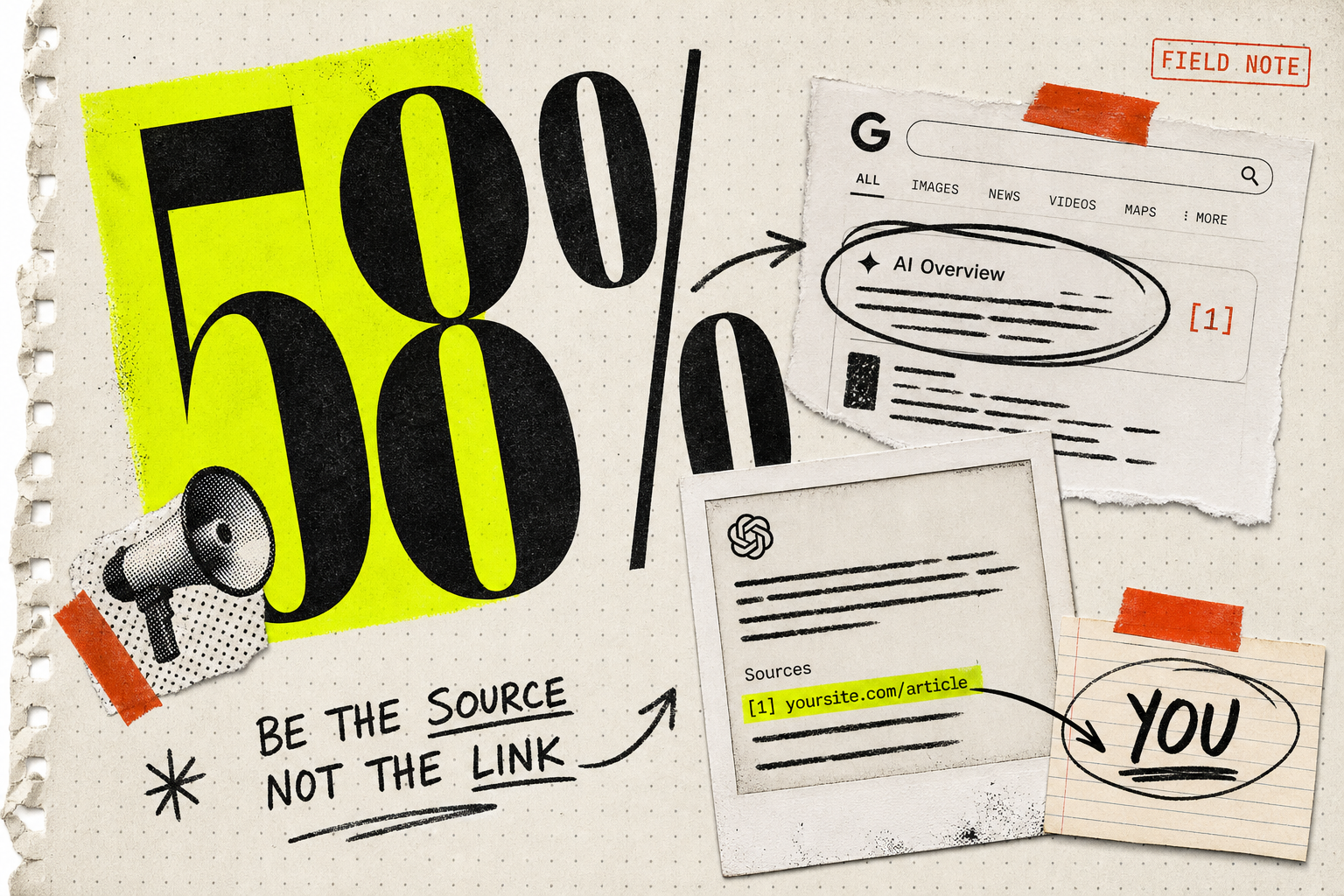
How To Get Cited By ChatGPT And Google AI Overviews
Position-one Google clicks are down 58% because of AI Overviews. The new game is getting cited by ChatGPT and Perplexity. Here's the 5-part playbook.
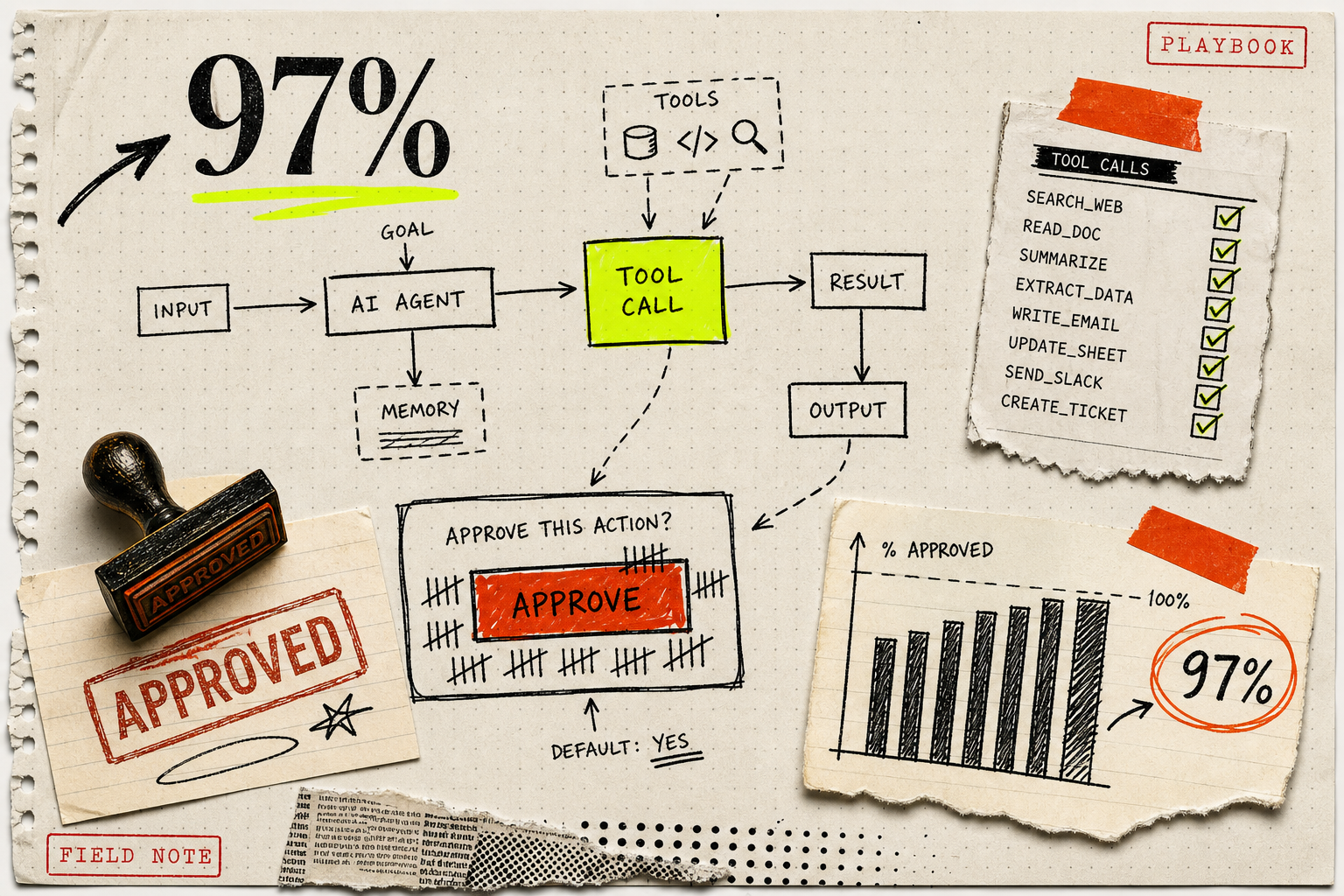
Your Humans Approve 97% Of What The AI Does. That's Not Oversight.
Anthropic just measured it: developers approve 97% of the permission prompts AI agents ask them. Here's how to build oversight that actually works.
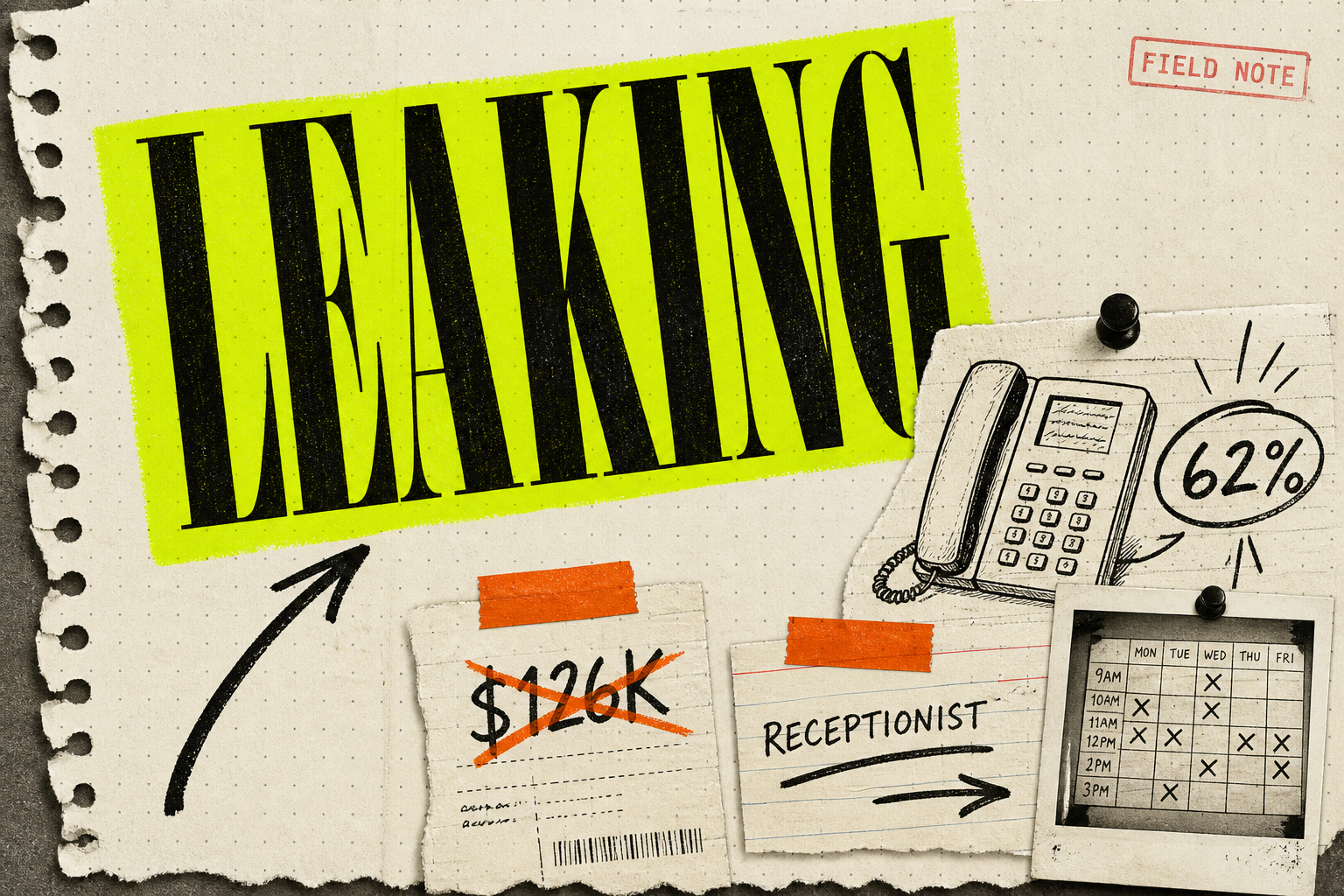
Your Business Misses 62% Of Its Calls. An AI Receptionist Fixes It.
Small businesses miss 62% of inbound calls and lose $126K a year to voicemail. An AI voice receptionist fixes it for under $300/mo. Here's the build.