How To Get Cited By ChatGPT And Google AI Overviews
Position-one Google clicks are down 58% because of AI Overviews. The new game is getting cited by ChatGPT and Perplexity. Here's the 5-part playbook.
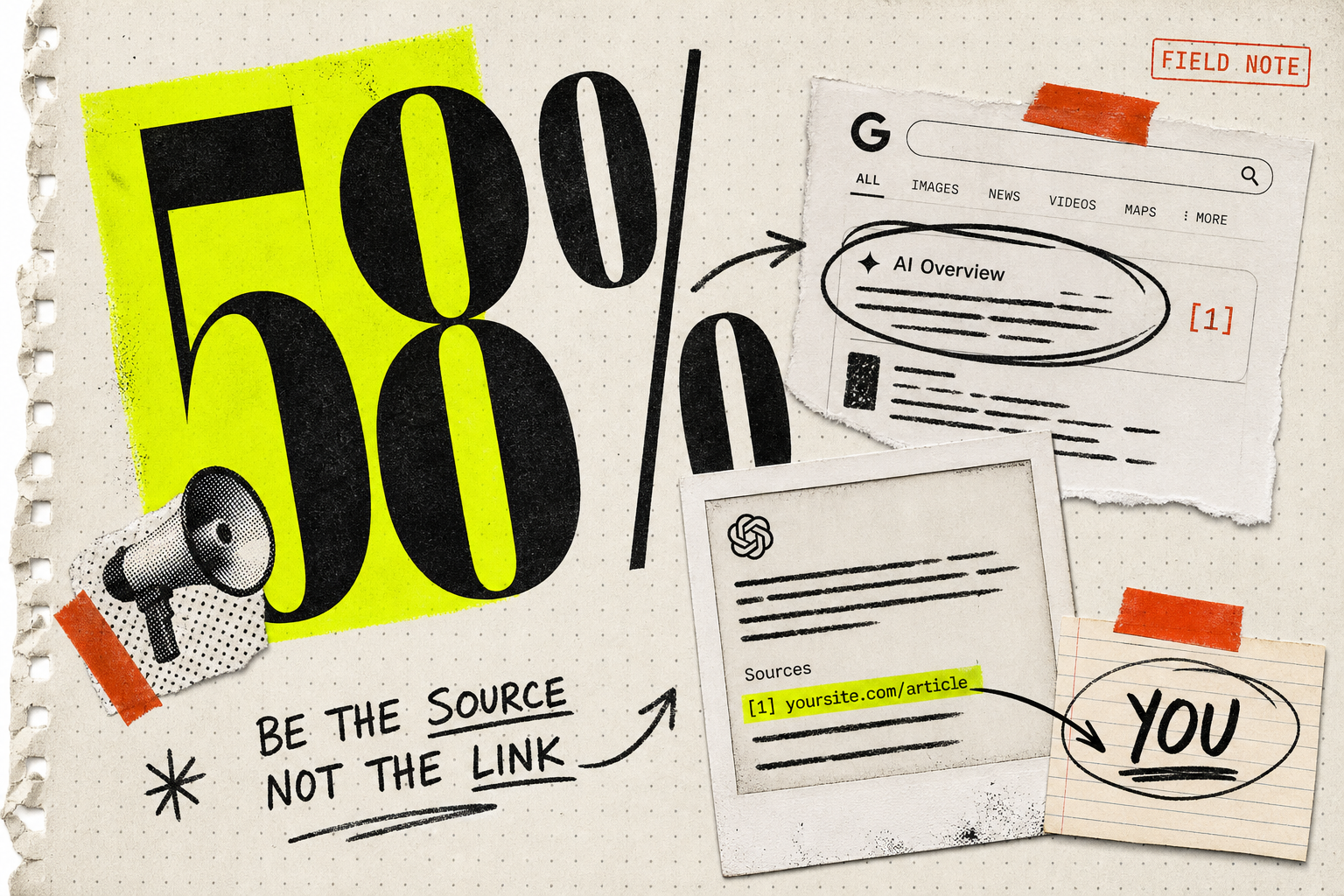
Your position-one Google ranking now earns 58% fewer clicks than it did two years ago[1]. Ahrefs pulled that number from 300,000 keywords in December. Seer Interactive puts the drop as high as 65.2% on informational queries[1]. Kevin Indig, Amsive, Pew — every serious study says the same thing: when Google shows an AI Overview, your traffic bleeds.
If your growth plan is still "rank #1 and wait," you're planning to lose.
The new game isn't ranking. It's getting cited — by ChatGPT, Perplexity, Google's AI Overview, Claude, Gemini. Getting your name in the answer, not the blue link under it. The discipline has a name (two, actually — AEO for answer engines, GEO for generative engines) and a small, unglamorous set of moves. Here's the one I run for the studio.
The stakes, in numbers
- 48% of Google searches now trigger an AI Overview as of March, up 58% year over year[2]
- Organic CTR on those queries drops 34.5% (Ahrefs' first cut) to 65.2% (Seer's long tail)[3][1]
- Zero-click rate on Google climbed past 65%[4]
- On informational queries specifically, click rate fell from 15% to 8% — a Pew finding Ahrefs confirmed[5]
- Sites with 32,000+ referring domains are 3.5x more likely to be cited by ChatGPT than lower-authority peers[6]
That last one matters. AI models are risk-averse. They pick sources they can trust. That means the game is different for a $5M operator with a modest domain than it is for HubSpot — but it's not impossible. It just requires the moves below, done deliberately.
Why most operators are doing this wrong
Two failure modes I keep seeing:
One — treating AEO/GEO as "SEO with AI keywords." It isn't. The winning content format is different. Long-winded, keyword-stuffed thought-leadership posts don't get cited. Short, self-contained answer blocks do. Yotpo's data shows AI models favor 40–60 word answer chunks over narratives that bury the lead[6].
Two — chasing every AI platform separately. Some of it overlaps, some doesn't. ChatGPT weighs authority signals and older, well-linked content. Perplexity leans fresh — 50% of its citations come from content under 13 weeks old[7]. Google AI Overviews are still, at bottom, Google — schema markup, structured data, and traditional ranking signals matter more there.
You don't need three strategies. You need one content structure that hits all three, plus a couple platform-specific accents.
The 5-part structure that actually gets cited
This is what I build into every post now — including this one, so you can reverse-engineer it.
1. A direct answer in the first 50 words
Not a hook that teases. An actual answer. If someone asks ChatGPT "how do I get cited by AI search engines," the model wants to lift a sentence that answers it cleanly.
Structure: definition → mechanism → who it's for. 40–60 words. No throat clearing.
2. Self-contained answer blocks under every H2
Each section should stand alone. A 50–300 word chunk that could be lifted out of context and still make sense. Start each with a one-sentence direct answer, then unpack. This is the single biggest lift.
The reason: AI models don't read your post top-to-bottom. They chunk it and grade each chunk on whether it answers a discrete query. Buried-lead sections get skipped.
3. Schema markup — the 5 that actually crawl
The five that matter for AI citations[8]:
- Organization — entity recognition. Who are you.
- FAQPage — Google removed FAQ rich results in May, but Perplexity, ChatGPT, and Bing Copilot still crawl the schema[9]. Ship it.
- Article / BlogPosting — attributes the content to a named author. Nima. Not "the team."
- Product / Service — for the offer page.
- HowTo — for step-by-step content.
If your CMS doesn't emit clean JSON-LD, that's the first fix. Everything else is downstream of the machine being able to read you.
4. Named-author signals + entity consistency
Every AI citation study I've looked at agrees on this: content attributed to a real, consistent, named author beats agency-voice "we" content. E-E-A-T isn't dead — it's the operating layer of the new search.
For the studio, that means every post ships under my name, first-person, with a bio that reinforces the entity (Nima → ZEROCAM → AI marketing systems). The models are watching for consistent brand-entity repetition[10]. Give them a stable target.
5. Freshness + cross-platform distribution
Perplexity in particular weights recency heavily. Half its citations come from content under 13 weeks old[7]. If your competitive set is 2024 blog posts, a well-structured 2026 piece can out-cite them for months.
The distribution move: get the same claims into a second high-authority surface — an indexed newsletter, a Substack cross-post, a YouTube video description. AI models triangulate. Two independent sources beat one strong source.
The two platforms behave differently
For ChatGPT and Claude — authority and stability win. Older, well-linked content on a domain the model has "seen" many times gets cited more. If you're new, the accelerant is being cited on higher-authority sites (podcast guest slots, Substack cross-posts, industry directory listings).
For Perplexity and Google AI Overviews — freshness and schema win. Update your best posts every 60–90 days. Add real dates to the content. Emit proper structured data. New content on a modest domain regularly beats old content on a big one[7].
Do both. It's not either-or.
What I'd build if I were you
If I were sitting in your seat running a $2–10M operator business, I'd stop writing long thought-leadership posts and do this instead:
- Audit your top 10 organic pages. Rewrite the first paragraph of each into a 40–60 word direct answer. That's a one-day project.
- Break up H2 sections into self-contained answer blocks. Each ~150 words, each answering one query cleanly. Another day.
- Emit Organization + Article + FAQPage schema. If you're on WordPress, plugins do this. If you're on Framer/Webflow, JSON-LD in the head. Half a day if you know what you're doing.
- Consolidate author attribution. Every post under one named author, first-person, with a bio that reinforces the brand entity. One afternoon.
- Set up a simple citation tracker. Query ChatGPT and Perplexity weekly with your top 20 buyer queries. Log which sources they cite. This tells you who to displace.
Total: about a week of focused work for an operator or their content lead. And you'll start showing up in answers that used to belong to your competitors.
Why this beats waiting for Google to "fix it"
Google isn't going to reverse AI Overviews. The rollout accelerated in 2026, not decelerated. Meanwhile the CTR floor keeps sliding: Ahrefs' original 34.5% number became 58% eight months later[3][1]. The trajectory is one-way.
The buyers you want are already asking their questions in ChatGPT before they Google anything. If your name isn't in the answer, the deal is over before you know you were in it.
Fix the structure. Fix the schema. Fix the author. Do it this week, not next quarter.
If you want this built for your business — the structure, the schema, the citation-tracking loop — that's what the audit call is for. 30 minutes, I show you exactly what your version looks like and what it would cost to ship it. No pitch, no follow-up sequence.
-
Update: AI Overviews Reduce Clicks by 58%↩
Updated Ahrefs finding: position-1 organic CTR down 58% when AI Overview shows.
-
Google AI Overviews in 2026: 48% of Searches Have Them↩
48% of Google searches trigger AI Overviews as of March 2026.
-
AI Overviews Reduce Clicks by 34.5%↩
Ahrefs' original 300k-keyword study on AI Overview CTR impact (34.5% drop).
-
80+ Google AI Overview Statistics 2026↩
Zero-click rate on Google has climbed past 65%.
-
AI Overviews Traffic 2026: 58% CTR Drop and Google's Response↩
Pew confirms informational-query click rate fell from 15% to 8%.
-
ChatGPT SEO & GEO 2026: 12 Tips To Get Cited In AI Answers↩
Sites with 32k+ referring domains are 3.5x more likely to be cited by ChatGPT; 40-60 word answer blocks perform best.
-
Content Freshness AI Rankings: A 2026 Agency Brief↩
50% of Perplexity citations come from content under 13 weeks old; refreshed pages move from invisible to cited inside a single index cycle.
-
Schema Markup for AI: The 5 Types ChatGPT Actually Crawls↩
The five schema types that matter most for AI citations: Organization, FAQPage, Article/BlogPosting, Product/Service, HowTo.
-
Schema Markup for Perplexity AI: Get Cited in 2026↩
Google removed FAQ rich results in May 2026 but Perplexity/ChatGPT/Bing Copilot still crawl FAQPage schema.
-
How to Get Cited in ChatGPT and Perplexity↩
Consistent brand-entity repetition and named-author signals boost AI citation rates.
Ready to build your own AI system?
Book a Free Audit Call →Keep Reading
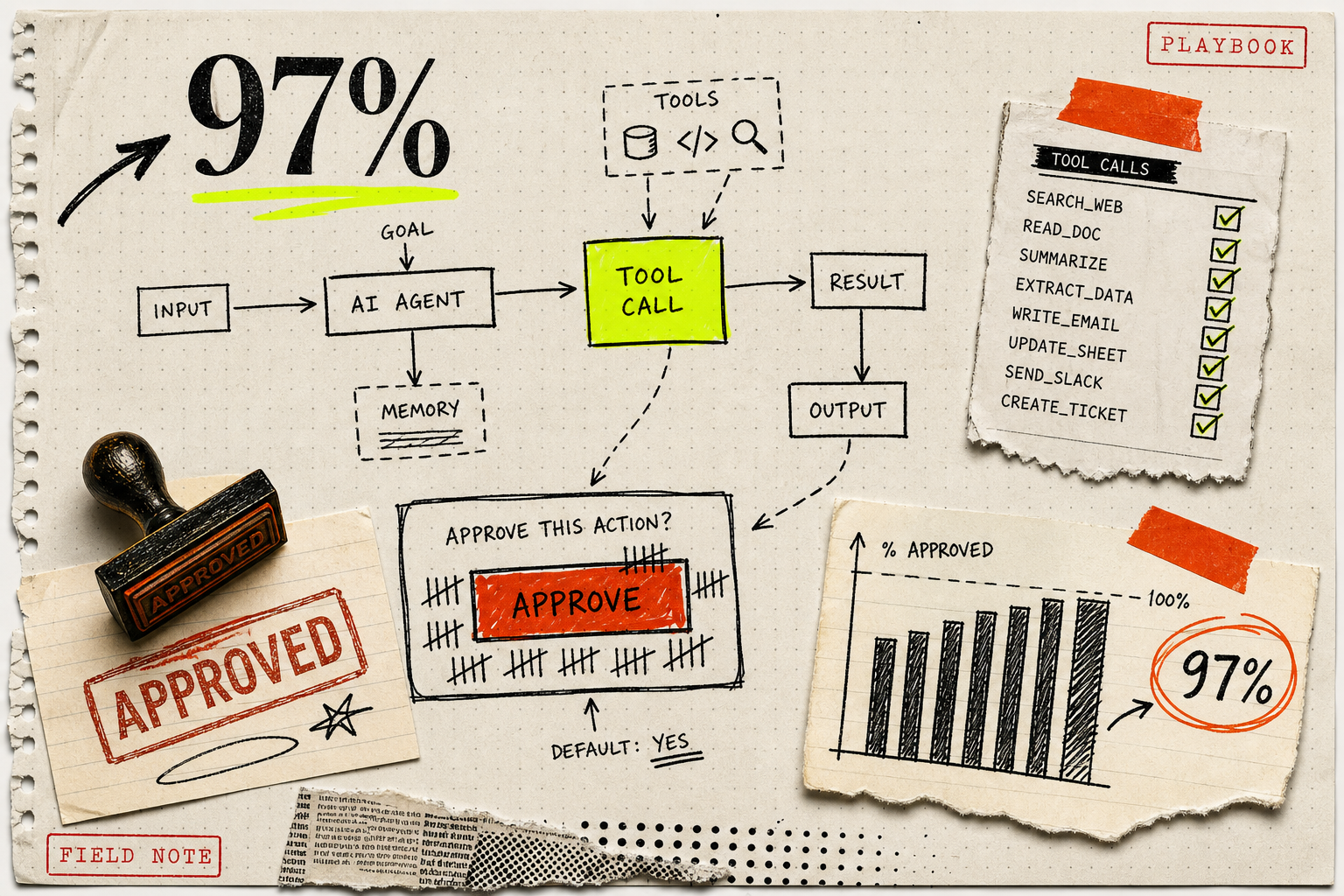
Your Humans Approve 97% Of What The AI Does. That's Not Oversight.
Anthropic just measured it: developers approve 97% of the permission prompts AI agents ask them. Here's how to build oversight that actually works.
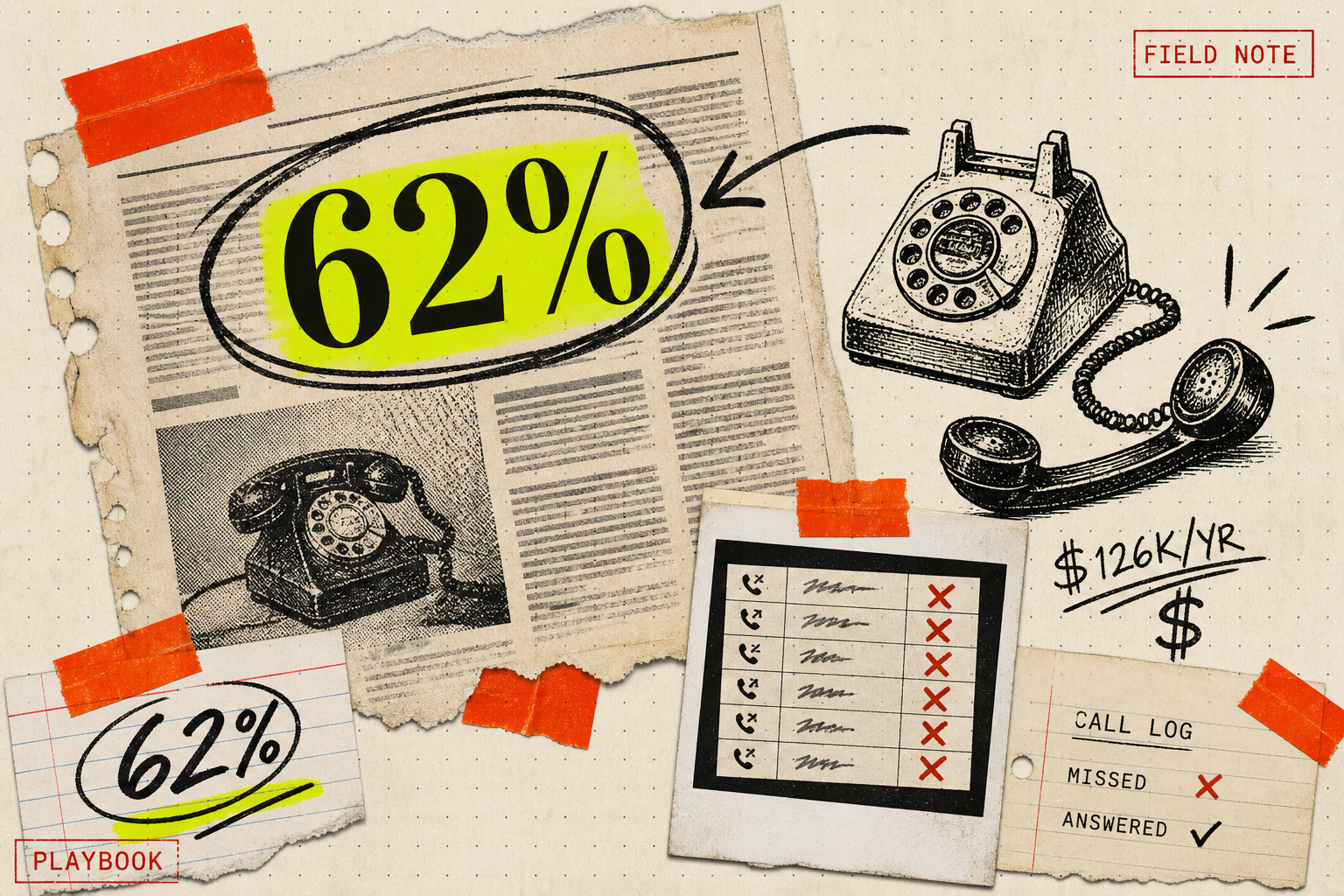
Your Business Misses 62% Of Its Phone Calls. Here's The Fix.
Small businesses miss 62% of inbound calls — a $126K/year leak on average. Here's the AI voice receptionist stack that plugs it, with real costs and a rollout plan.
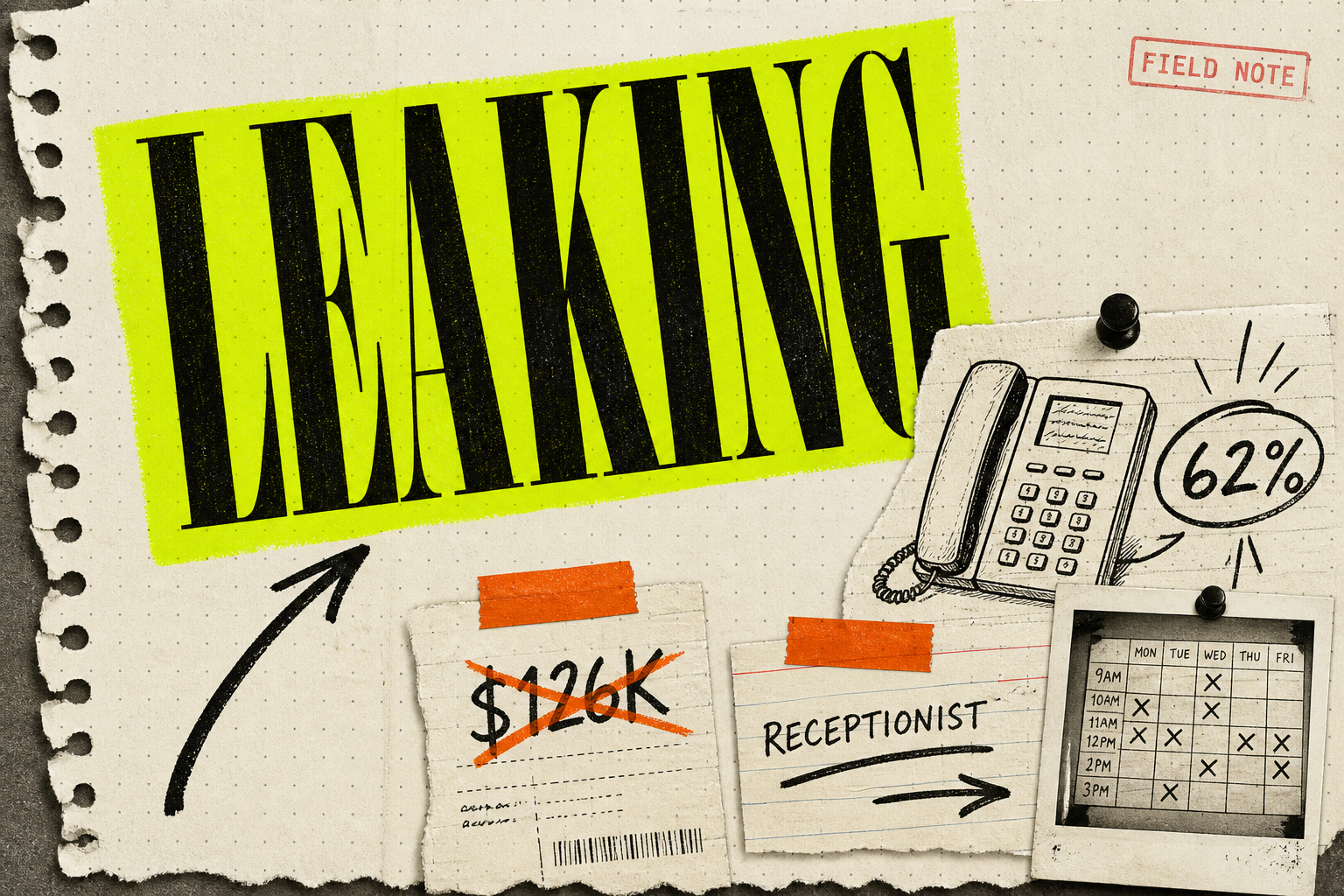
Your Business Misses 62% Of Its Calls. An AI Receptionist Fixes It.
Small businesses miss 62% of inbound calls and lose $126K a year to voicemail. An AI voice receptionist fixes it for under $300/mo. Here's the build.