Your AI Agent Is A Chatbot With A Marketing Budget
Half the operators I talk to say they built an agent. When I open it, it's a chatbot. Here's the line, in operator language — and how to know which one you should be paying for.
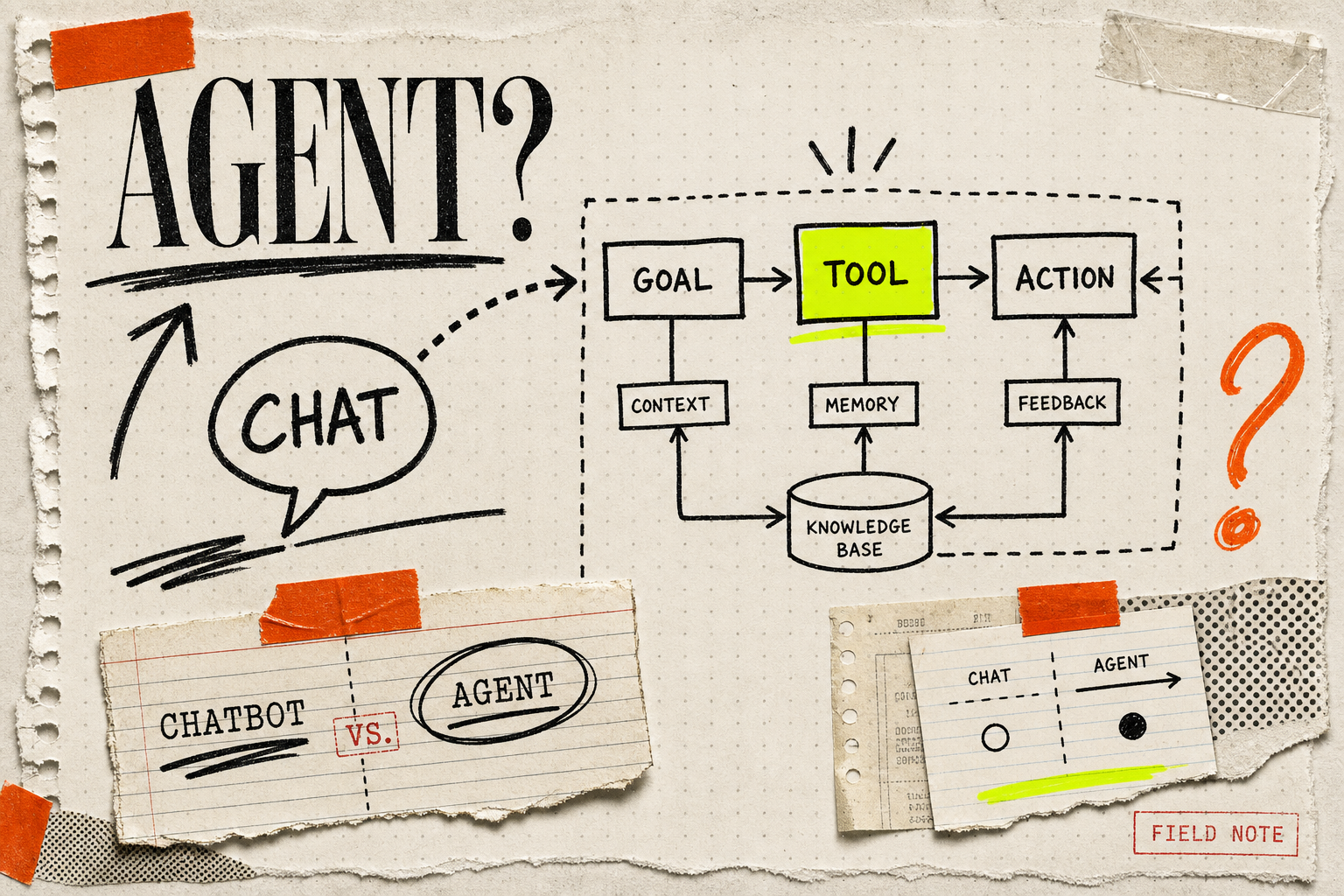
Half the operators I talk to say they "built an AI agent" last quarter. When I open the system, it's a chatbot. A long prompt, a "knowledge base," maybe a webhook. There is no agent in there.
This isn't pedantry. The two things have different costs, different failure modes, and different ceilings. If you mix them up when you're spec'ing the project, you'll either overpay for a wrapper or underbuild for what the work actually needs — and you'll join the 56% of CEOs who told PwC they got "nothing" out of their AI spend[1].
Here's the line, in operator language. And here's how to know which one your business should actually be paying for.
The cheap version of the answer
A chatbot is a conversation. You send a message, it sends a message back. The smart ones use an LLM under the hood, pull from a knowledge base, and handle multi-turn context. They're optimized to resolve a question.
An agent is a job. You give it a goal, it picks the steps, calls tools, takes actions in real systems (your CRM, your inbox, your billing), and reports back when the work is done. It's optimized to complete a task without you watching.
Same language model can sit inside both. The difference is what it's allowed to do and how the system is wired around it.
Why this isn't pedantry — the numbers diverge
Pricing diverges first. A chatbot interaction runs roughly $0.50 per resolved conversation versus about $6.00 for a human agent on the same job, which is why Gartner has been calling for $80B in contact-center labor savings by the end of this year[2]. That's a great trade — for the FAQs and order-status questions a chatbot was designed for.
Agent economics look completely different. Agents call tools, retry, branch, and chew through tokens. The same vendors quoting you fifty-cent chatbot interactions will quote per-task pricing on agents that lands an order of magnitude higher — sometimes more. That's not a rip-off. That's the work being structurally different.
Adoption is diverging too. Grand View Research pegs the chatbot market at $11.78B in 2026, growing 19.6% a year[3]. The voice-AI-agent market is $2.4B today but growing 34.8% a year[4] — nearly twice as fast. Gartner's most-cited number from last August: 40% of enterprise apps will ship task-specific AI agents by end of 2026, up from less than 5% in 2025[5].
The market is voting that these are different products. Most operators haven't caught up.
Where it actually breaks
The dangerous middle is where you buy "an AI agent platform" but use it like a chatbot — or, worse, the other way around. Three failure modes I see weekly:
Failure 1: Chatbot dressed as an agent. A vendor sells you "an AI sales agent." You wire it up. It answers questions about your product. It can't actually book the meeting in your calendar, can't update HubSpot, can't send a contract. It's a chatbot with a sales-themed prompt. You're paying agent pricing for chatbot work.
Failure 2: Agent loaded with chatbot expectations. You ask the agent to "handle support." You wire it to Zendesk, Stripe, and your shipping API. Then you measure it like a chatbot — by deflection rate, by CSAT on the first reply. It's optimized to resolve the ticket, which sometimes means issuing a refund or escalating to a human — and your dashboard reads that as failure. You rip it out.
Failure 3: Both, glued together, with no governance. This is where the MIT NANDA report — drawn from 150 interviews and 300 deployments — landed its now-famous finding: 95% of generative-AI projects show "little to no measurable" impact on P&L[6]. Forrester's read on the same data is sharper: the model is rarely the problem. The problem is ambiguity, miscoordination, and zero evaluation discipline[7].
You can't measure what you can't define. If you don't know which one of these you bought, you can't tell if it's working.
The 90-second decision
When an operator asks me "should this be a chatbot or an agent?" I run the same three questions:
- Does the work end when the conversation ends? If yes, chatbot. (Customer asks "where's my order," bot tells them, done.) If no — if the conversation is just the trigger and the real work is in your other systems — agent.
- Does it need to take actions you'd normally approve before doing? Issuing refunds, updating CRM, sending outbound emails on your behalf, charging cards. If yes, you need an agent — and you need approval and audit layers. Don't fake it with a chatbot.
- Can you measure success without watching the conversation? Agents win on outcomes (deals closed, refunds processed, hours saved). Chatbots win on conversation metrics (resolution rate, CSAT, deflection). If you can't write the outcome metric on one line, you're not ready to buy an agent — you're ready to buy a chatbot.
If you got two "agents" out of three, you need an agent. If you got two "chatbots," buy a chatbot and stop overpaying.
What I'd actually build for a $5M operator today
Picture a hospitality operator doing $5M, 80% of their support volume is "what's my reservation, can I move it, what's the policy." Here's the build I'd spec:
- Tier 1 — chatbot. Knowledge-base RAG, scoped to FAQs and reservation lookups (read-only). Handles 70% of inbound. Resolution measured. Cost per chat: pennies.
- Tier 2 — agent. When the user wants to change something — move the reservation, refund, upgrade — handoff to an agent with write access to the booking system, a refund-cap policy, and human approval over $500. Measured on resolution-without-human, with full audit log.
- Tier 3 — human. Anything the agent flagged. Capped at maybe 10% of volume.
That's not one product. That's a system with two AI products inside it doing different jobs. The chatbot saves money. The agent saves customers. Mixing them is what most "AI rollouts" actually are — and it's why 88% of organizations use AI, but only 23% have scaled agents and only 12% see real ROI[8].
The hard rule
Don't let a vendor tell you you've got an agent until you can point at three things: (1) tools it can call, (2) actions it can take in your real systems with an audit trail, (3) an outcome metric that isn't "the user said thanks." Without all three, you bought a chatbot. That might still be the right purchase — but pay chatbot prices for it.
If your stack right now is a mess of "AI agents" that don't actually take actions, I'd start by tearing out the labels and asking what each thing actually does. Most of the time you'll find you have one chatbot, one half-built agent, and a Slack channel full of vendors invoicing you for both.
That's the kind of audit I'd do for you in 30 minutes. No pitch, no slides — I'd map your current AI stack on one page, tell you which pieces are doing the work and which ones are line items pretending to. Book a free audit call at zerocam.studio.
-
AI Adoption: The Complete Enterprise Guide 2026↩
PwC CEO survey: 56% report 'nothing' from current AI efforts.
-
Key Chatbot Statistics You Should Follow in 2026↩
$0.50-$0.70 per chatbot interaction vs $6-$15 per human; Gartner projects $80B contact-center labor savings by 2026.
-
AI Chatbot Statistics (2026): Usage, ROI & Voice Bot Trends↩
Global chatbot market $11.78B in 2026, 19.6% CAGR — per Grand View Research.
-
Voice AI Agents Market — Brilo AI compilation↩
Voice AI agents $2.4B (2024) projected to $47.5B by 2034, 34.8% CAGR.
-
Gartner: 40% of Enterprise Apps Will Feature Task-Specific AI Agents by 2026↩
Reports Gartner's prediction: 40% of enterprise apps will feature task-specific AI agents by end of 2026, up from less than 5% in 2025.
-
Enterprise AI Rollout Failures: Causes and Case Studies↩
MIT NANDA report: 95% of GenAI projects show no measurable P&L impact, from 150 interviews and 300 deployments.
-
10 Major Agentic AI Challenges and How to Fix Them↩
Cites Forrester 2025 Model Overview Report: agent failures emerge from ambiguity, miscoordination, and unpredictable system dynamics — not traditional bugs.
-
AI Agent Adoption Statistics 2026: Enterprise AI Usage↩
88% of orgs use AI, only 23% scale agents, only 12% see ROI.
Ready to build your own AI system?
Book a Free Audit Call →Keep Reading
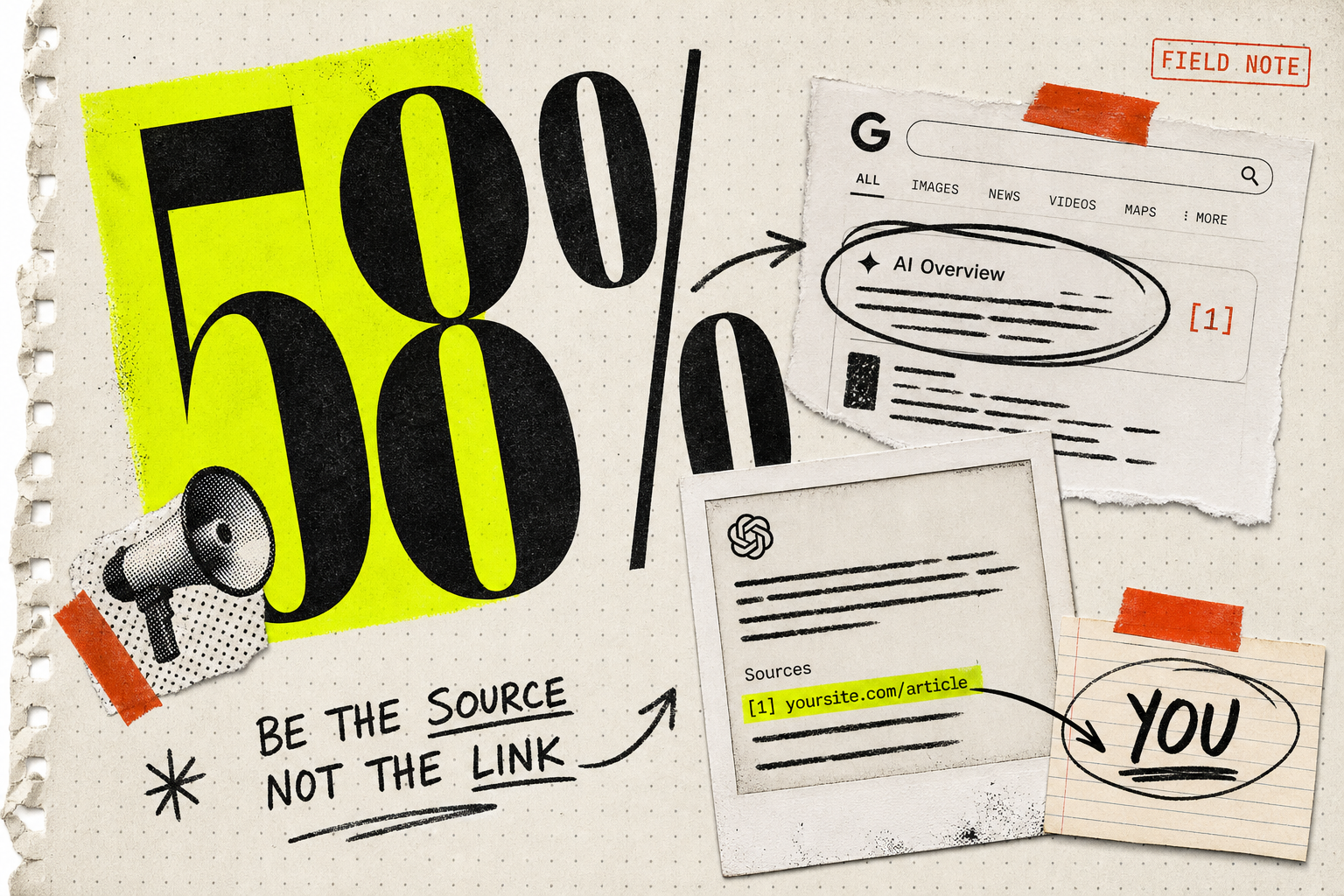
How To Get Cited By ChatGPT And Google AI Overviews
Position-one Google clicks are down 58% because of AI Overviews. The new game is getting cited by ChatGPT and Perplexity. Here's the 5-part playbook.
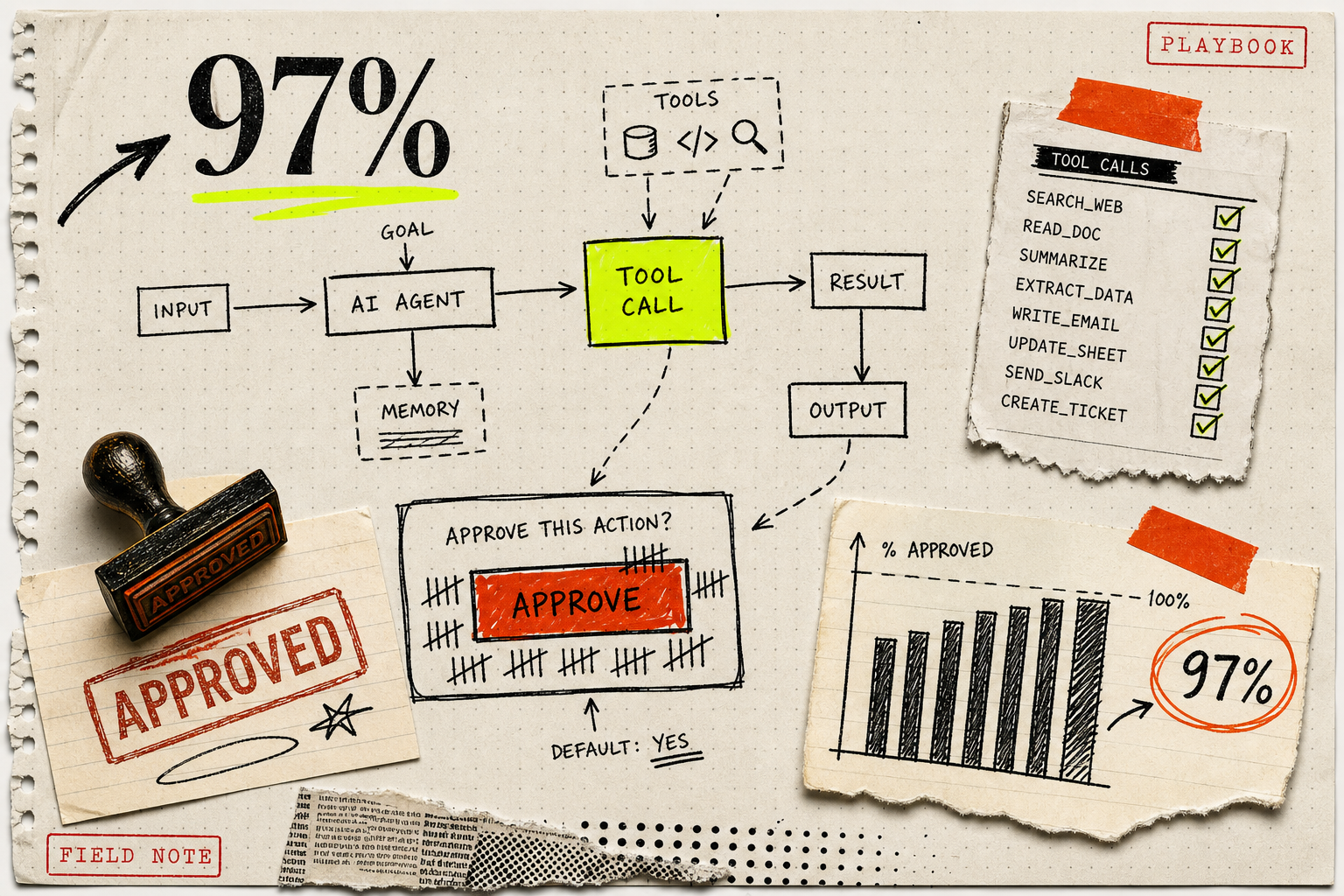
Your Humans Approve 97% Of What The AI Does. That's Not Oversight.
Anthropic just measured it: developers approve 97% of the permission prompts AI agents ask them. Here's how to build oversight that actually works.
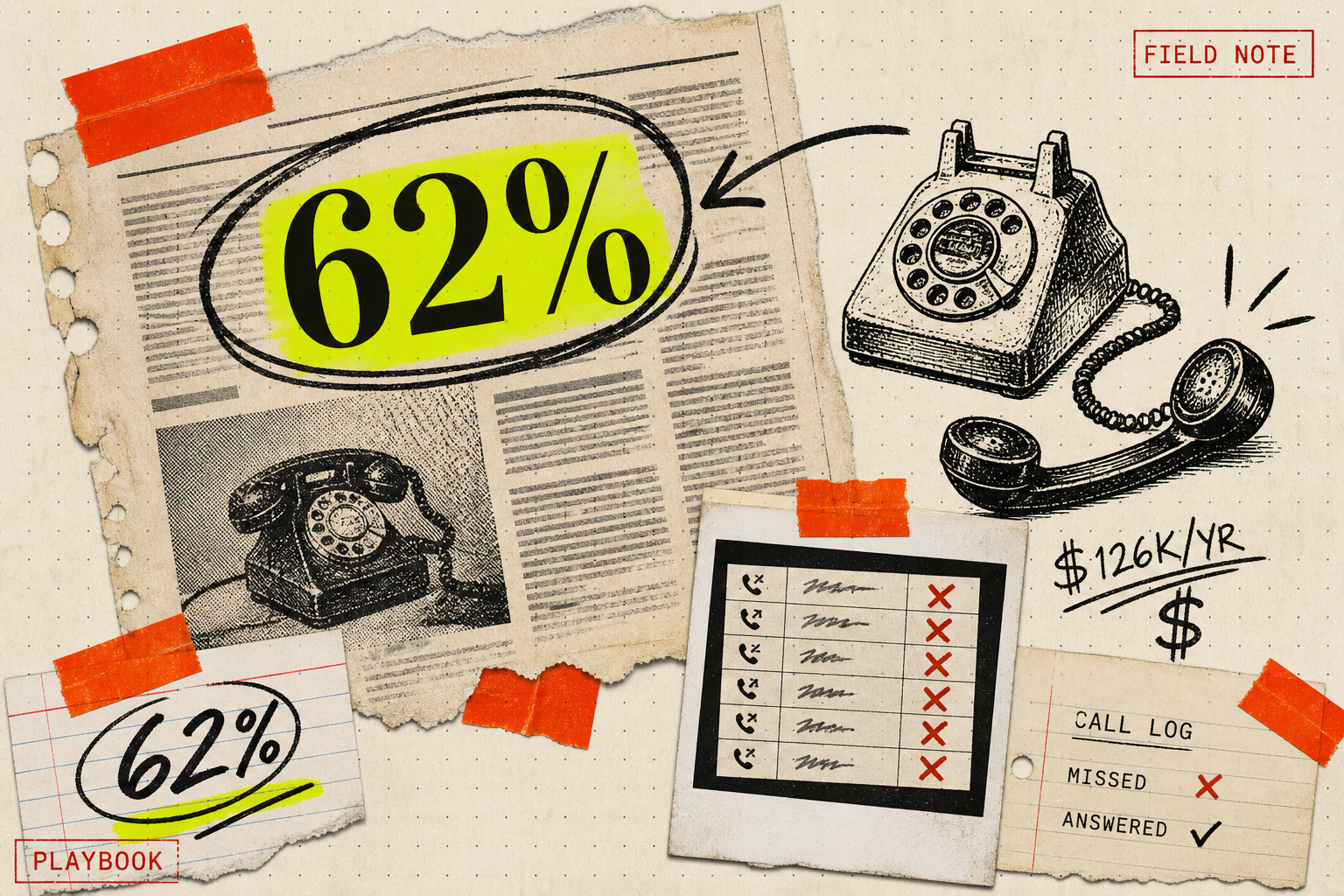
Your Business Misses 62% Of Its Phone Calls. Here's The Fix.
Small businesses miss 62% of inbound calls — a $126K/year leak on average. Here's the AI voice receptionist stack that plugs it, with real costs and a rollout plan.