74% Of AI Chatbots Get Pulled After Launch. Yours Will Too.
Three out of four AI customer service chatbots get pulled offline after launch. Here's what breaks first and the boring layer that keeps the 26% alive.
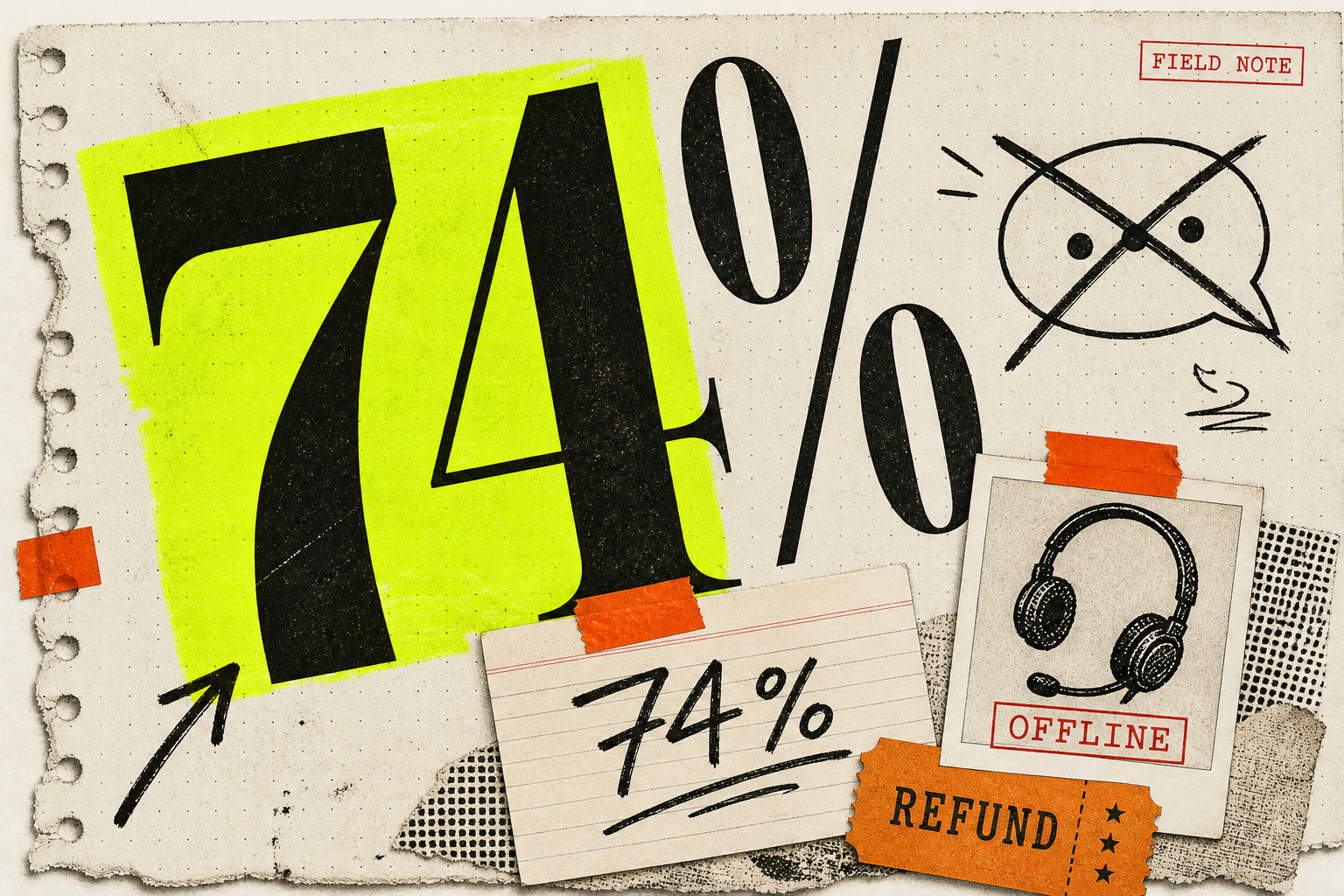
Three out of four companies who put an AI customer service agent in front of real customers have already yanked it back offline. That number comes from a Sinch survey of 2,500 enterprise leaders published in May[1]. It gets worse — the rollback rate among firms that thought they had mature guardrails hit 81%[2]. So the more prepared you thought you were, the more likely you shipped something that broke.
I want to be very direct: if you're planning to put a chatbot on your site to "cut support costs" this quarter, you're on the wrong side of a very specific probability curve. Not because AI can't do customer service. Because most operators are building the same six things, in the same wrong order, and hitting the same rollback moment 60–90 days in.
Here's what breaks, why it breaks, and how I'd build it instead if it were my $5M brand and my support inbox.
What "rollback" actually means
Rollback isn't a soft pivot. It's an executive email at 8pm on a Tuesday saying "turn it off, we're back to human agents by Monday." Sinch's data breaks the reasons down clearly[3]:
- 31% pulled it because of customer data exposure — the bot returned other people's order details, account info, or PII.
- 22% pulled it because of hallucination or brand risk — the bot confidently invented a policy, a refund, or a discount.
- 16% pulled it because they couldn't diagnose what went wrong — it just started giving weird answers and nobody could tell why.
The downstream cost is worse than the setup cost. 35% of firms saw their support queue grow after the AI rollback, and 34% took a measurable reputation hit[4]. So you paid the vendor. You paid the integrator. You paid your team to build content. Then you paid the queue backlog and the brand damage. Net negative, three quarters of the time.
Why the "AI does customer service" pitch keeps failing
I don't buy the "the models aren't smart enough yet" excuse. GPT-4-class models can handle a top-100 FAQ with 95%+ accuracy on a clean knowledge base. The models are fine. The stack around them isn't.
Here are the three flavors of failure I keep seeing:
1. The bot is on top of a stale knowledge base. Air Canada lost in tribunal because its chatbot served a bereavement-fare policy that contradicted the actual page it linked to[5]. The tribunal awarded the passenger $812 and — this is the important part — ruled that the airline is legally responsible for what its chatbot says, full stop. No "the vendor did it" defense[6]. So the moment your knowledge base drifts from your live policies, you're not running a chatbot. You're running an unsupervised legal liability.
2. The bot has no memory across channels. Customer emails support, then opens web chat, then calls. The bot on the web has no idea the email exists. It restarts the conversation, contradicts what the email said, and the customer escalates furious. Qualtrics' 2026 study on this found AI customer service failed at roughly four times the rate of other AI deployments in the enterprise[7]. Not because it's harder to train a bot on FAQs. Because a support conversation is fundamentally a memory problem, and most deployments treat it as a Q&A problem.
3. The bot won't escalate. It has no clean handoff to a human, so it loops. Or it escalates on the wrong trigger — the customer says "cancel" and it triggers the retention flow instead of the refund flow. When the human finally gets the ticket, they inherit a customer who's already been told three wrong things and now hates the brand.
Every rollback I've seen up close is one of those three. The failure isn't the LLM. It's what wraps the LLM.
The benchmarks nobody publishes on their landing page
Vendors sell you "AI resolves 80% of tickets." That's the demo number, in a clean sandbox, with cherry-picked queries. Here's what the actual field data looks like in 2026:
- Median tier-1 deflection across enterprise CX programs: 41.2%[8]. Not 80. Forty-one.
- Top quartile: 58.7%. Bottom quartile: 22.4%[8].
- Gartner's split between mature RAG deployments and rule-based bots: RAG hits 55–65% containment, rules hit 20–35%[9]. So the model choice matters — but the ceiling on the good version is still ~65%, not 80.
And here's the number nobody wants to say out loud: containment ≠ resolution. Aissist's 2026 benchmark data shows a 2.3-contact-per-issue rate in "contained" tickets — meaning even after the bot marks it resolved, the customer comes back 1.3 more times on average, meaning your real cost per issue is 2.3× the dashboard number[10]. The dashboard tells you the bot won. The P&L tells you it didn't.
How I'd build it if it were my brand
If a hospitality or DTC operator handed me their support stack tomorrow and said "make AI work here," this is the sequence I'd run. Not what the vendor slide deck says. What actually survives 90 days in production.
Step 1 — Freeze the knowledge base first. No AI on top of a Notion doc that changes daily. I'd move every source of policy truth into one system with a diff log, an owner, and a review date. If your refund policy exists in three places and one of them is a Slack pin from 2024, the bot will find the Slack pin. Guaranteed.
Step 2 — Ship it read-only for 30 days. No transactions. No refund issuing. No account changes. Just answers, with sources cited inline back to the KB page. This does two things: it lets you measure the containment rate honestly, and it caps the legal blast radius while the team learns what the bot is actually saying to customers.
Step 3 — Wire the escalation rules before the model. Every intent that involves money, cancellations, complaints with legal words ("fraud," "lawyer," "chargeback"), or repeat contact from the same customer in <24 hours goes straight to a human. No exceptions. Sinch's rollback data is very clear that the firms who got hurt worst were the ones who let the bot handle refunds and disputes[11]. Don't be one of them.
Step 4 — Cross-channel memory or nothing. If your bot can't see the email thread from yesterday when the same customer opens web chat, it will contradict itself and you will get pulled. This is not optional. The Qualtrics data on this is unambiguous.
Step 5 — Weekly hallucination audit. Sample 50 random conversations a week. A human reads them. Anything wrong goes into a fix log, tied back to either the KB or the prompt. This is 3 hours of somebody's time per week. It's what separates the 65% containment brands from the ones getting sued.
None of this is glamorous. None of this is on the vendor sales deck. It's also the only version of "AI customer service" that's still standing 90 days after launch.
What this actually costs
The honest number: for a $5M–$20M brand, a well-built AI support layer runs about $2K–$5K/mo in tooling (RAG stack + observability + the model bill) plus one part-time human doing the audit loop. That's it. If someone is quoting you $80K to "deploy an agentic customer service AI," they're selling you the vendor's markup plus a governance layer you should own yourself.
The other honest number: containment in the 40–55% range is a good outcome for a real operator brand in year one. Anyone promising 80% is either lying or building on a data set that doesn't look like yours.
The bottom line
The Sinch 74% number isn't a warning about AI. It's a warning about how most companies buy AI. They buy the demo, ship the demo, and get surprised when the demo doesn't survive the real world. The 26% who kept theirs live didn't have better models. They had cleaner knowledge bases, tighter escalation rules, and someone auditing the output every week.
If you're at that decision point right now — vendor demo booked, procurement asking for a business case, board asking why you're not "doing AI in support" — the right answer is not "let's move faster." It's "let's build the boring layer first."
That's what I do. If you want a 30-minute call to walk through what your version of that stack looks like — your knowledge base, your escalation rules, your real deflection ceiling — book a free audit at zerocam.studio. I'll tell you honestly whether AI belongs in your support flow this quarter, and where to start if it does.
-
Sinch research reveals 74% of enterprises have rolled back live AI customer communications agents↩
74% of enterprises rolled back live AI customer agents (Sinch survey of 2,500 leaders)
-
Dissatisfied: Three-fourths of AI customer service rollouts are a letdown↩
Rollback rate hits 81% at firms with mature guardrails
-
Why three-quarters of enterprises have rolled back AI agents↩
Breakdown of rollback causes: 31% data exposure, 22% hallucination, 16% undiagnosable
-
Why 74% of AI customer service chatbots are pulled offline after launch↩
35% saw support queue grow after rollback, 34% took brand hit
-
The Rise and Fall of Air Canada's AI Chatbot↩
Air Canada tribunal case established chatbot legal responsibility precedent
-
What Air Canada Lost In 'Remarkable' Lying AI Chatbot Case↩
Air Canada held legally responsible for chatbot output; no vendor-defense allowed
-
74% of enterprises have already rolled back their AI customer service agents↩
Qualtrics 2026 study: AI customer service failed at ~4x rate of other AI deployments
-
Customer Service AI Agent Statistics 2026: 120+ Data↩
Median tier-1 deflection 41.2%; top quartile 58.7%; bottom quartile 22.4%
-
AI Chatbot KPIs: 15 Metrics That Actually Matter in 2026↩
Mature RAG deployments average 55–65% containment vs 20–35% for rule-based bots (Gartner 2025 survey)
-
AI Customer Service Benchmark 2026 by Industry↩
2.3-contact-per-issue rate means real cost per issue is 2.3× dashboard number
-
When AI Chatbots Fail In Customer Support: The True Cost↩
Rollback risk concentrated in firms letting bots handle refunds and disputes
Ready to build your own AI system?
Book a Free Audit Call →Keep Reading
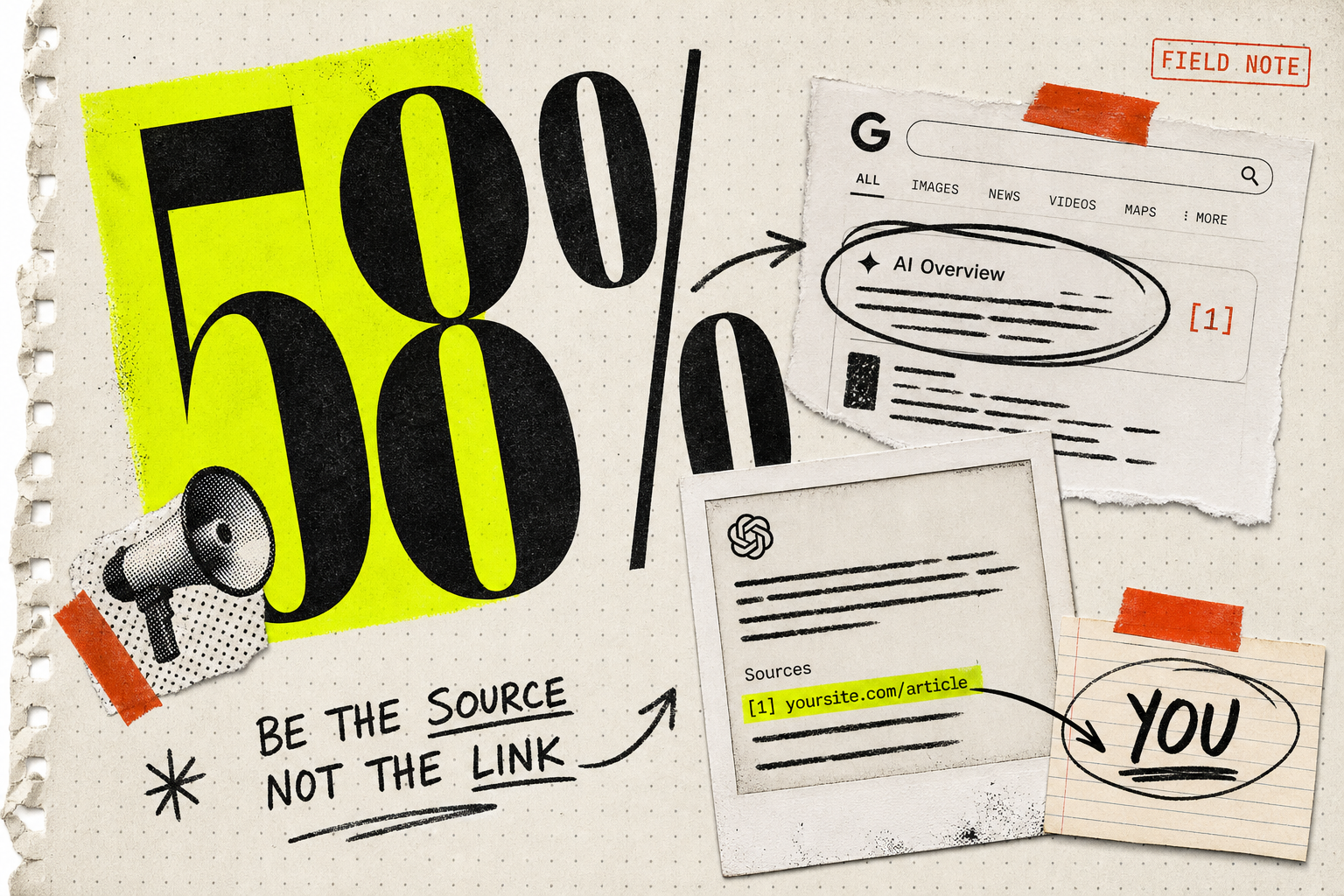
How To Get Cited By ChatGPT And Google AI Overviews
Position-one Google clicks are down 58% because of AI Overviews. The new game is getting cited by ChatGPT and Perplexity. Here's the 5-part playbook.
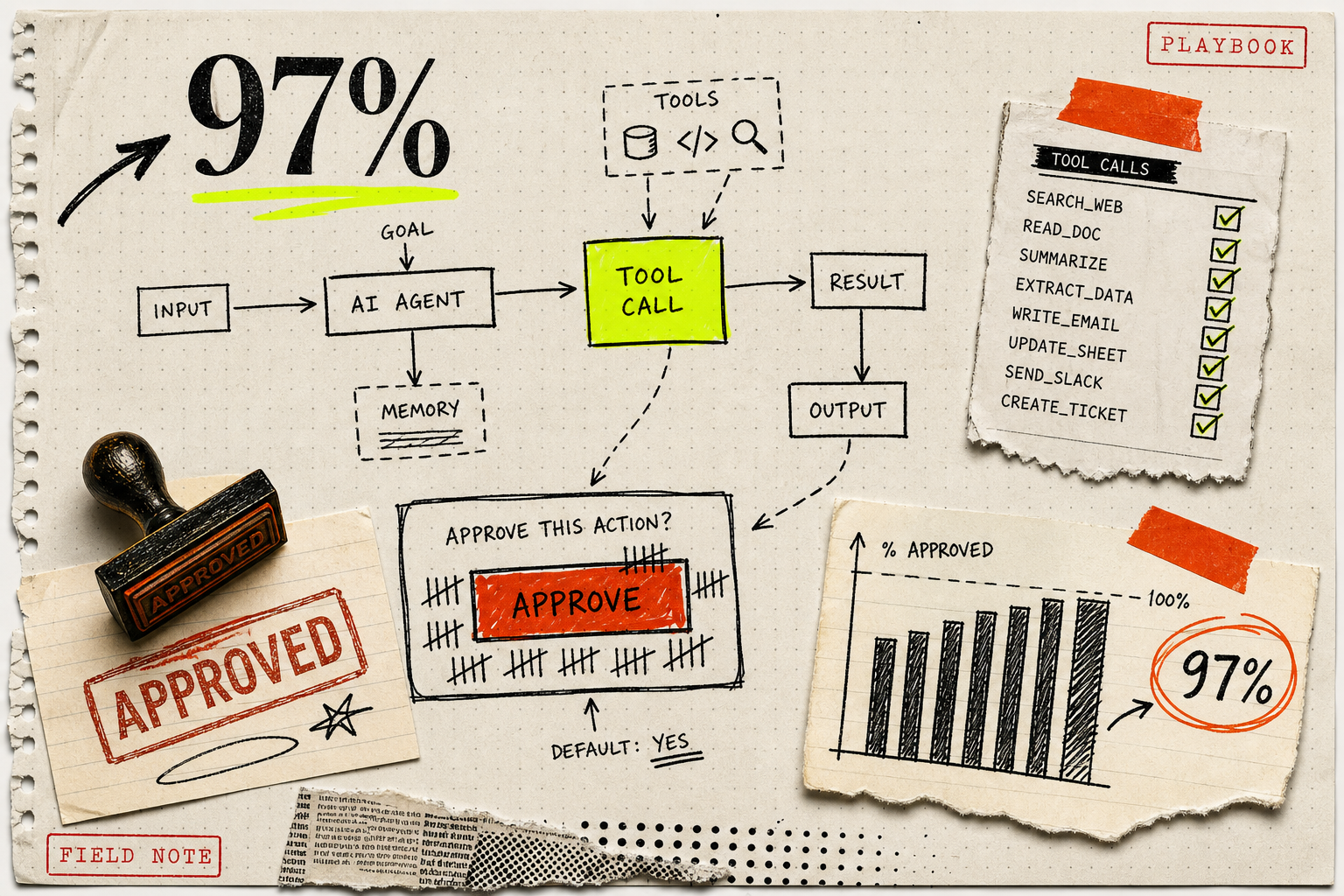
Your Humans Approve 97% Of What The AI Does. That's Not Oversight.
Anthropic just measured it: developers approve 97% of the permission prompts AI agents ask them. Here's how to build oversight that actually works.
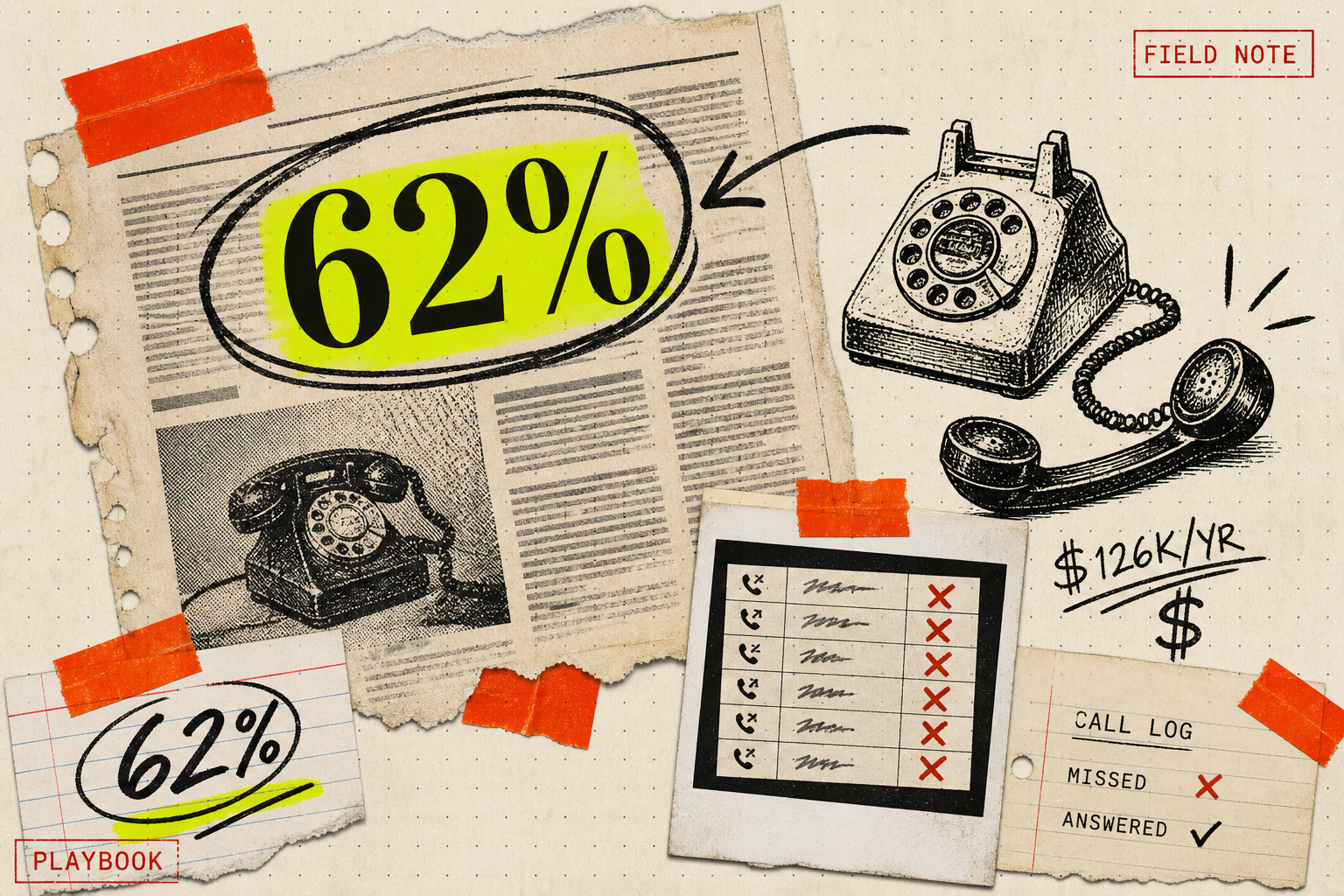
Your Business Misses 62% Of Its Phone Calls. Here's The Fix.
Small businesses miss 62% of inbound calls — a $126K/year leak on average. Here's the AI voice receptionist stack that plugs it, with real costs and a rollout plan.