The Best AI CRM For Small Business Is Not A CRM
Most 'AI CRM' pitches are dashboard candy priced like autonomous agents. Here's what a $2M-$20M business actually needs to buy, and what to skip.
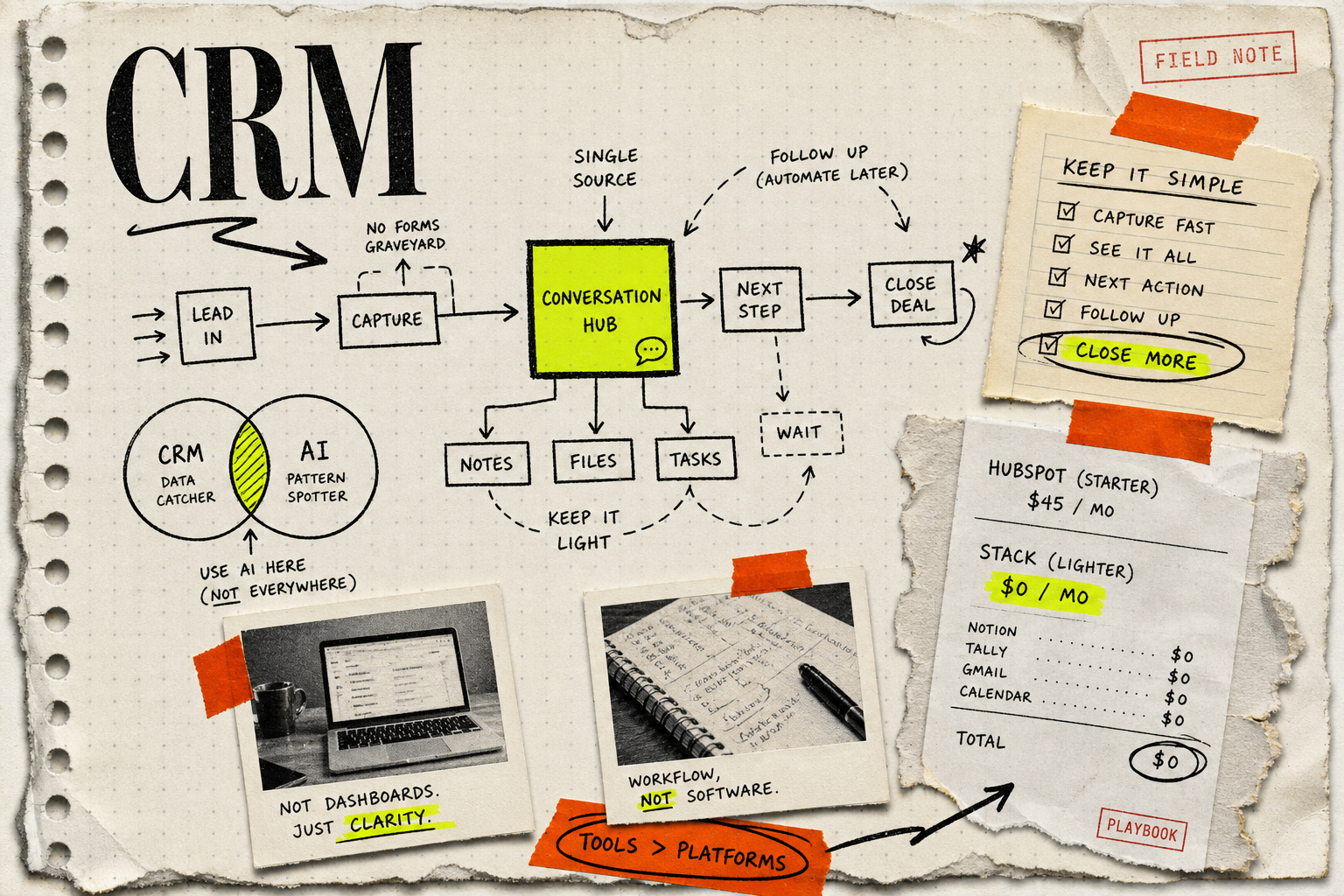
Every "best AI CRM for small business" list ranks the same six tools with slightly reshuffled logos. HubSpot at the top. Salesforce for the enterprise cousin. Then some combination of Zoho, Pipedrive, Attio, folk, and whichever new startup paid for the sponsored slot.
Almost none of it matters if you're running a $2M–$20M business. The question isn't which CRM has the shiniest AI panel. It's whether you actually need a CRM at all — and if you do, whether the "AI" bolted on top does anything a decent sales rep can't do faster with Claude and a Google Sheet.
Here's what I'd actually pick, and why most of the AI-CRM pitch is dashboard candy.
The number that should scare you before you buy anything
Gartner has been tracking CRM implementations for 20 years. The failure rate hasn't moved. Multiple 2025–2026 reports peg it between 30% and 70% depending on how you define failure. Johnny Grow's most recent number is 55%[1]. Gartner and Forrester's own historical figures sit at 50% and 47%[1]. Ascendix's 2026 review puts it at 50–70% of projects ending in shareholder losses, lost market share, or damaged careers[2].
Read that again. A coin flip. And the "AI CRM" pitch — the one you're being sold right now — is that adding an AI copilot to a system that already fails half the time will magically fix it.
It won't. Because AI didn't cause the failures. Bad data did. Sales reps not entering deals did. Managers running reports nobody used did. Bolting Einstein Copilot onto a graveyard of half-entered contact records makes the graveyard talk back — it doesn't make it a real pipeline.
What "AI" actually means in a CRM in 2026
I audited the AI feature pages of the six most-recommended small-business CRMs. Once you strip the marketing, the actual capabilities cluster into three buckets:
- Autocomplete for humans. Draft this email. Summarize this call. Score this lead. HubSpot Breeze, Salesforce Einstein, Pipedrive Sales Assistant, Zoho Zia — they all do this. It's useful. It's also a $20/month ChatGPT feature they're charging you $50–$150 per seat per month for.
- Rules dressed up as intelligence. "AI-powered" lead routing that's an if/then. "AI predictions" that are a linear regression on close date. Zoho's Zia has done this since 2017 — the models got better, the marketing got louder.
- Actual autonomous agents. Salesforce's Agentforce, HubSpot's newest Breeze agents, and a handful of startups (Attio, 11x, Clay) are shipping agents that book calls, qualify inbound, or enrich records without a human clicking a button. This is the only bucket where "AI CRM" means something new.
Bucket 3 is real. Buckets 1 and 2 are what most SMB "AI CRMs" actually ship, priced like Bucket 3.
The market has actually consolidated
HubSpot has 299,458 customers, 5–6% of the global CRM market by revenue, and adds 9,000–10,000 new customers a quarter[3]. It holds 62% of small-business CRM installations. Salesforce leads mid-market at 46%[4]. 71% of small businesses have adopted a CRM, and 65% of those adopted within their first five years[4]. This is a mature category.
Which means the honest answer to "what's the best AI CRM for my $5M business" is boring: HubSpot's free tier still crushes for most of you. Add Breeze when the seat count justifies it. If you're technical, run Attio for the flexibility and pay the setup cost in exchange for a system you actually own[5].
But that's not the interesting question. The interesting question is why you're buying one at all.
The three cases where you actually need a CRM
I've watched too many $3M businesses buy Salesforce because the founder read a growth book. Here's the honest filter.
You need a CRM if:
- You have three or more people touching the same prospect and things get dropped
- Your sales cycle is longer than 30 days and you can't remember what stage each deal is in
- You're doing outbound at volume and need to track sequence performance
You do not need a CRM if:
- You're solo or two people and your inbox works fine
- Your sales cycle is a single call
- You're a fulfillment business, not a sales business
For roughly half the operators asking me "which AI CRM should I buy," the answer is: none. You need a shared inbox, a spreadsheet, and 40 minutes of your assistant's time each week. That's not a product I can sell you. It's also the truth.
What the AI actually saves you, in hard numbers
When AI in a CRM works, here's what it moves:
- Meeting note transcription and CRM entry. Saves reps ~15 minutes per call. At 20 calls per week, that's 5 hours. Real.
- Lead scoring and routing. Cuts response time to inbound from hours to minutes. Responding to a web lead inside 5 minutes is 21x more likely to qualify than responding 30 minutes later, per the classic MIT/InsideSales lead-response study still cited industry-wide[6].
- Draft-first email sequences. A rep going from cold-page to first draft in 30 seconds vs. 15 minutes.
None of this requires you to move CRMs. You can add most of it to your existing stack for $50–$200 per month in tools. The trap of "AI CRM" as a category is that vendors package this as a $200-per-seat upgrade tier because they can.
What I'd actually build for a $5M business today
If a hospitality operator or DTC founder asked me for the stack today:
- HubSpot free tier for contacts, deals, and shared inbox. $0.
- Fathom or tl;dv for meeting recording and auto-CRM logging. $19 per user.
- Claude + n8n for a lead-routing and first-draft-email agent that reads new inbound, scores it against your ICP, drafts a reply, and pings the right rep in Slack. Setup: one weekend. Ongoing: ~$40/month in tokens.
- A weekly Loom from the founder reviewing 10 deals with the sales team. This is not AI. It's still the biggest lever.
Total: under $200/month per rep. About 20% of what Salesforce Sales Cloud plus Einstein would cost. Better data. Faster iteration. And you own the workflow — not the vendor.
The startup vendors know this, which is why the fastest-growing "AI CRMs" like Attio, folk, Coffee.ai, and Knowlix are all pitching flexibility and API-first over feature bloat[5]. That's the right instinct. It's also two years behind what you can build yourself with the same LLMs they're renting.
The bottom line
Most "best AI CRM for small business" content is affiliate marketing wearing a suit. The real answer depends on three variables — team size, sales cycle length, and whether you have anyone technical — and for most $2M–$20M businesses, the winning move is a lightweight CRM plus a custom agent layer you actually control.
If you want that built without spending your next quarter evaluating vendors, that's what I do. Book a 30-minute audit. I'll tell you in the call whether you need a CRM at all, which one fits, and what the AI layer should actually be doing for you. No pitch, no upsell tier.
-
The CRM Failure Rate is 55% in 2025↩
Multiple analyst firms peg CRM failure rate between 30-70%; Johnny Grow's aggregated 2025 average is 55%.
-
Why Most CRM Implementations Still Struggle in 2026↩
Gartner/Forrester data cited: 30-70% of CRM projects fail; recent 2025 Johnny Grow research puts the average at 55%.
-
HubSpot Market Share 2026: CRM Share, Revenue & Customers↩
HubSpot has 299,458 customers, 5-6% global CRM market share by revenue, adds 9,000-10,000 net new customers per quarter.
-
CRM Statistics 2026: 80+ Facts and Data↩
71% of small businesses have adopted CRM; HubSpot holds 62% of SMB installations, Salesforce leads mid-market at 46%.
-
Attio CRM Review 2026: Features & Pricing↩
Attio is worth it for startups, PLG, and modern GTM teams that need a flexible, data-driven CRM with fast setup and native AI.
-
The Short Life of Online Sales Leads↩
Contacting a web lead within 5 minutes vs 30 minutes yields ~21x greater likelihood of qualifying the lead.
Ready to build your own AI system?
Book a Free Audit Call →Keep Reading
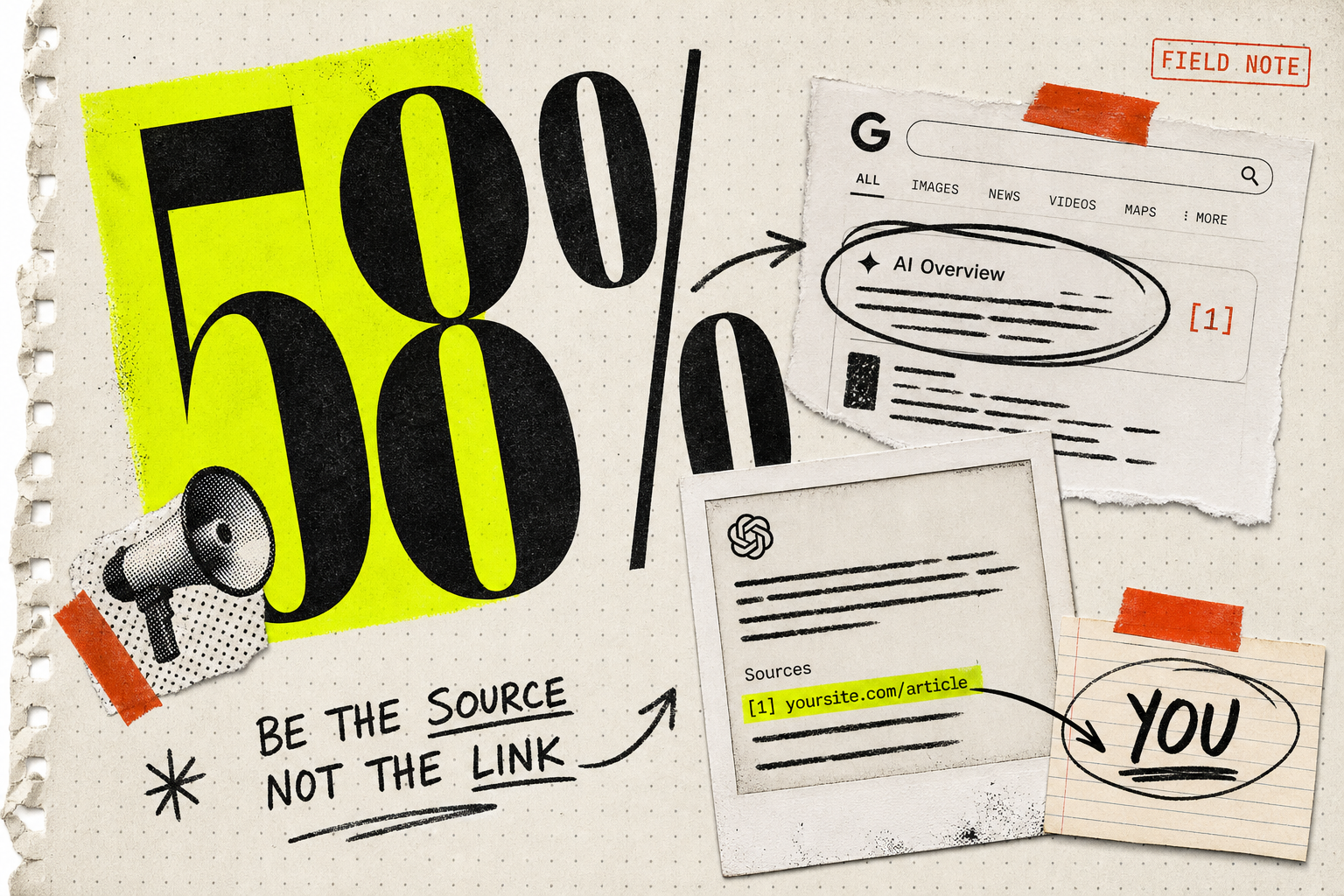
How To Get Cited By ChatGPT And Google AI Overviews
Position-one Google clicks are down 58% because of AI Overviews. The new game is getting cited by ChatGPT and Perplexity. Here's the 5-part playbook.
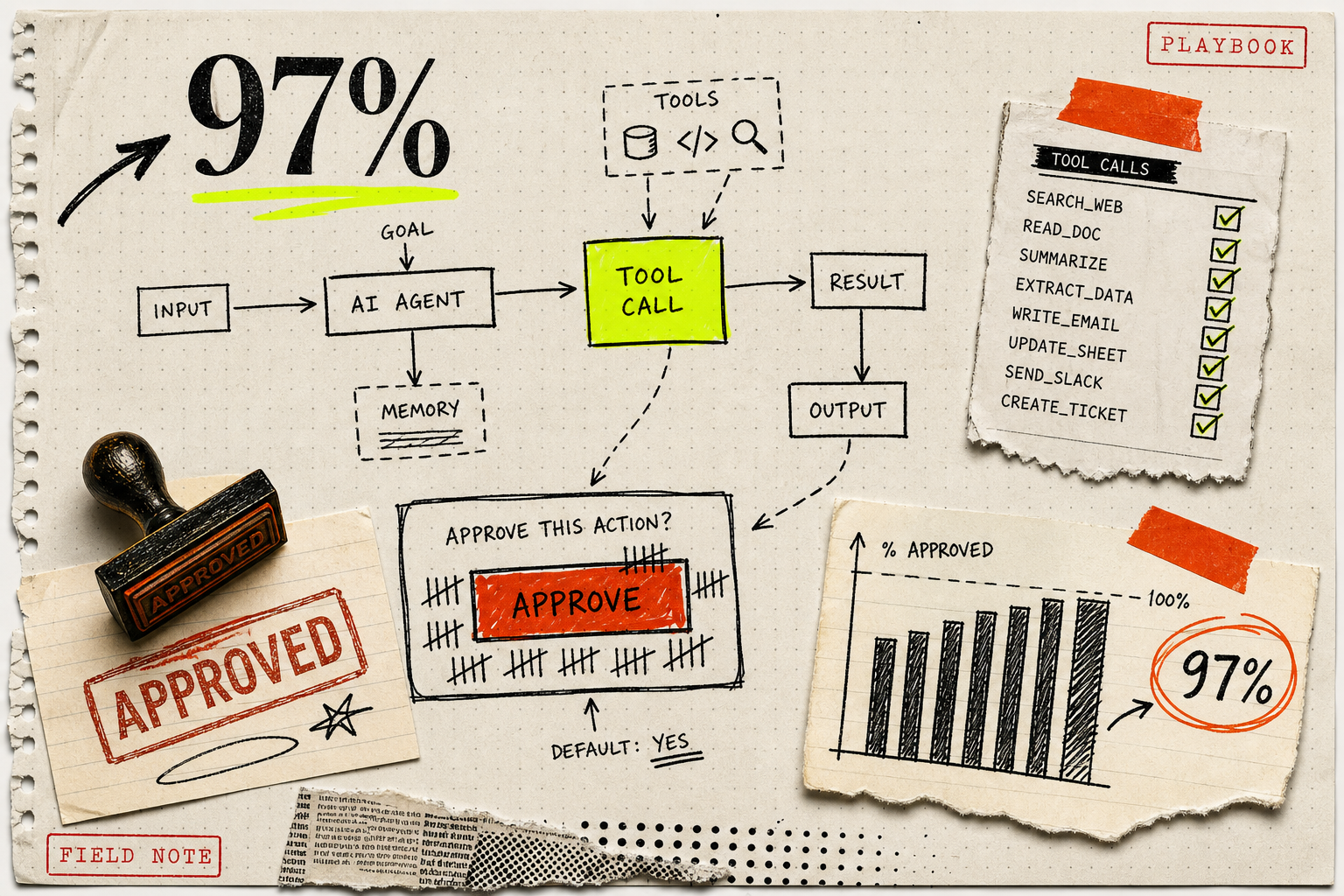
Your Humans Approve 97% Of What The AI Does. That's Not Oversight.
Anthropic just measured it: developers approve 97% of the permission prompts AI agents ask them. Here's how to build oversight that actually works.
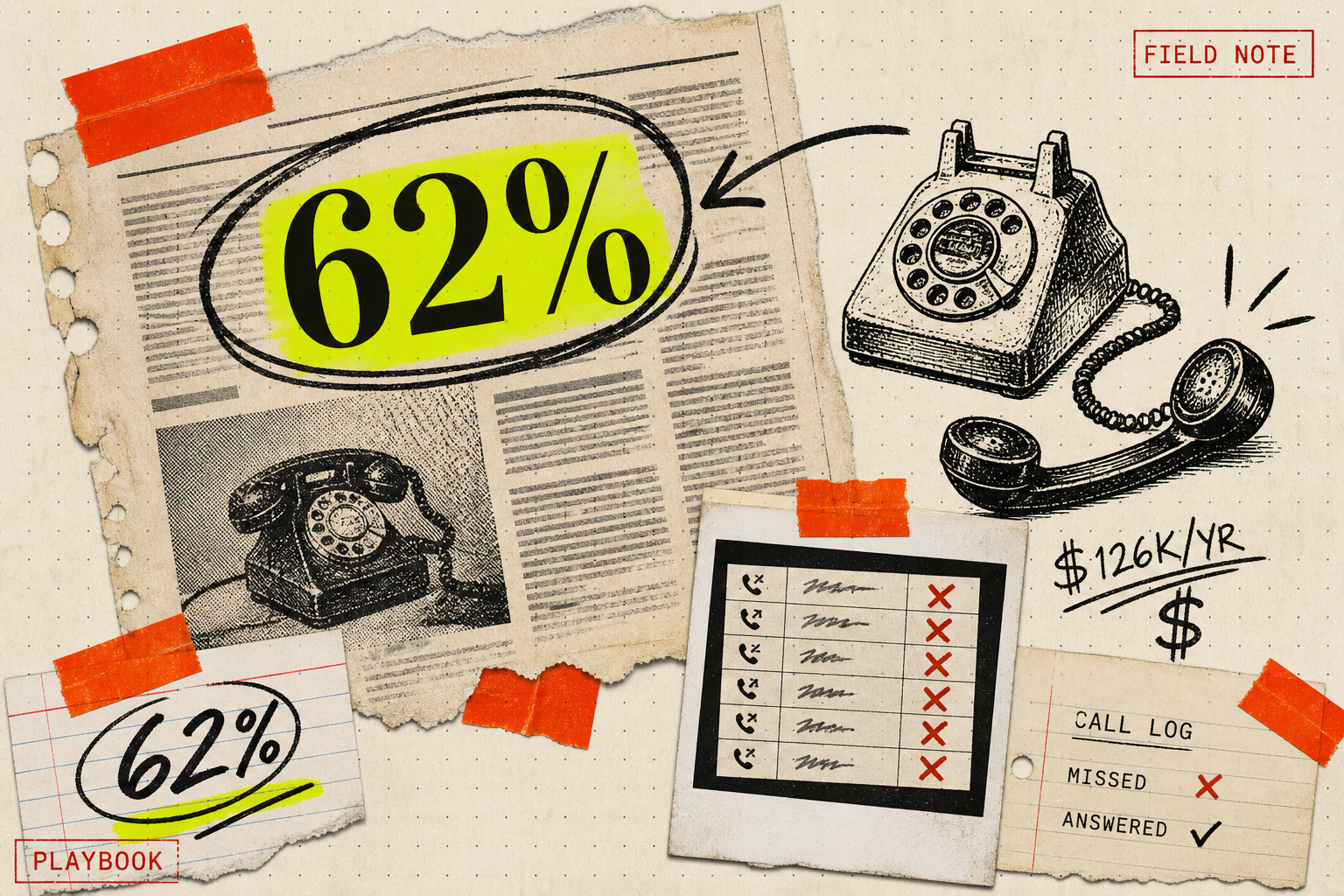
Your Business Misses 62% Of Its Phone Calls. Here's The Fix.
Small businesses miss 62% of inbound calls — a $126K/year leak on average. Here's the AI voice receptionist stack that plugs it, with real costs and a rollout plan.