ChatGPT Can't See Your Store. Here's What To Fix First.
Your Shopify store is already enrolled in ChatGPT's agentic storefronts. That doesn't mean it's visible. Here's the exact 30-day fix I'd run today.
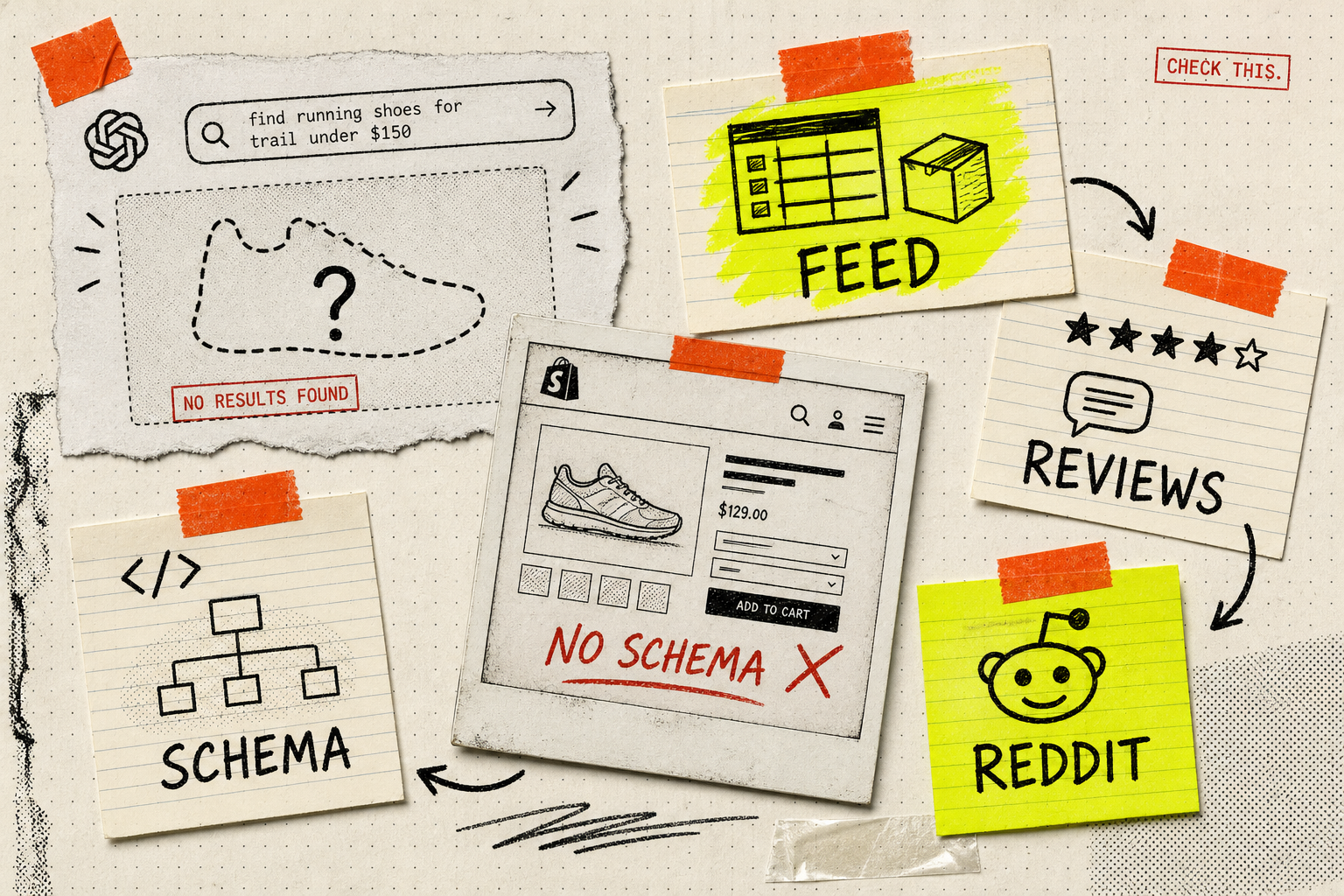
ChatGPT now handles 900 million weekly users[1], and roughly 36% of Walmart's referral traffic already comes from it[2]. Shopify auto-enrolled over 2 million US merchants into "Agentic Storefronts" in ChatGPT on March 11, 2026[3]. Your store is probably "enrolled" too. It's also probably invisible.
Here's the gap nobody is naming clearly: enrollment is not visibility. Being in the index is not being in the answer. And the brands winning the new shopping layer — Glossier, SKIMS, Spanx, Vuori — got there on purpose[4].
This is the playbook I'd run if I ran a $1M–$20M DTC store today.
What actually changed
Three protocol shipments, three months, one new search layer:
- September 2025 — OpenAI and Stripe ship the Agentic Commerce Protocol (ACP), an open spec for product feeds, carts, and delegated payments[5].
- March 11, 2026 — Shopify auto-activates Agentic Storefronts in ChatGPT for eligible US merchants[3].
- Q1 2026 — Adobe measures AI-driven traffic to US retail sites up roughly 670% in the first month of the 2025 holiday season[6]. ChatGPT alone drove a +393% YoY jump in retail referral traffic[1].
That's the volume. Now the catch.
Walmart's own data: conversion was three times lower for purchases completed inside ChatGPT versus ones that redirected back to walmart.com — that's from Walmart EVP Daniel Danker, who told WIRED the chatbot underperformed across 200,000 tested items[7]. OpenAI quietly pulled back from native checkout for the same reason[6].
So the actual game in 2026 isn't "win the in-chat checkout." It's "be the brand the agent recommends, then take the click."
That's a different sport than SEO. It has different rules. And almost nobody is playing them yet.
Why most stores are invisible
I've looked at a lot of Shopify stores this year. The pattern is consistent.
The product copy is written for buyers — which sounds right, until you remember agents are the buyer now. The agent reads the title, the description, the schema, the metafields, the structured data, the reviews, the Reddit threads about you, the price you list on Google Shopping versus the one on your site. Then it decides whether to surface you.
Three things kill you fast.
1. Vague claims
"Our hand cream is luxurious and effective" tells the agent nothing it can match to a query. "Unscented hand cream, 50ml, beeswax + shea butter, no parabens, $24" is matchable. One of these gets surfaced for "best fragrance-free hand cream under $30." The other doesn't.
2. Inconsistent data
Established brands are already losing position overnight when their content isn't structured in a way agents can parse reliably — Fortune reports agents now drive up to 10% of revenue for some brands and zero for others on the same shelf[8]. If your price on Google Shopping says $45 and your Shopify says $49, the agent flags it and skips you[9].
3. No third-party signal
Agents weight outside sources — Trustpilot, Reddit threads, industry blog mentions — heavier than your own copy. On-site content alone is not enough[9].
This is the part most operators won't want to hear: the agent doesn't trust your product page. It trusts what the internet says about your product page.
The 30-day fix
Here's what I'd actually build, in order, if I had one month and a $5M Shopify brand.
Week 1 — Audit and instrument
Pull every product feed you have — Shopify, Google Merchant Center, Meta catalog. Diff them. Every price mismatch, every missing field, every "N/A" in the brand or material column is a vote against you. Fix the schema first, before any copy work.
Then sign up for a generative engine optimization tool — Profound, Peec AI, or the AI Visibility tracker inside Ahrefs/Semrush — and baseline your share of voice across ChatGPT, Gemini, and Perplexity for your five biggest buyer queries. You can't fix what you can't see, and Q1 share-of-voice is what we're going to move.
Week 2 — Rewrite product copy for retrieval
Take your top 20 SKUs by revenue. Rewrite the descriptions to be answer-shaped — short, specific, claim-dense.
A good test: read the description out loud and ask, "could ChatGPT lift one sentence from this and recommend it confidently?" If yes, ship it. If no, it's marketing fluff.
Add structured data — product schema, FAQ schema, review schema — on every PDP. The ACP feed spec is publicly documented[5][10]; mirror its required fields in your on-site schema and you're already ahead of 90% of competitors.
Week 3 — Build the third-party signal
This is where most brands quit and where the moat actually lives.
Run a 2-week PR push targeting the five publications and three subreddits your buyers read. Not link-building — citation building. Get your brand mentioned in lists, comparison posts, "I tried X for 30 days" reviews, and forum threads. The agent reads all of it. Reviews on Trustpilot, Reddit threads, Substack mentions — these are the citations that move you from "indexed" to "recommended."
If you can't get organic mentions in two weeks, run a $5–15K creator burst across 10–15 mid-tier YouTubers and TikTokers in your category. Specifically ask for written show notes and blog posts on their sites alongside the video — the agent indexes those, not the video.
Week 4 — Onboard the protocols
Apply for ChatGPT Instant Checkout via the ACP integration[10]. Yes, conversion is lower in-chat than on-site today. Do it anyway — because the redirect path also works through the same enrollment, and being listed gets you into the agent's consideration set. Enable Google's Universal Commerce Protocol via Shopify's Agentic Storefronts UI. Enable Microsoft Copilot and Perplexity surfaces if eligible.
Set up monitoring on share-of-voice across the four big surfaces. Track it weekly. If you're not moving up, your third-party signal is the bottleneck — not your store.
The opinion most operators don't want
Agentic commerce is not a new acquisition channel. It's a redistribution of an existing one.
The brands that were already winning organic search and word-of-mouth — clear positioning, strong product reviews, consistent data, real third-party citations — get amplified by agents. The brands that were winning paid (Meta plus Google ads, no organic moat) are about to feel a cold draft. Adobe's data already shows it: AI-driven traffic surged 670% in one month while paid CACs kept climbing[6].
If your growth engine is 80% paid right now, agentic commerce is a small fire under your business that will get larger every quarter. Not because agents will replace ads — they won't. Because the cost of "being trusted" is going up, and ads don't buy trust.
The fix isn't more agency spend. It's a 30-day product-data and citation sprint, executed once, that compounds for the next 18 months.
Want this run on your store?
This is the kind of project I build with a single operator over four weeks — audit the feeds, rewrite the data layer, set up the GEO tracking, and run the citation push. If you want a version of this run on your store, book a 30-minute audit. I'll tell you exactly what your version would look like — and which of the four weeks above is the one actually breaking your visibility today.
-
ChatGPT Commerce & Agentic Shopping Statistics 2026↩
900M weekly ChatGPT users; +393% AI retail referral traffic Q1 YoY 2026.
-
ChatGPT Instant Checkout: ACP Protocol Retailer Guide (2026)↩
Walmart receives ~36% of its referral traffic from ChatGPT (citing Modern Retail).
-
Shopify Activates Agentic Storefronts in ChatGPT by Default↩
Shopify auto-activated Agentic Storefronts in ChatGPT for eligible US merchants on March 11, 2026 — over 2M stores enrolled.
-
AI Shopping Assistant Guide 2026: Agentic Commerce Protocols↩
Glossier, SKIMS, Spanx, Vuori announced as early Shopify ACP partners.
-
Agentic Commerce Protocol (ACP) — open specification↩
Open ACP spec maintained by OpenAI and Stripe — defines product feeds, carts, delegated payments.
-
OpenAI Just Did Retailers A Favor By Killing In-Chat Checkout↩
Adobe: AI-driven traffic to US retail sites up ~670% in first month of 2025 holiday season; OpenAI pulled back from native in-chat checkout.
-
Walmart: ChatGPT checkout converted 3x worse than website↩
Walmart EVP Daniel Danker told WIRED that conversion was 3x lower for purchases completed inside ChatGPT vs. redirect to walmart.com, across 200,000 tested items.
-
AI agents are already driving 10% of revenue for some brands. Is yours invisible to them?↩
Brands lose positions overnight when content is not structured for agents; AI agents already drive ~10% of revenue for some brands.
-
GEO for Shopify: How to Optimize Your Store for AI Search (2026)↩
AI engines weight third-party sources heavily; price/data inconsistencies between Google Shopping and on-site cause agents to skip the listing.
-
Get Started — Agentic Commerce↩
OpenAI's ACP integration guide — start with a structured product feed.
Ready to build your own AI system?
Book a Free Audit Call →Keep Reading
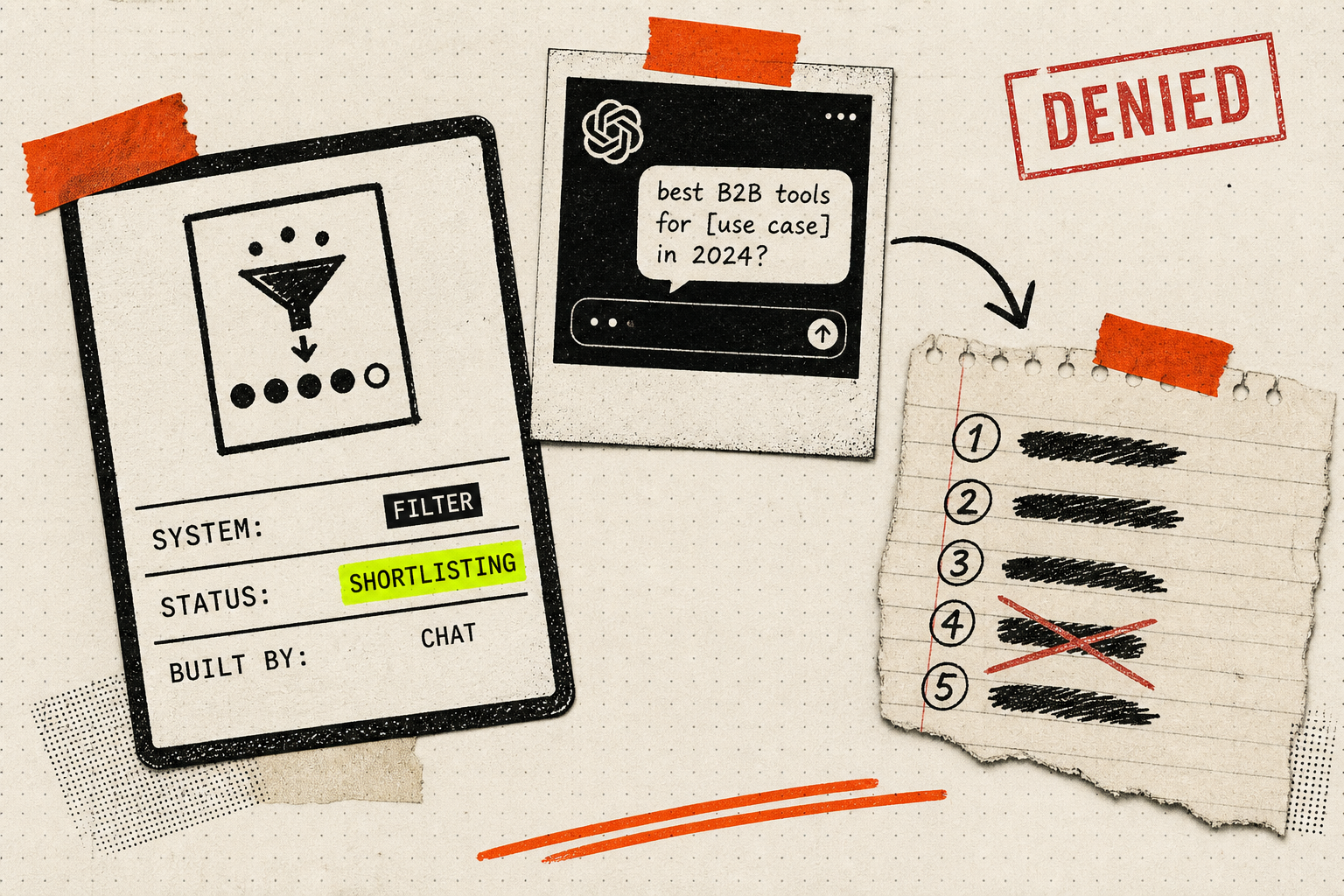
Buyers Shortlist You In ChatGPT Before You Know They Exist
51% of B2B buyers start vendor research inside an AI chatbot. If you're not in the model's shortlist, your funnel already ended. Here's the fix.
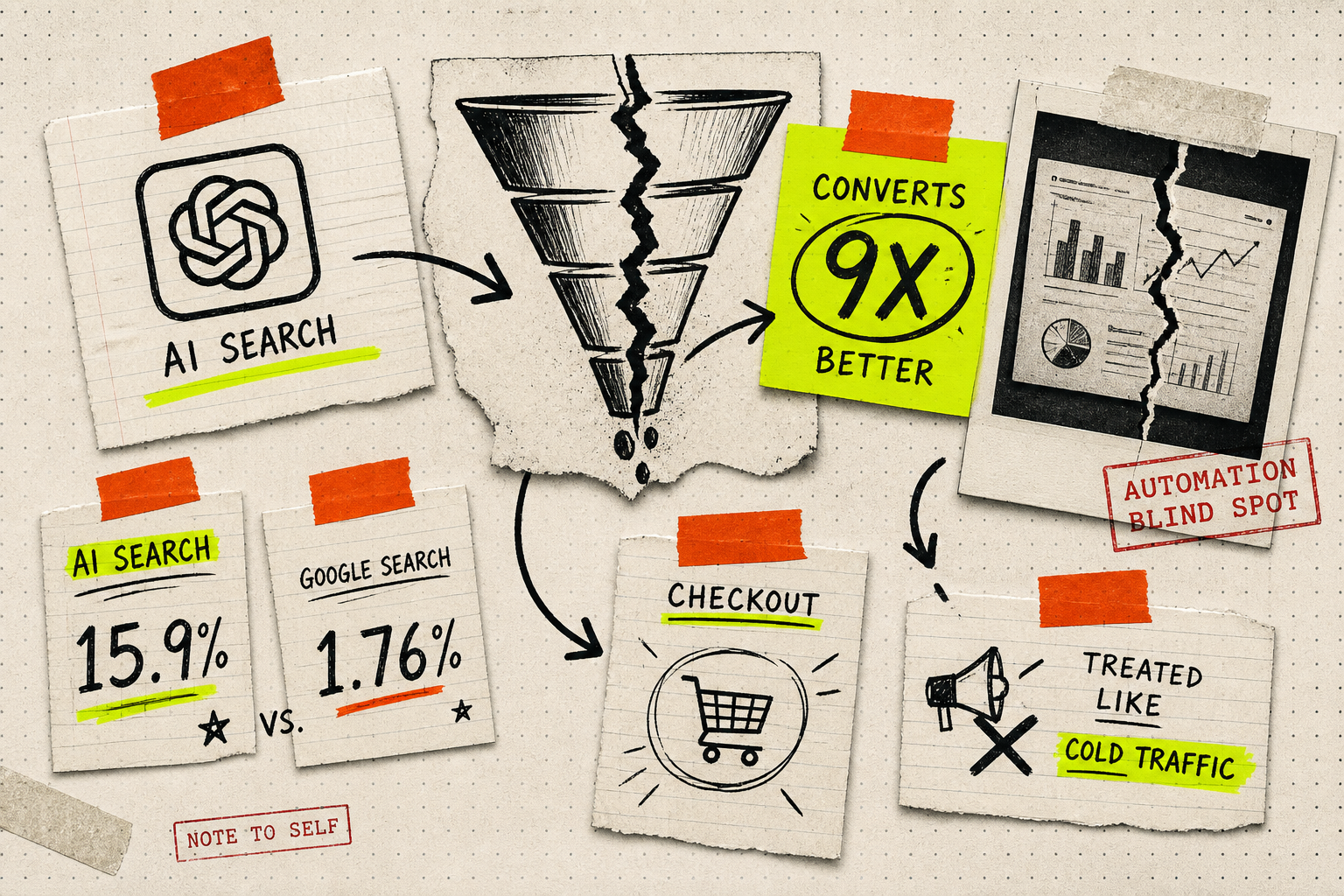
AI Search Broke Your Funnel. Your Automation Doesn't Know Yet.
ChatGPT traffic converts at 15.9%. Google at 1.76%. Your marketing automation is treating both the same — and burning your best leads.
Your Business Is Invisible In ChatGPT. Here's Why.
Your customers are asking ChatGPT for a plumber, a Shopify agency, a bookkeeper — and your business isn't in the answer. Here's why, and the 4-part fix.