GLM 5.2 Costs 80% Less Than Claude. Your Stack Is About To Get Cheap.
Lindy just moved 100% of its production traffic off Claude to DeepSeek. Here's the model-routing playbook every business should run this week.
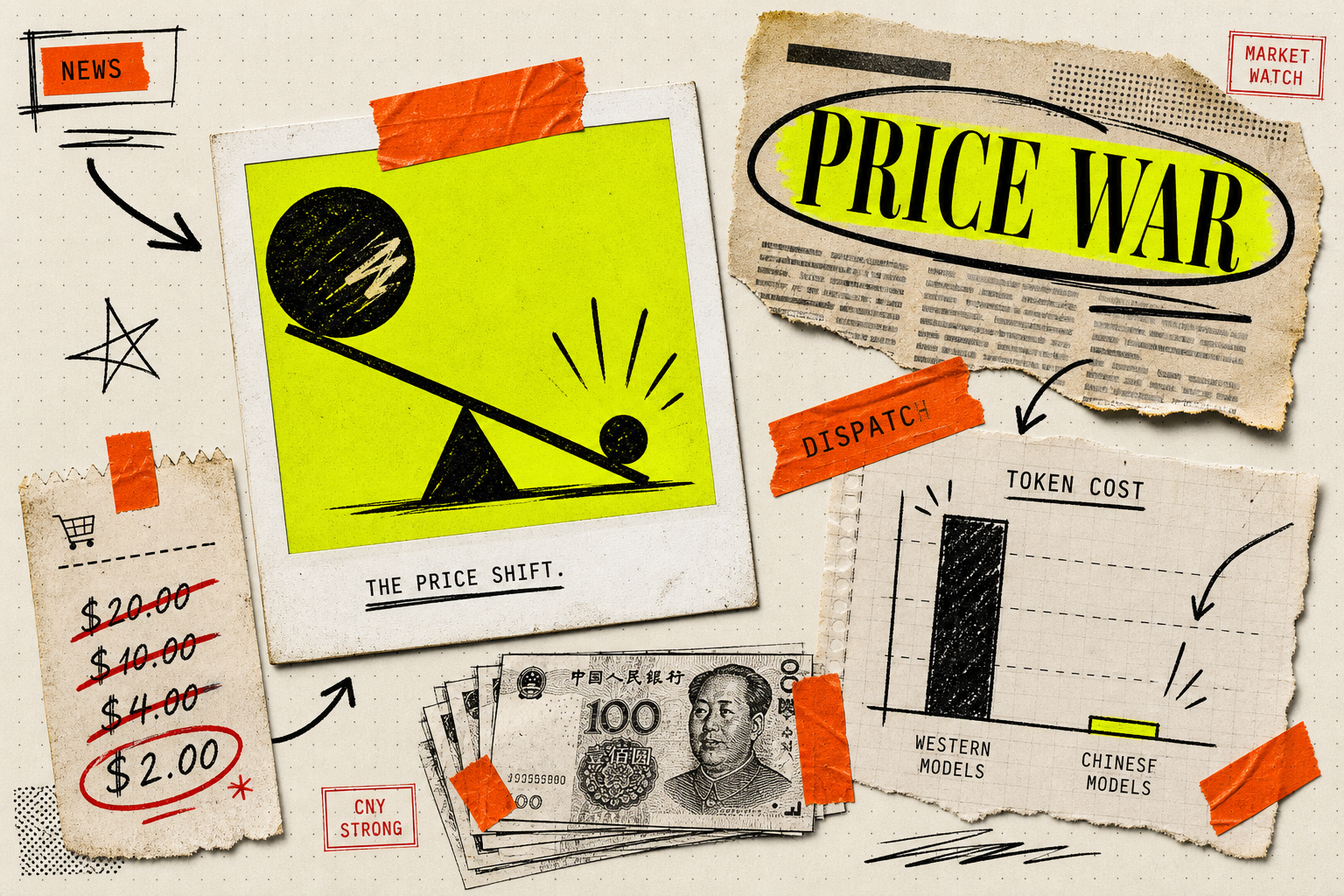
Lindy — an AI agent startup — moved 100% of its production traffic off Anthropic's Claude models and onto DeepSeek in June. CEO Flo Crivello said the switch will save the company millions of dollars within months[1]. That's not a stunt. That's the trade every operator with an AI bill is about to run.
Chinese models — DeepSeek V4, Z.ai's GLM 5.2, Alibaba's Qwen — now handle 30%+ of tokens processed through OpenRouter every week since February, peaking at 46%[2]. Twelve months ago that number was 11%. In the first half of 2025 it was 4.5%[2]. Something snapped.
Most of the LinkedIn coverage frames this as a geopolitics story. It's not. It's a pricing story with a real payoff for anyone running a business that's currently paying $8,000/month to Anthropic and wondering if it needs to.
Here's what actually changed, and what I'd do if it were my P&L.
The number that matters
Chinese open-source models are running 60% to 90% cheaper than Anthropic and OpenAI's flagship models for comparable output quality, according to OpenRouter's data team[3].
The specifics:
- GLM 5.2 (Z.ai) landed within a percentage point of Anthropic's Opus 4.8 on one closely-watched agentic benchmark — at roughly one-fifth the cost[4].
- DeepSeek V3.2 scored 79 on a public quality benchmark at $0.28 per million output tokens. Claude Opus 4.6 scored 100 — at $25 per million[5]. That's 89x more expensive per token for a 26% quality delta.
- Qwen 3.7 Max — Alibaba — is the cheapest model in the current top-10 leaderboard at $1.25 per million tokens[6].
For an operator running a $20M business, "80% cheaper" isn't a research paper. It's a line item that just got smaller. Uber reportedly burned its entire 2026 Anthropic budget in a few months[7]. Citi at one point shut off employee access to Anthropic and OpenAI's most expensive models over cost[8]. If Citi is nervous, you should be running the math on your own stack.
Why this happened faster than anyone predicted
Two things collided.
First, the Chinese labs stopped being a novelty. When DeepSeek shipped in January 2025, everyone called it a one-off. It wasn't. Chinese models accounted for nearly half of all open-source AI downloads on Hugging Face between February 2025 and 2026[9]. Brookings' Kyle Chan estimates they're now "six to nine months" behind US frontier models[10] — close enough to matter for most business workloads.
Second, US frontier prices went up, not down. OpenAI and Anthropic keep releasing more expensive tiers, not cheaper ones. Corporate America has been calling this "AI sticker shock" for months[11]. Meta, Amazon, Tesla, and Adobe have all reportedly clamped down on employee AI usage over cost[11]. The message from every finance team is the same: this bill is not sustainable.
That's the setup. A market that finally has options — and buyers who finally have a reason to look.
What most operators are getting wrong
The takes on LinkedIn and X are running two extremes.
Wrong take #1: "Chinese models are equal to Claude and 90% cheaper — switch everything." No. They're not equal. They're six-to-nine months behind on the hardest tasks, and hard tasks include most of what a $1M–$20M business actually needs an agent to do reliably: multi-step reasoning, tool use with recovery, following a long system prompt without drift.
Wrong take #2: "Chinese models are a national security risk — don't touch them." Maybe true for defense contractors. Not relevant for a Shopify brand routing customer service tickets. And every open-weight Chinese model can be self-hosted on your own infrastructure — no data leaves your VPC. That's actually more control than you have with Anthropic's API.
The right frame is the one Harpreet Arora at Vercel gave to CNBC: "When a task doesn't need the best model, teams are beginning to route it to the cheapest one that's good enough"[12]. This is called model routing, and it's the actual play.
The routing playbook I'd build for a $5M business
If I were rebuilding an AI stack today, I'd sort every LLM call into three buckets:
Bucket A — Frontier only. Things where a bad answer costs a customer, a lawsuit, or a deal. Legal review, contract summarization, complex reasoning agents that touch production data. Keep these on Claude Opus, GPT-5, or Gemini 3.1. Maybe 10% of your calls, 50% of your quality-sensitive workload.
Bucket B — Mid-tier. Content drafting, structured extraction, tool-calling agents, most customer-facing chat. This is where GLM 5.2 and Qwen 3.7 Max are already competitive. Route here first. This is probably 60% of your call volume.
Bucket C — Bulk work. Classification, tagging, summarization, embedding generation, "did this email mention a refund" — anything where you're doing 100K+ calls a day. This should have been on the cheapest capable model six months ago. DeepSeek V4, an open-weight model self-hosted, or a small distilled model. Probably 30% of your volume, 5% of your cost.
That's it. Most operators are running Bucket A on Bucket A, Bucket B on Bucket A, and Bucket C on Bucket A — paying $25/M tokens to classify emails. The routing layer is the play.
The one thing nobody's saying out loud
There's a second-order effect the pricing pieces are missing.
If GLM 5.2 is 80% cheaper and 95% as good for most workloads, the entire "AI is expensive so we can only afford one use case" argument collapses. Instead of picking one agent to build this quarter, you can build five. Instead of running a monthly review of your token spend, you stop worrying about it. Instead of gatekeeping AI access from employees like Citi did, you turn it on for everyone.
The operators who win the next 12 months aren't the ones with the best model. They're the ones with the most models running the most jobs cheaply. Volume of automation beats sophistication of automation when the marginal cost approaches zero.
That's what actually changed this week.
The move
Don't rip and replace anything today. Do this instead: pull the last 30 days of your OpenAI or Anthropic bill. Sort by endpoint. Find the top three highest-cost endpoints that are doing bulk work — classification, summarization, tagging. Run those same calls through GLM 5.2 or DeepSeek V4 via OpenRouter for a week. Compare accuracy on a 100-call sample. If it holds, switch just those endpoints and pocket the savings. Everything else stays where it is.
That's the whole play. Not a rewrite. A routing decision.
If you don't want to spend a weekend testing this and would rather have someone map your actual token spend to the right models — Bucket A, B, or C — that's what the audit call is for. 30 minutes, I'll show you which endpoints are burning cash and which model should own them. Book it at zerocam.studio.
-
Chinese AI models are gaining ground with U.S. companies as OpenAI, Anthropic costs surge↩
Lindy CEO Flo Crivello confirmed moving 100% of AI traffic to DeepSeek will save millions within months.
-
Chinese AI models are gaining ground with U.S. companies as OpenAI, Anthropic costs surge↩
Justin Summerville (OpenRouter) says Chinese models are 60-90% cheaper than Anthropic/OpenAI flagships.
-
China's Answer to AI Sticker Shock↩
GLM 5.2 landed within a percentage point of Claude Opus 4.8 on an agentic benchmark at ~one-fifth the cost.
-
LLM API Pricing Comparison & Cost Guide (Jul 2026)↩
DeepSeek V3.2: quality 79 at $0.28/M output tokens; Claude Opus 4.6: quality 100 at $25/M.
-
AI Leaderboard 2026: Compare & Rank 300+ Top AI Models↩
Qwen 3.7 Max is the cheapest model in the current top-10 leaderboard at $1.25/M tokens.
-
Corporate America Is Experiencing AI Sticker Shock↩
Uber reportedly burned its entire 2026 Anthropic model budget in a few months.
-
Companies are throttling employees' AI use because it's too expensive↩
Citi at one point shut down employee access to OpenAI and Anthropic's most expensive models over cost.
-
China's Answer to AI Sticker Shock↩
Chinese models accounted for nearly half of all open-source AI downloads on Hugging Face Feb 2025-2026.
-
Chinese AI models are gaining ground with U.S. companies as OpenAI, Anthropic costs surge↩
Brookings' Kyle Chan estimates Chinese models are 6-9 months behind US frontier models.
-
Corporate America Is Experiencing AI Sticker Shock↩
Meta, Amazon, Tesla, and Adobe have reportedly clamped down on employee AI usage over cost.
-
Chinese AI models are gaining ground with U.S. companies as OpenAI, Anthropic costs surge↩
Vercel's Harpreet Arora: teams are routing tasks to the cheapest model that's good enough.
Ready to build your own AI system?
Book a Free Audit Call →Keep Reading
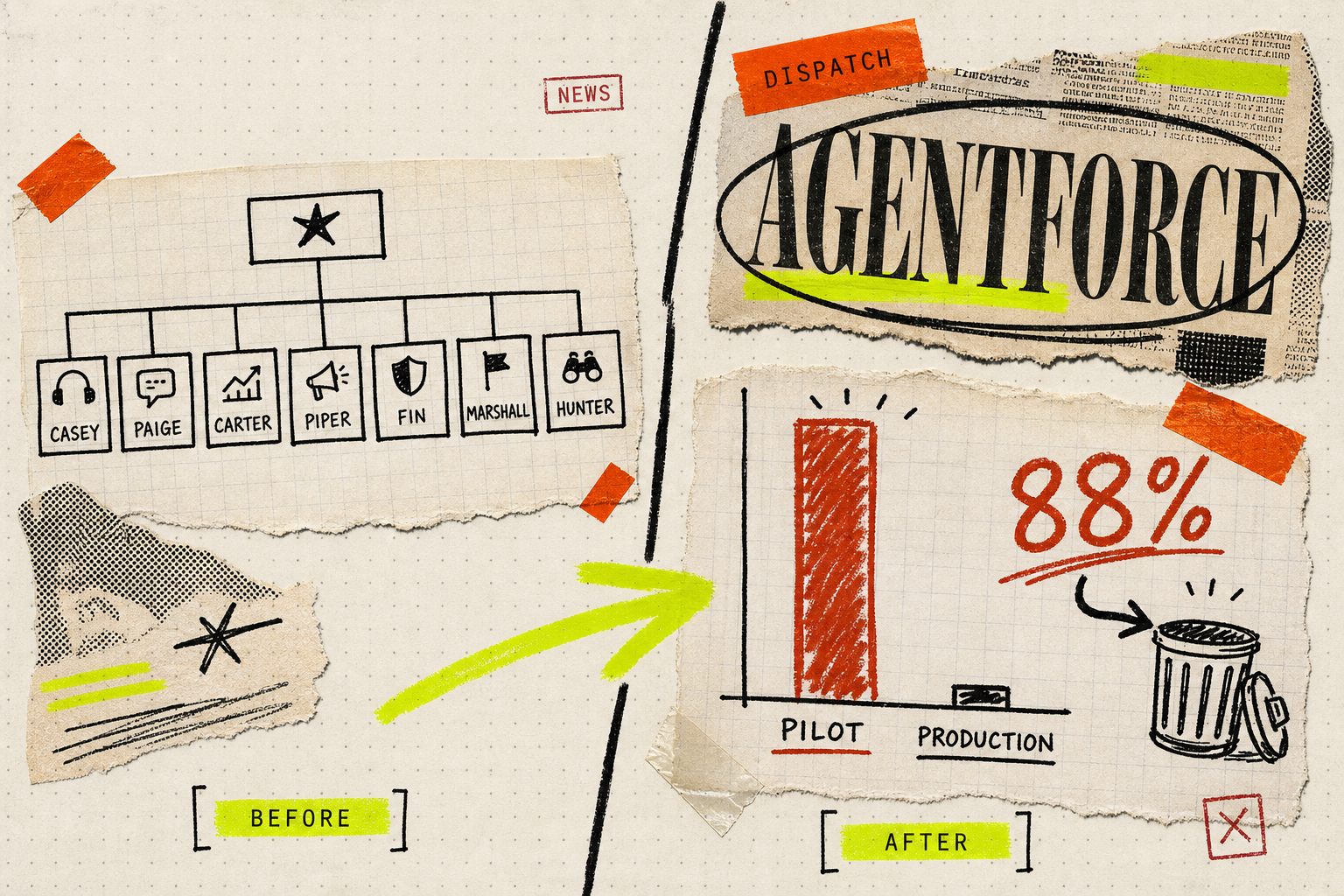
Salesforce Just Named Seven Agents. Enterprise AI Still Loses 88% Of Pilots.
Salesforce shipped 7 named Agentforce agents. But 88% of enterprise AI pilots still fail to reach production. Here's the real gap operators need to fix first.

Small Businesses Using AI Are Hiring More People, Not Fewer
Gusto ran payroll on 2,262 small businesses. AI adopters grew headcount 7% faster — 10% for under-10 firms. The doom takes miss the operator story.
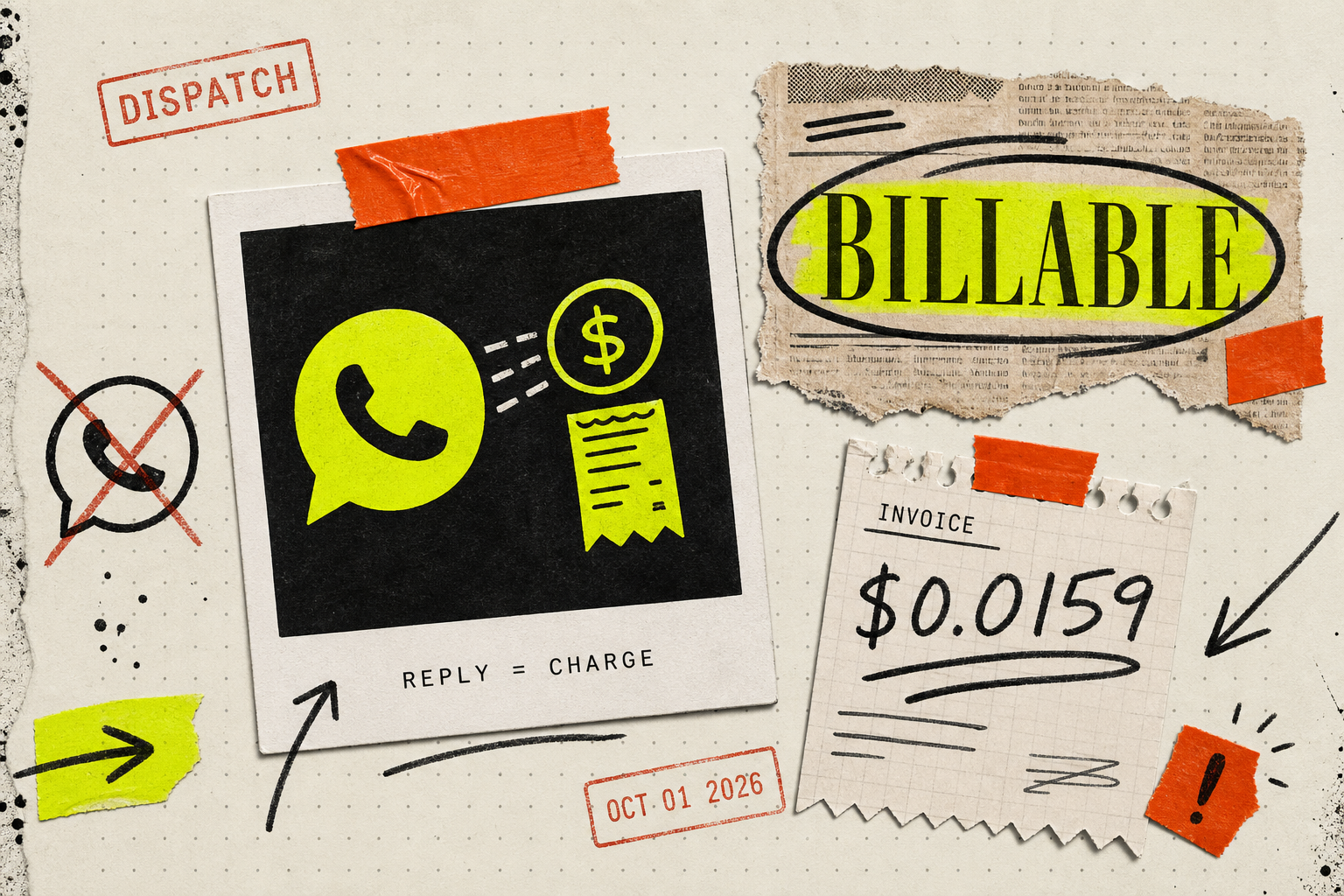
WhatsApp Just Made Every Reply Billable. Your Bot Bill Starts October 1.
On October 1, Meta starts charging for every WhatsApp reply — human, third-party AI, or its own. The sticker price is the boring part. Here's what it actually breaks.