Databricks Just Open-Sourced The Layer Above Your AI Agents. Read The Contract.
Databricks open-sourced Omnigent, a meta-harness above Claude Code, Codex, Cursor. The lock-in just moved up one layer. Here's the contract.
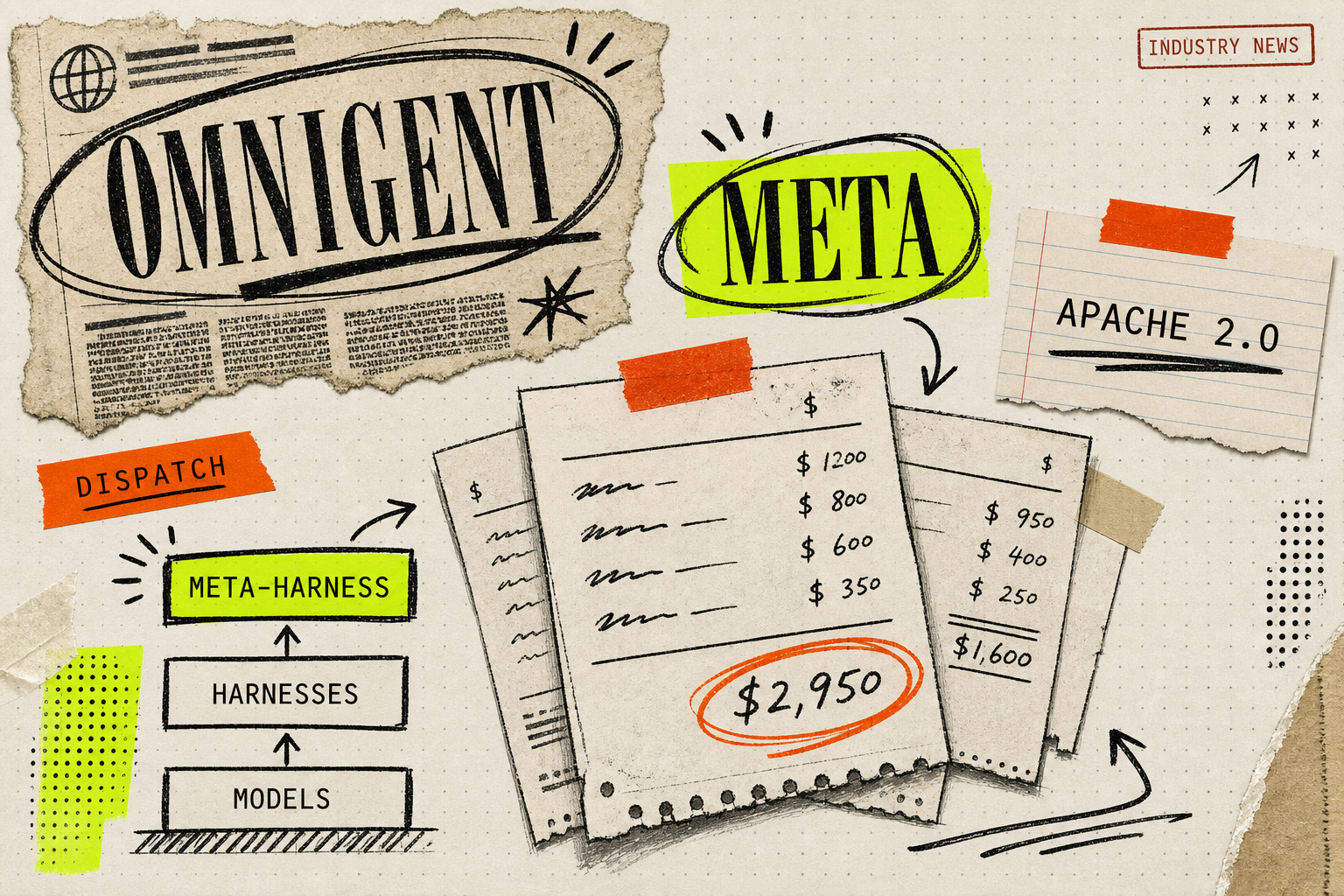
Databricks open-sourced a piece of software called Omnigent at their Data + AI Summit. Apache 2.0. Sits above Claude Code, Codex, Cursor, Pi, and whatever custom agents you've wired up[1]. Every LinkedIn thought-leader is calling it the "Kubernetes moment for agents."
Most of them haven't read what Omnigent actually does. And the ones who have are pitching it wrong to operators.
Here's the real story: the meta-harness layer is inevitable, and it's about to become the new SaaS lock-in — the layer where your vendor decides how much you spend, what your agents can touch, and how portable your setup is. Databricks just shipped the reference implementation under a permissive license so nobody else gets to own the standard first. That's the play. And if you run a business that's about to hire its second, third, or fifth AI agent, you should read the contract before you sign it.
What Omnigent actually is
Strip the marketing. Omnigent is a coordinator that wraps individual agent harnesses — Claude Code, OpenAI's Codex, Cursor, Anthropic's Pi, custom YAML-defined agents — and gives you three things that don't exist without it[2]:
- A single API to swap harnesses. Define an agent once; switch from Claude Code to Codex with a one-line change. No rewriting.
- Policies at the meta layer, not the prompt. Cost caps per session. Pause before a git push. Strip a GitHub token out of what the agent sees but inject it into the outbound request. This is real access control, not "please don't do that" written into a system prompt[3].
- Multi-user live sessions. Share a URL, teammates jump into an active agent session, comment on files, steer it live.
Databricks' framing is that they're doing to agent harnesses what Kubernetes did to servers — an abstraction that makes the thing underneath interchangeable. The comparison is not stupid. When you're running four or five agents concurrently — which Databricks says its own 5,000-person engineering team is doing right now, copy-pasting output between tools[3] — you either build this layer yourself or you rent one.
Why they open-sourced it
This is the part everyone is skipping.
Databricks did not open-source Omnigent because they love developers. They open-sourced it because the meta-harness layer is going to exist whether they build it or not, and if OpenAI or Anthropic or a well-funded startup ships one first, the standard gets defined by someone whose interests don't align with Databricks selling more data platform seats.
Look at what they kept. Omnigent is Apache 2.0 open-source[4]. But there's also a managed version running on Databricks, currently in beta. Same code, but the sandboxes, the cost accounting, the audit logs — those get better when you run it on their infrastructure. That's the classic move. Ship the standard for free. Sell the operations.
The pattern rhymes with what Google did with Kubernetes: open-source the orchestrator, sell the managed cloud version, watch the ecosystem accrete around your favored deployment target. Databricks isn't hiding this. Their own release notes say "AI needs a layer above the harness," and that Omnigent runs "independently of Databricks" — with a managed Databricks version in beta[4]. That's not a footnote. That's the business model.
The three things this changes for operators
If you run a $2M–$20M business and you're not writing enterprise infrastructure, most of this is inside baseball. But three consequences are going to reach you within 18 months.
1. The harness stops being the lock-in. The meta-harness becomes it.
Right now, if you build your outbound stack on Claude Code and Anthropic ships a bad quarter, migrating to Codex is a real project. That's harness lock-in. Omnigent (or the meta-harness that wins) makes the harness fungible — one YAML line to swap — but locks you into its policy model, its cost accounting, its session format, its integration list.
That's not necessarily worse. It's different. The moat moves up a layer. Which is exactly why every big vendor is about to ship one.
2. Runaway agent costs stop being a footnote.
Multi-agent workflows are already the norm. ECI Research's 2026 AI Builder Summit survey found roughly two-thirds of enterprise AI leaders have multi-agent collaboration running in live or pilot workflows[3]. And 70–95% of AI agents fail in production, mostly on compounding errors and runaway tool use[5]. The reason cost caps are Omnigent's headline feature is because inference bills are the number-one thing that kills agent projects before they hit steady state.
If your current agent stack has no per-session cost cap, no configurable pause threshold, no way to answer "what did I spend on this workflow last Tuesday" — you're not running agents in production. You're running a science experiment with a company credit card attached.
3. Governance becomes a purchase criterion, not a compliance checkbox.
MIT put a hard number on this last quarter: 95% of enterprise generative-AI deployments produce zero measurable P&L impact[6]. RAND puts overall AI project failure at above 80%[7]. Not because the models don't work. Because the ops layer around them doesn't exist.
Contextual policies — "require human approval for a git push after a new npm package was downloaded in this session" — are the operational primitive that separates "we tried agents" from "our agents ship things." That's not something you write into a system prompt. It's a policy engine that watches state across an agent's actions.
What I'd do if I ran a $5M business today
Do not adopt Omnigent this quarter. It's in alpha. Databricks says so on the tin[8]. Enterprise teams should evaluate in isolated test environments — the framework is barely eight weeks old.
But do three things now:
One: Audit your existing agent stack for the three governance primitives Omnigent named — per-session cost caps, stateful action-based policies, and an audit trail of what each agent touched. If your stack has none of those, you have a problem regardless of whether Omnigent wins.
Two: Stop building your outbound, support, and back-office agents so tightly coupled to one harness that a switch would take a week. Even without Omnigent, treat the harness as replaceable. Store prompts, tools, and policies in your own repo, not in a vendor's UI. Because the meta-harness is going to happen — Databricks just proved a company with $100B+ in market cap is willing to bet on it[9] — and the businesses that win are the ones whose agents are portable.
Three: Watch what the managed offering charges when it exits beta. That number will tell you how much of the "value" is really in the operations, not the open-source code. That's your negotiating room when the sales rep calls.
The agent stack is stabilizing into layers: models on the bottom, harnesses above, meta-harness above that, observability on the side, and — the layer everyone is missing — the engineering intent that governs what those agents actually build. The businesses that treat those layers as separable will get to shop for the best one at each level. The businesses that let a vendor stack the whole thing get to pay the vendor's number.
Databricks just told the market the meta-harness layer is a category. That's the announcement. Everything else is a feature list.
If you're staring at an agent stack that's already three vendors deep and you don't know what would break if you swapped one, that's exactly what the audit call is for. Thirty minutes. I'll tell you what your version of "harness-portable" looks like, and whether the cost-cap gap is going to bite you before Q4.
-
Introducing Omnigent: A Meta-Harness to Combine, Control, and Share Your Agents↩
Databricks' own launch announcement for Omnigent as an open-source meta-harness.
-
omnigent-ai/omnigent — GitHub README↩
Official Omnigent repo documenting the harnesses it wraps and its capabilities.
-
Omnigent: Databricks Open Sources an AI Agent Meta-Harness↩
Analysis of Omnigent's governance primitives, cost caps, and Databricks' own multi-agent usage stats.
-
Databricks Data + AI Summit 2026: All 20+ major launches↩
Confirms Omnigent is Apache 2.0 open source with a managed Databricks beta running alongside.
-
AI Agent Failure Rate: Why 70-95% Fail in Production↩
70-95% of AI agents fail in production, primarily from compounding errors and tool breakdowns.
-
AI Statistics 2026: Adoption, ROI & Impact↩
Cites the MIT finding that 95% of generative-AI deployments produce no measurable P&L impact.
-
AI Project Failure Rate 2026: 80% Fail↩
RAND finding that more than 80% of AI projects fail, roughly double conventional IT.
-
Databricks Open-Sources Omnigent: A Multi-Agent Governance Framework↩
Notes Omnigent is in early alpha as of its June 2026 release and enterprise teams should test in isolation.
-
The Agentic Data Platform Reset: Databricks Data + AI Summit 2026↩
Confirms Omnigent lets other platforms adopt the same orchestration pattern, positioning Databricks in a $100B+ market.
Ready to build your own AI system?
Book a Free Audit Call →Keep Reading
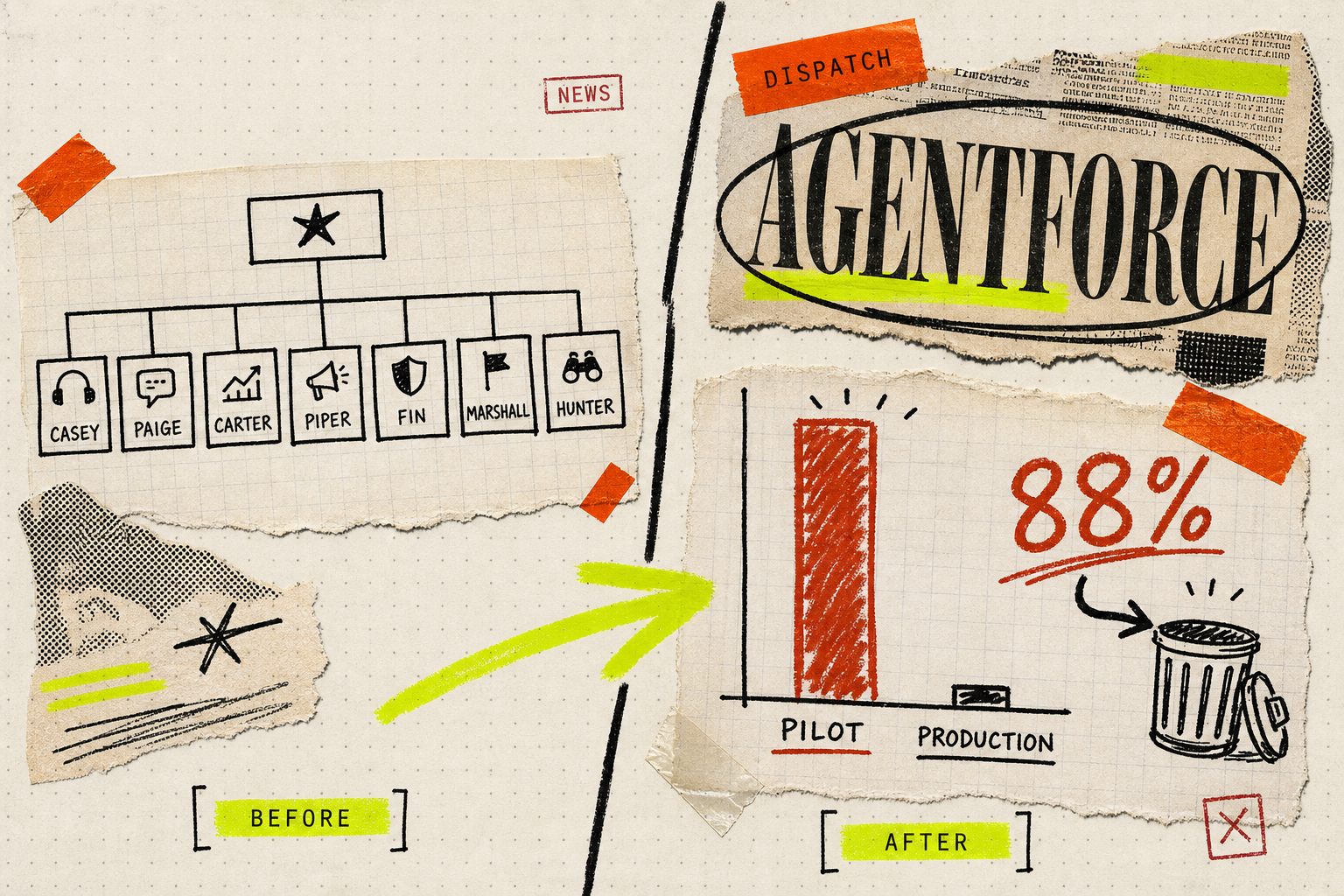
Salesforce Just Named Seven Agents. Enterprise AI Still Loses 88% Of Pilots.
Salesforce shipped 7 named Agentforce agents. But 88% of enterprise AI pilots still fail to reach production. Here's the real gap operators need to fix first.

Small Businesses Using AI Are Hiring More People, Not Fewer
Gusto ran payroll on 2,262 small businesses. AI adopters grew headcount 7% faster — 10% for under-10 firms. The doom takes miss the operator story.
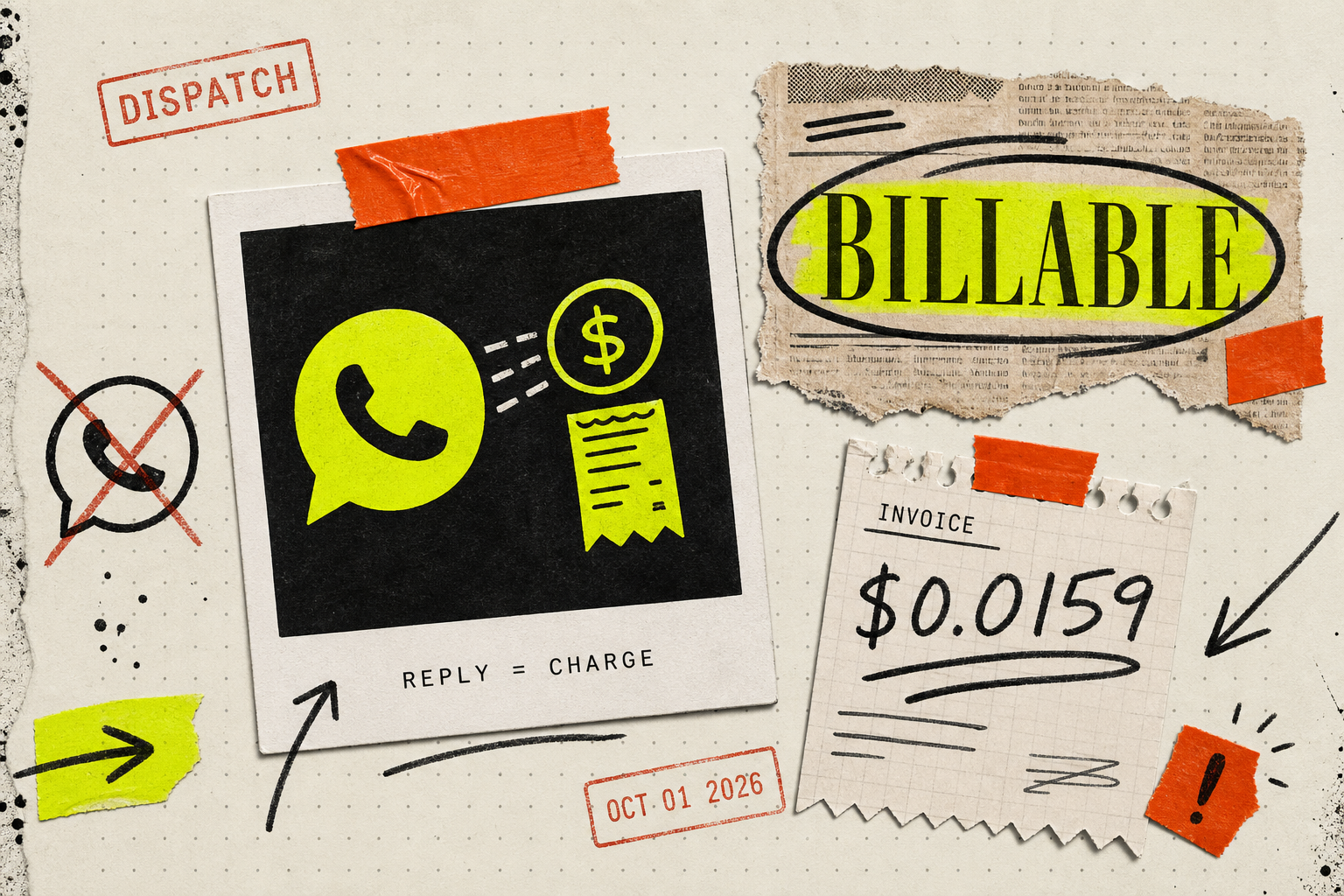
WhatsApp Just Made Every Reply Billable. Your Bot Bill Starts October 1.
On October 1, Meta starts charging for every WhatsApp reply — human, third-party AI, or its own. The sticker price is the boring part. Here's what it actually breaks.