Your Team Is Already Using AI You Didn't Approve. It's A $670K Problem.
IBM's 2026 breach report is out. Shadow AI adds $670K per incident, 98% of companies have it, and 77% of small businesses still have no AI policy. Here's the weekend fix.
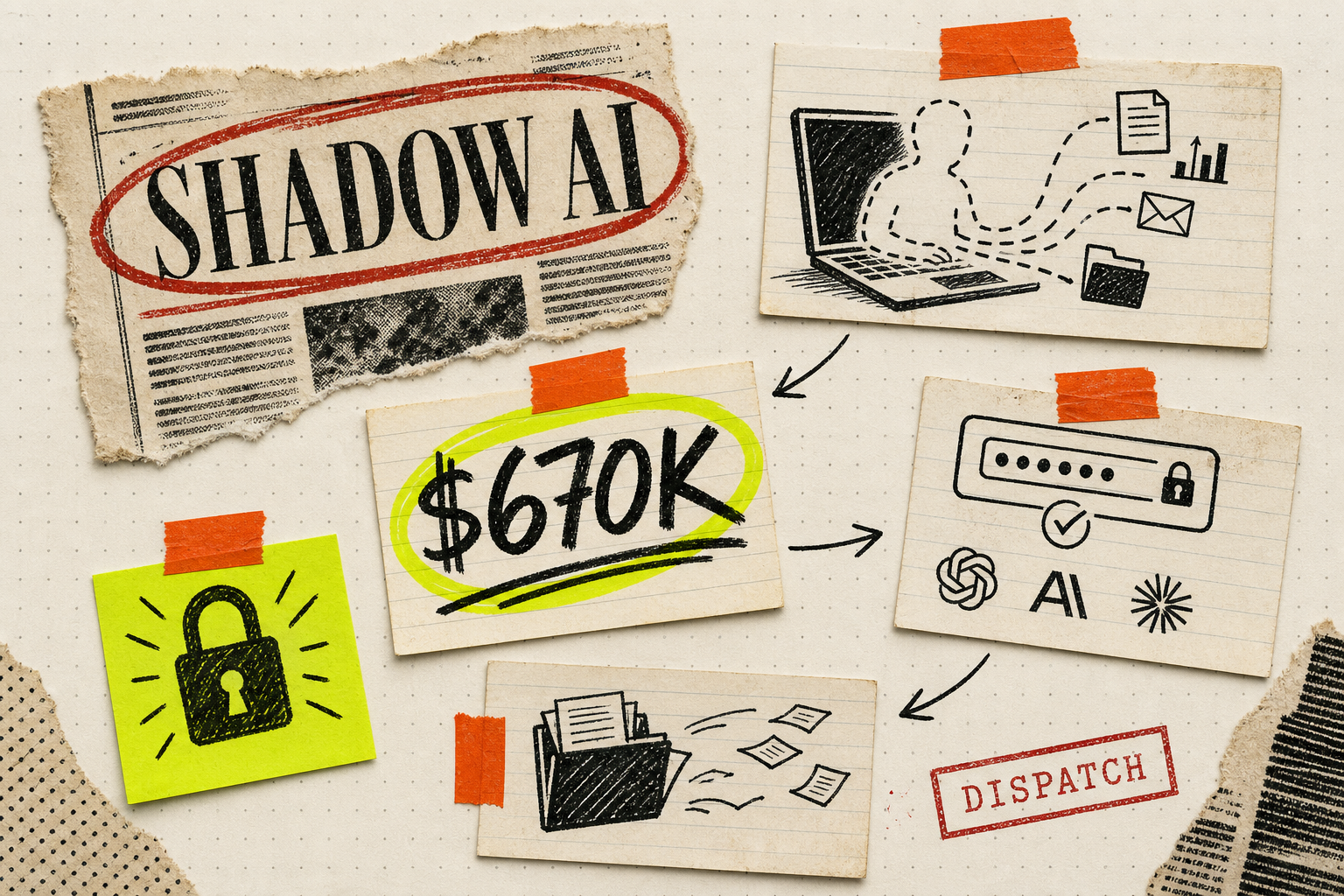
IBM dropped its 2026 Cost of a Data Breach report a week ago. The number that should have made every founder pause: one in four breaches this year were AI-enabled, and they cost an average of $6 million[1]. About a million more than the average breach.
The story most write-ups missed: a huge chunk of that damage isn't coming from AI you deployed. It's coming from AI you didn't.
Your team is already using ChatGPT, Claude, Perplexity, Gemini, and thirty other tools you've never heard of. On personal accounts. With your data. And you don't have a policy that says otherwise.
That's shadow AI, and it's now the fastest-growing security risk in small and mid-market companies. Here's what the last twelve months of data actually say — and what I'd do about it if I ran a $5M business.
The scoreboard
Let me line up the numbers so you can't unsee them.
- 98% of organizations have employees using unsanctioned AI tools[2].
- 47% of generative AI users access the tools through personal accounts their company doesn't see[3].
- 39.7% of AI interactions at work expose sensitive data — customer info, source code, contracts, financials[4].
- 46% of U.S. workers admit uploading sensitive company info or IP to public AI tools[5].
- Shadow AI adds $670,000 to the average breach cost, and 97% of firms hit with an AI-related breach had no AI access controls[6].
- Shadow AI usage in the workplace grew 4x in the last year[7].
Those aren't Reddit numbers. They're from IBM, Netskope, Cyberhaven, and Ponemon — the same firms your enterprise clients cite when they audit their own vendors.
If you run a $1M–$20M business, this is you. Especially you.
Why most takes are wrong
The dominant narrative in tech press is "employees are being reckless." That's lazy. Employees are being productive.
They found a tool that lets them draft a client email in 90 seconds instead of 15 minutes. They shipped a proposal on Sunday because Claude helped them turn bullet points into prose. They saved themselves from a bad quarter by pasting a messy CSV into ChatGPT and asking it to make sense of it.
Then they went right back to work. They didn't file a ticket. They didn't ask for a Copilot license. Because they know how that conversation ends — a three-month evaluation, a Slack thread with three people who don't use AI, and a "we'll circle back."
The productivity gap between what your team can do with AI and what your policy allows is why shadow AI exists. Ban ChatGPT and they'll open a personal tab. Block the domain and they'll use their phone. The tool is too useful to give up.
The right question isn't "how do we stop this?" It's "how do we let this happen safely?" Most owners are still asking the wrong one.
What actually changes for a $5M business
The IBM report also flagged that the average AI-related breach takes 247 days to detect[6]. That's eight months of your data sitting in an OpenAI training set, or in a stolen personal account, before anyone notices. For a small business, eight months is the difference between a bad quarter and closing the doors.
Small businesses have one advantage large ones don't: you can move fast. Forbes ran a piece three weeks ago pointing out that a small owner can write a workable AI governance framework in a few days, where a Fortune 500 takes months[8]. That's your edge.
But most owners aren't using it. 77% of small businesses using AI still have no written AI policy[9]. You're on the wrong side of that number until you fix it.
Here's what I'd actually build for a business your size.
The three-part shadow AI fix I'd run this month
Not a compliance program. A working system.
1. Sanction one tool per job. Publicly.
Pick one tool for each of the top three uses in your business — writing, research, code. Something like Claude for writing (Team plan, around $25/seat), Perplexity for research, and Copilot or Cursor for code. Buy the seats. Push credentials through a password manager.
The rule you say out loud: "Use these. If you need a different tool, ask. We'll evaluate it in a week." That last sentence is what beats shadow AI. The reason your team is on personal accounts isn't rebellion, it's speed. Match the speed.
2. Write a one-page policy. Not a 40-page manual.
Every generic template on the internet will give you a 40-page policy nobody reads. Skip it. One page. What can go in, what can't, who to ask.
Structure I'd use:
- Never in: customer PII, financials, source code, contracts, anything with "confidential" on it, hiring or performance decisions
- OK to use: drafts of anything you'd already send to a public consultant, structured data with names and emails stripped, general research
- Ask first: anything you're unsure about — 24-hour turnaround guaranteed
- The only banned move: using personal accounts on company work
Have every employee sign it. Once. Takes five minutes.
3. Log who's using what. Once a quarter.
You don't need Netskope. You need a Google Form and a calendar reminder. Every quarter, everyone answers: "What AI tools did you use for work in the last 90 days? Company account or personal?"
You'll be shocked what shows up in month one. That shock IS the audit. Fix what you learn.
The whole system takes a weekend to set up and 30 minutes a quarter to maintain. It closes the $670K exposure and it doesn't cost you productivity — it grows it, because now people can actually use the good tools out in the open.
The bigger point
The narrative that AI adoption is a technology problem is wrong. It's a governance problem, and for small businesses it's a governance problem you can solve in a weekend that Fortune 500s will spend two years on.
The businesses that do it now will run circles around the ones still writing memos. Because "we're not sure about AI yet" isn't a policy. It's an invitation for your team to make the policy for you — on personal accounts, with your data, and no paper trail.
If you're running a business between $1M and $20M and you don't have a written AI policy, that's what I'd audit first. Not the tools. The rules of the road.
Book a free audit call
If this sounds like your business — team using AI you didn't sanction, no policy, no clue how deep it goes — that's what my free audit call is for. 30 minutes, no pitch. I'll help you map what your team is actually using, what's exposed, and the one-page policy that closes the gap.
The tools will keep getting better. The people using them are already ahead of your policy. Close that gap or someone else will close it for you.
-
IBM Study: One in Four Malicious Breaches are AI-Enabled, Costing Companies $6 Million on Average↩
1 in 4 malicious breaches AI-enabled, avg $6M cost — IBM 2026 Cost of a Data Breach report
-
Top 50 Shadow AI Statistics 2026: The Risk of Unsanctioned AI Tools↩
98% of organizations have employees using unsanctioned AI tools
-
Cloud and Threat Report: 2026↩
47% of generative AI users on personal accounts, unmanaged by their employer
-
AI Data Security Risks: 39.7% of AI Use Involves Sensitive Data↩
39.7% of AI interactions at work expose sensitive data
-
Shadow AI Incidents: A Running List for MSPs↩
46% of U.S. workers admit uploading sensitive company info to public AI tools
-
Shadow AI explained: risks, costs, and enterprise governance↩
Shadow AI adds $670K to breach cost; 97% of AI-breached firms lacked controls; 247-day detection
-
Shadow AI invades the workplace, up 4x in the last year↩
Shadow AI workplace usage grew 4x year over year
-
Small Businesses Adopted AI Faster Than They Wrote Rules For It↩
Small business owners can write an AI governance framework in days vs months for Fortune 500
-
Small Business AI Adoption: 68% Use It, Most Wing It↩
77% of small businesses using AI have no written AI policy
Ready to build your own AI system?
Book a Free Audit Call →Keep Reading
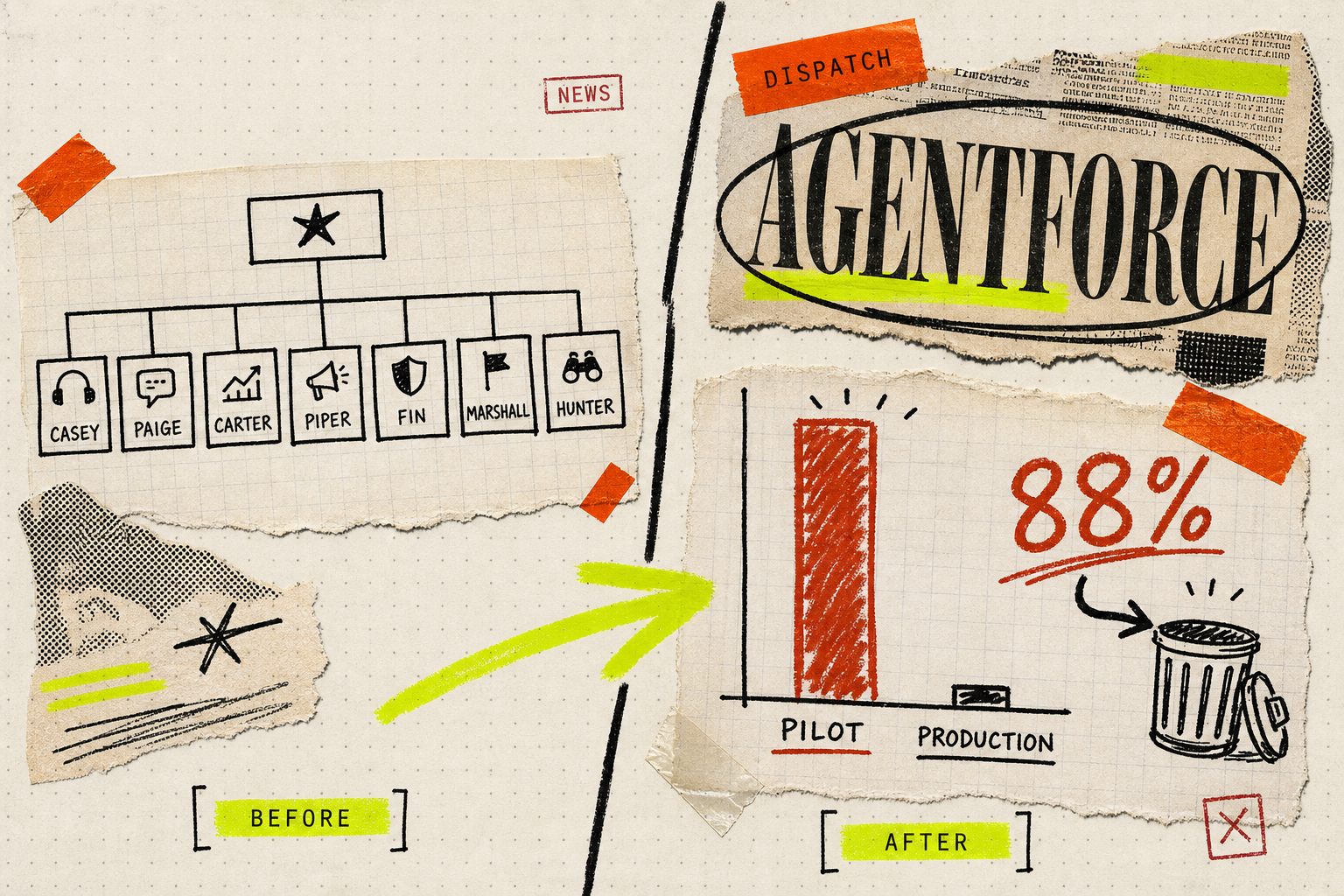
Salesforce Just Named Seven Agents. Enterprise AI Still Loses 88% Of Pilots.
Salesforce shipped 7 named Agentforce agents. But 88% of enterprise AI pilots still fail to reach production. Here's the real gap operators need to fix first.

Small Businesses Using AI Are Hiring More People, Not Fewer
Gusto ran payroll on 2,262 small businesses. AI adopters grew headcount 7% faster — 10% for under-10 firms. The doom takes miss the operator story.
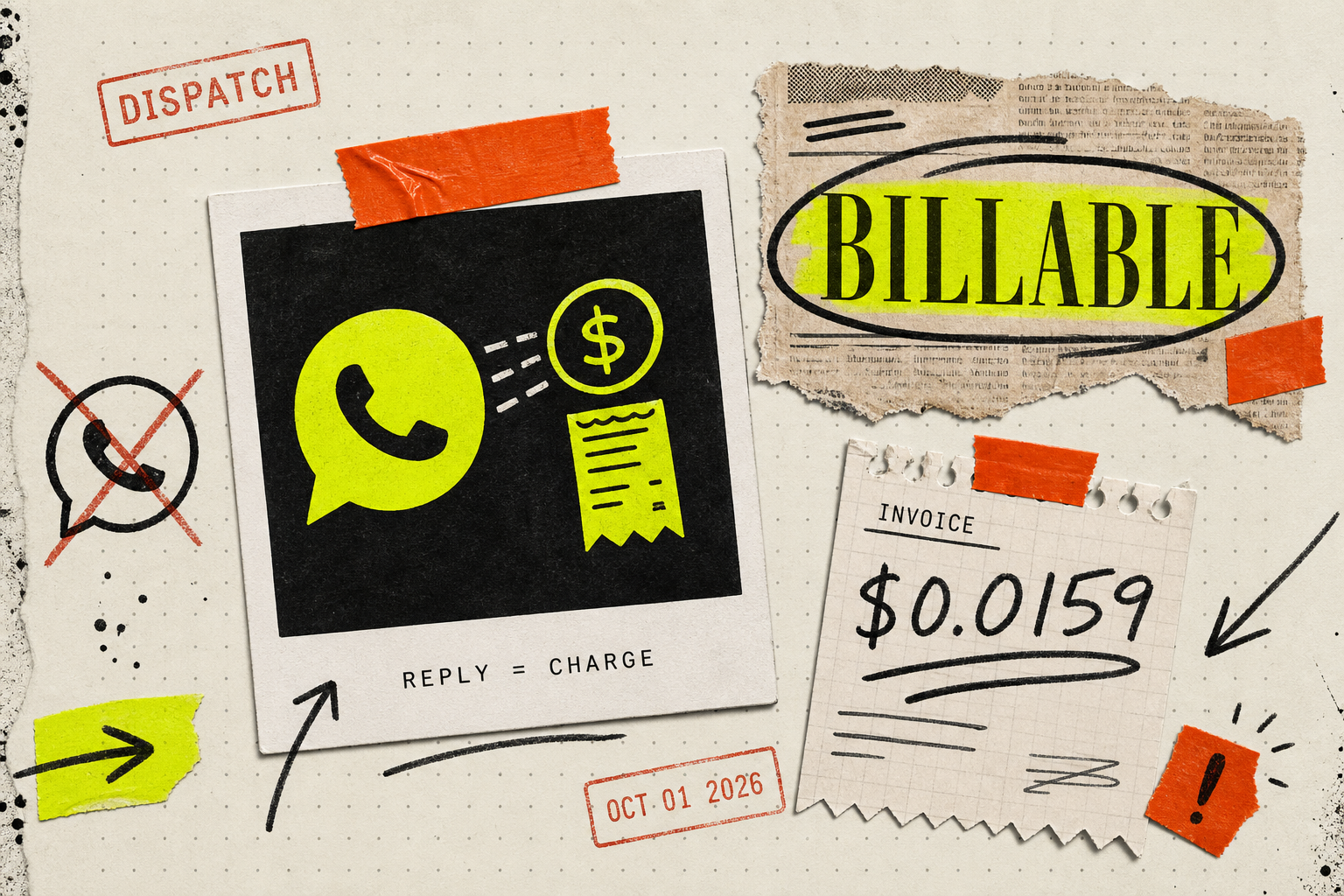
WhatsApp Just Made Every Reply Billable. Your Bot Bill Starts October 1.
On October 1, Meta starts charging for every WhatsApp reply — human, third-party AI, or its own. The sticker price is the boring part. Here's what it actually breaks.