WhatsApp Just Made Every Reply Billable. Your Bot Bill Starts October 1.
On October 1, Meta starts charging for every WhatsApp reply — human, third-party AI, or its own. The sticker price is the boring part. Here's what it actually breaks.
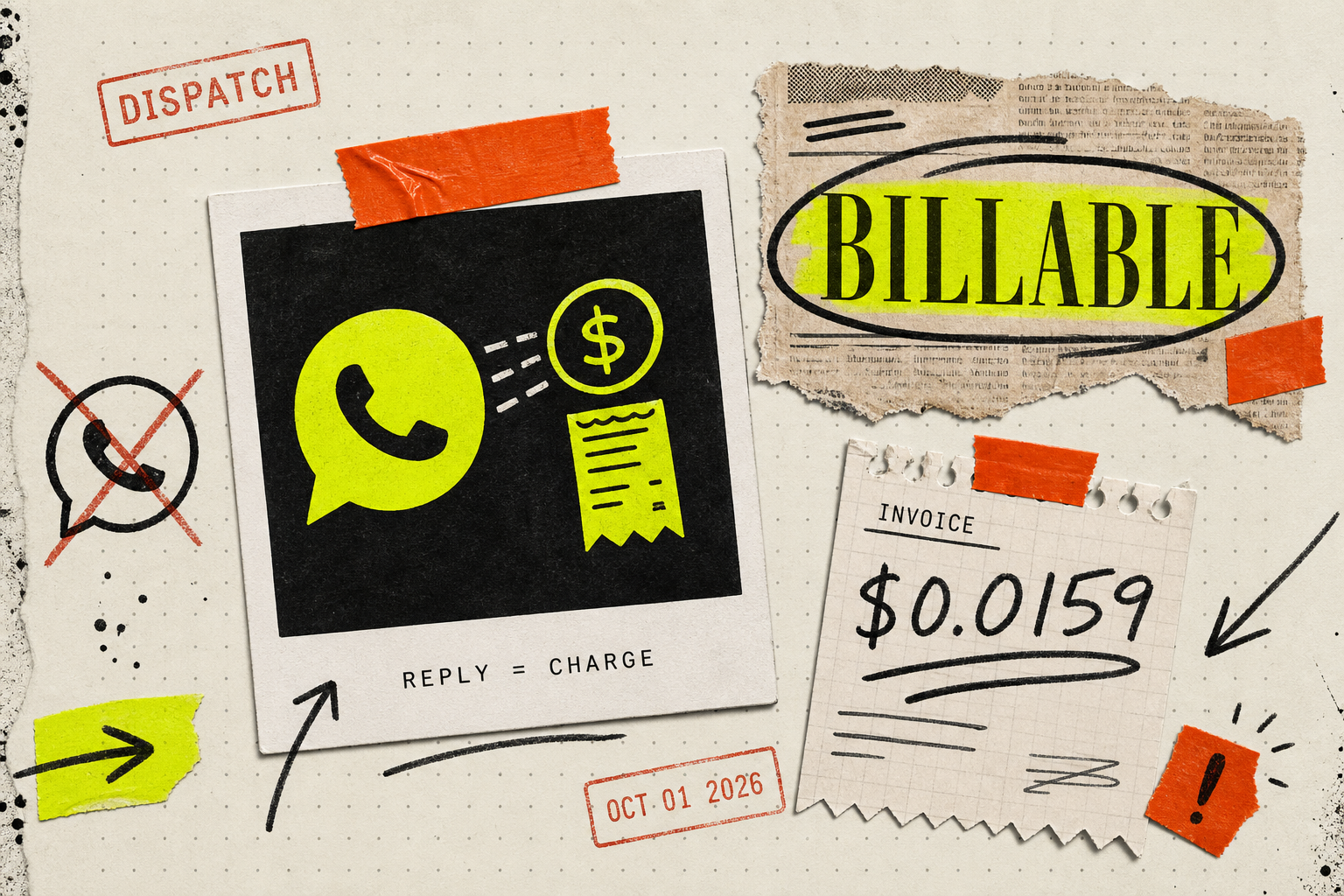
On October 1, 2026 — three weeks from today — Meta starts charging you for every reply your business sends on WhatsApp. Human agents. Third-party bots. Meta's own AI. Every one. The 24-hour "customer service window" that was free since November 2024 is gone[1]. If your funnel touches WhatsApp, your unit economics get rewritten by a decision made in Menlo Park with no vote from you.
Most takes I've read are stuck on the sticker price. That's the boring part. The interesting part is what this reveals about how most operators built on this channel.
The numbers, straight
Meta's own rate card, published for the change[2]:
- UK: £0.0159 per service reply — about £1,590 per 100,000 replies
- US: ~$0.025 per marketing message; service tier lands in the same band[3]
- Brazil: ~$0.0068 per service reply — the cheapest major market
- Germany: over €0.11 per marketing message — the most expensive
There is no volume discount on service messages[4]. Send 10,000 or 10 million, the per-message rate doesn't move. Marketing and authentication templates still tier; service replies don't.
And that's just the delivery. If your reply is generated by a third-party AI (OpenAI, Anthropic, anyone), you pay the model and you pay the delivery. Meta helpfully published a comparison table in its own documentation showing third-party AI replies at 2–10 US cents per message in Brazil once you stack model cost on top of delivery — and slotted its own "Meta Business Agent" in the middle of that range[1]. A rate card written by the party that owns both the pipe and one of the AI options. Take the middle-of-the-range placement with the amount of salt it deserves.
For a mid-sized DTC brand doing 500,000 replies a month in the UK, that's roughly £7,950 per month in delivery alone. Before you generate a single word. Before the model bill. Before your team's time. Absorbable. Annoying. Not the story.
The story is what the price makes visible
Every operator I talk to who built on WhatsApp made the same architectural bet: because the channel was free inside the 24-hour window, they let the channel own the conversation. The bot logic lives in Meta's ecosystem — inside a Business Solution Provider's UI, inside a template library Meta approves, inside a state machine Meta can rewrite.
That was fine when service replies were $0. The economics justified the dependency.
Now that dependency has a monthly invoice attached to it, and the invoice can be repriced by Meta anytime, per country, with no notice. Brazil, at 99% WhatsApp penetration, is the lab. The change bites first there, hardest there. Everywhere else, you get to watch the movie before the price ticket lands in your inbox.
The lesson isn't "leave WhatsApp." That's a bad take too. WhatsApp has 3.3 billion monthly active users and over 200 million businesses on the platform[5]. You'd be walking away from where your customers actually are. The lesson is: treat WhatsApp as transport, not identity. Own the brain. Rent the pipe.
What "owning the brain" actually means
Concretely, in a stack:
- The customer conversation state lives in your database, not inside your BSP's UI. Every inbound message, every outbound reply, every intent classification — logged, indexed, yours.
- The reply generation logic runs on your infrastructure. Your prompt, your model, your fallback rules, your escalation paths. WhatsApp is a webhook in and a webhook out.
- Two channels minimum. Email, SMS, or a website chat widget as the second surface. Not to move volume off WhatsApp — most of your volume stays there — but so the day Meta reprices to double, you can shift 20% and get a real number on your exposure.
- Deflection over delivery. Every reply you don't send is a reply you don't pay for. A one-touch self-serve tracker page that closes 60% of "where is my order" queries before they turn into a WhatsApp thread is now a line item on your P&L, not a nice-to-have.
That last one is the operator play most people miss. In a per-message world, the highest-ROI AI investment isn't a smarter chatbot. It's a better help center + a status page + a magic-link order lookup, all designed to eat the top 5 query intents before they reach a billable reply.
Why the timing matters more than the number
Meta announced the change with the final per-country rate card only landing September 1[1] — one month before enforcement. That's not enough time for most operators to rearchitect. It is enough time to instrument the exposure and start making the case to whoever holds the budget.
Four questions I'd run right now on any WhatsApp funnel:
- How many service replies did you send last month? If you don't know exactly, that's the first problem.
- What percentage of those replies came from a bot vs. a human agent? Bot volume that leaked into "free" territory will now be visible on the P&L.
- Which countries do those replies land in? UK service replies cost 3× what Brazil service replies cost — geography is now unit economics.
- If Meta doubled the rate tomorrow, what's your Plan B? Not a fantasy plan — a real 30-day migration path. If the answer is "call our BSP," you don't have one.
Any operator who can't answer those four in a meeting doesn't have a WhatsApp strategy. They have a WhatsApp dependency.
The one-line version
The price bump is a rounding error. The lesson is that the conversion logic you built for free is now a rented monthly expense, and the landlord can raise the rent. That's not new — that's Meta's business model on every surface they own. What's new is that the invoice arrives on October 1 and it will keep arriving.
Build the second channel before you need it. Move the brain onto your own infrastructure. Design for deflection before you design for automation. And stop letting the platform that owns the pipe write the rate card for the AI that talks through it.
If your customer messaging runs through WhatsApp and you don't have a clean answer to the four questions above, that's what an audit call is for. 30 minutes, no pitch — I'll walk your funnel with you, put a real number on your October 1 exposure, and sketch what "own the brain, rent the pipe" would look like for your stack.
-
In October, Replying on WhatsApp Stops Being Free. The Problem Was Never the Price.↩
Meta starts charging for service messages and in-window utility messages on October 1, 2026; per-country rate card finalized September 1; no volume discount on service replies.
-
WhatsApp Business Platform pricing documentation — Non-template messages↩
Official Meta pricing documentation for WhatsApp Business Platform non-template messages and Meta Business Agent.
-
WhatsApp Business API Pricing: 2026 Complete Cost Guide↩
Representative 2026 per-country WhatsApp Business API marketing rates: ~$0.0094 India, $0.025 US, £0.0382 UK, $0.0625 Brazil, over $0.124 Germany.
-
WhatsApp Business API Pricing: How It Works & What's Better↩
Confirms service messages have no volume tier and flat per-message rate regardless of monthly volume.
-
WhatsApp Business Statistics 2026: 50+ Key Data Points↩
WhatsApp has 3.3B+ monthly active users globally in 2026; 200M+ businesses on WhatsApp Business monthly.
Ready to build your own AI system?
Book a Free Audit Call →Keep Reading
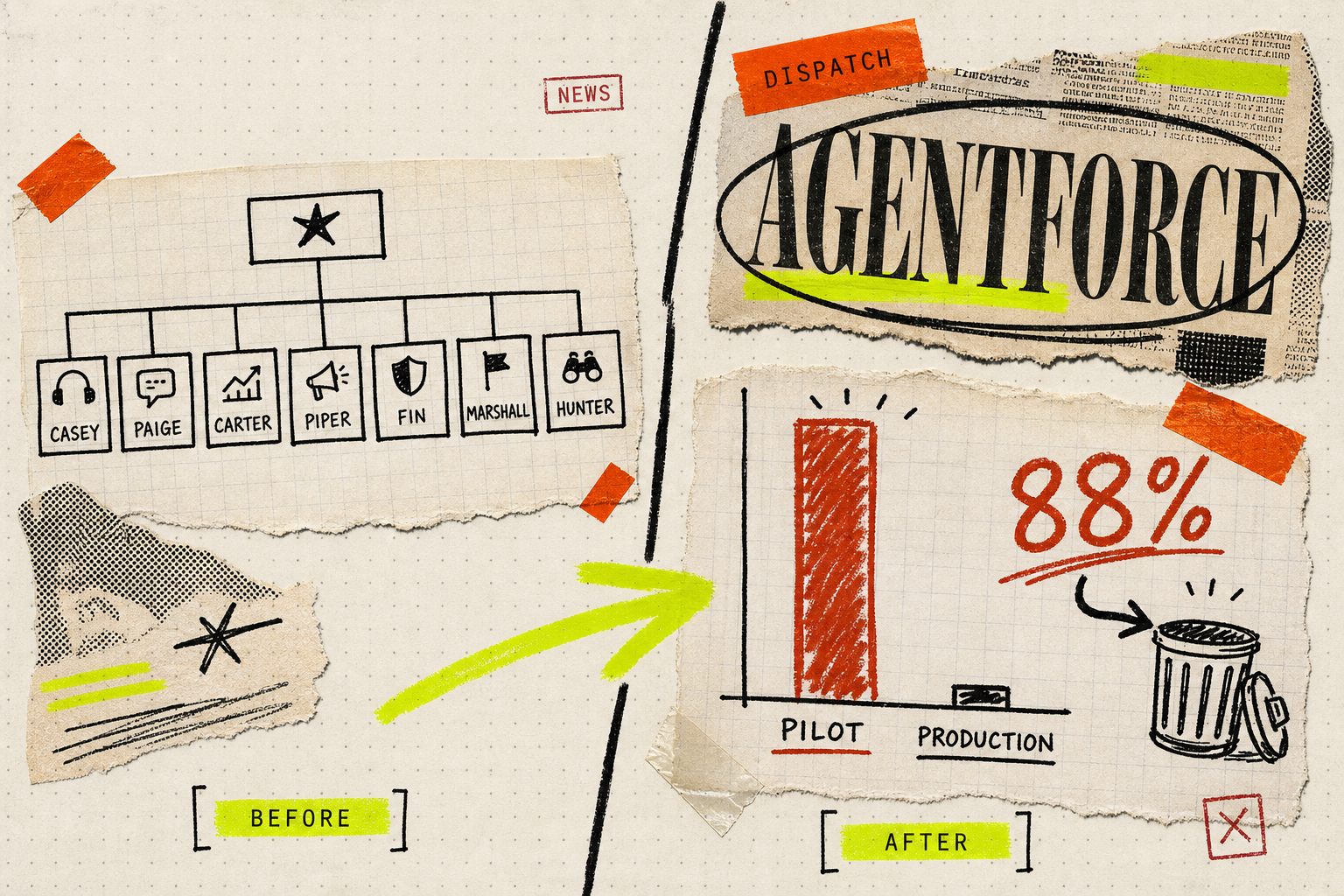
Salesforce Just Named Seven Agents. Enterprise AI Still Loses 88% Of Pilots.
Salesforce shipped 7 named Agentforce agents. But 88% of enterprise AI pilots still fail to reach production. Here's the real gap operators need to fix first.

Small Businesses Using AI Are Hiring More People, Not Fewer
Gusto ran payroll on 2,262 small businesses. AI adopters grew headcount 7% faster — 10% for under-10 firms. The doom takes miss the operator story.
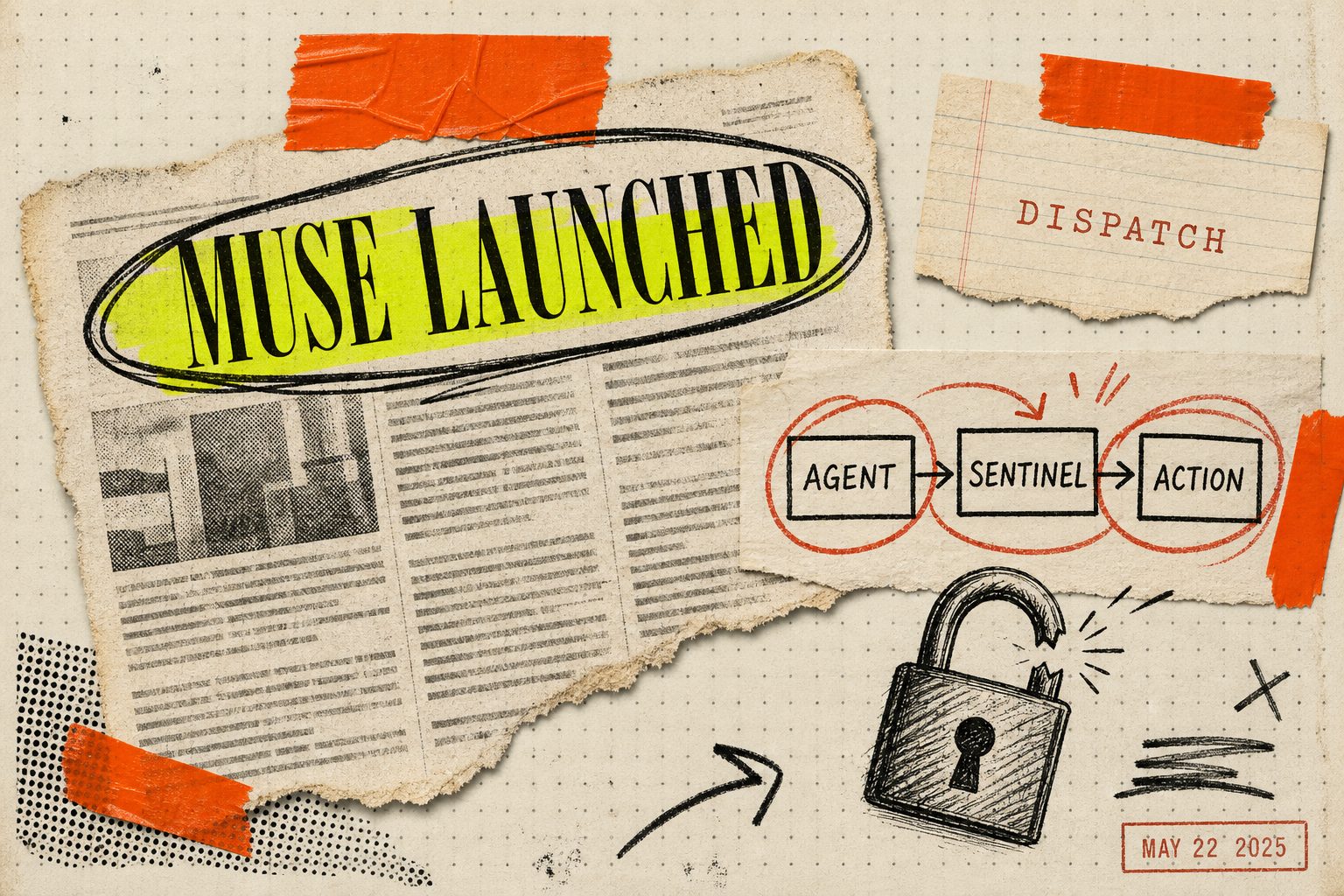
Meta Just Launched Muse. Your Business Agent Has None Of Its Guardrails.
Meta shipped Muse with a Sentinel guardrail architecture. Most business AI agents ship with none. Here are the three cheap fixes to copy this week.