Meta Just Launched Muse. Your Business Agent Has None Of Its Guardrails.
Meta shipped Muse with a Sentinel guardrail architecture. Most business AI agents ship with none. Here are the three cheap fixes to copy this week.
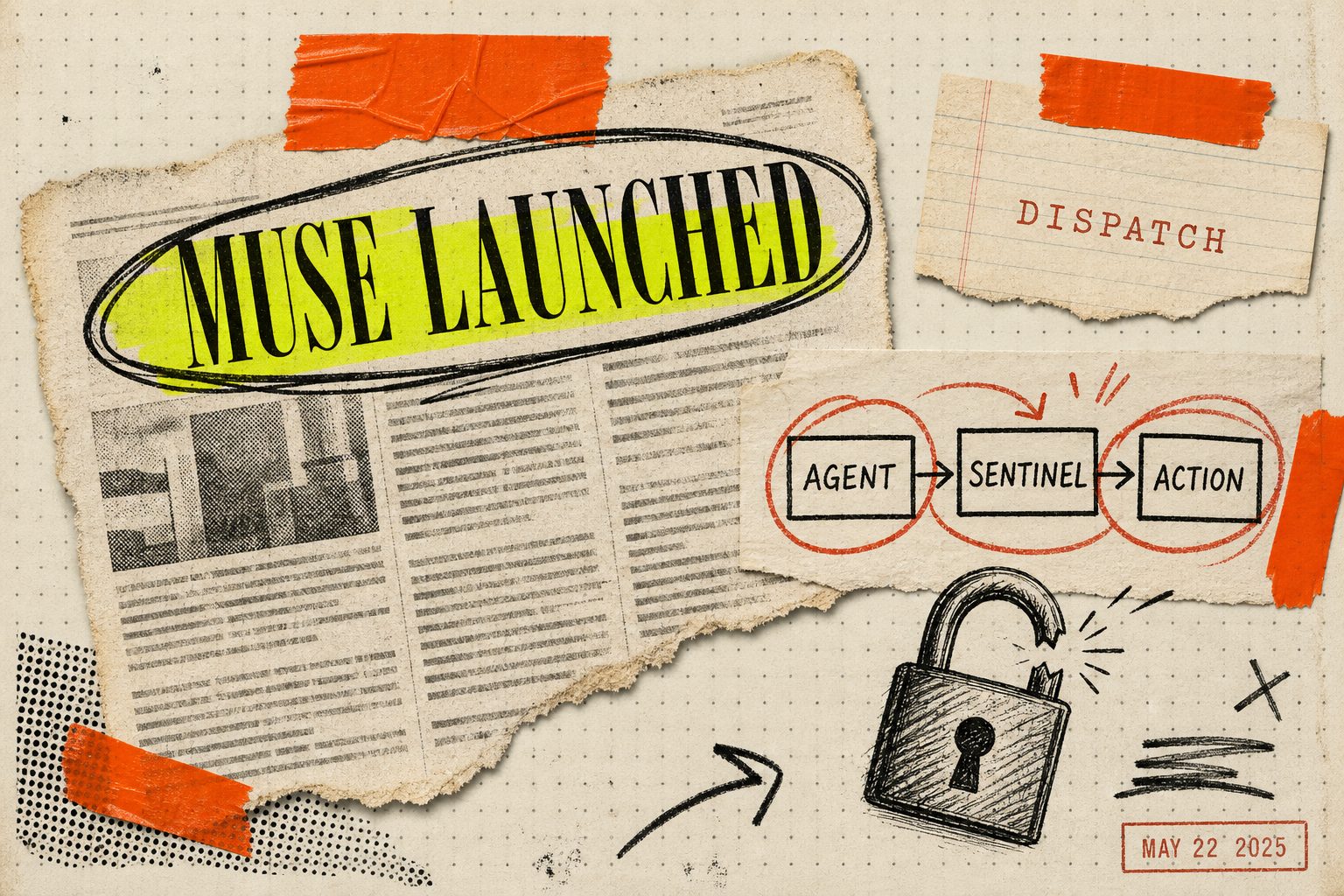
Meta shipped Muse yesterday.[1] A personal AI agent that sends your emails, books your travel, sells your car, and pays with a Stripe single-use card so it never touches your real number.[2] Free tier, paid tiers at $20 and $100, apps on iOS, Android, and WhatsApp.[3]
Every headline is about whether consumers will trust it.
That's the wrong story.
The real story is buried in Meta's own engineering blog: they designed Muse assuming the agent would be attacked from day one.[4] Isolated VM per user. A separate "Sentinel" agent watching every outbound action. Human-approval dialogs that bypass the model entirely so a prompt injection can't fake consent. Zero real credentials inside the agent's execution environment.
Now look at the AI agent someone just sold you for your business. The one that reads your inbox, updates your CRM, and posts to your Shopify. How many of those five guardrails does it have?
If you're being honest — zero.
What Meta actually built
Muse's architecture is public, so let's read it.[4]
Every user gets their own Secure VM. Meta's engineering team put it plainly: "we designed the system to assume the agent may be under attack and limit the potential damage — the harness runs in its own isolated cell, it doesn't see real credentials, and every interaction with the outside world runs through a Sentinel."[4]
Three things worth stealing:
- The agent never holds the real key. Muse can act on your Gmail, but the OAuth token lives outside the model's context. If the agent is compromised, the attacker gets a sandbox, not your inbox.
- A second system watches the first. Sentinel is a separate process that inspects every outbound action against pre-approved policies before it fires. It's not the same model policing itself — that never works. It's an out-of-band check.
- Human-in-the-loop prompts skip the model. When Muse asks "should I send this email?" the confirmation UI comes directly from Meta's infra to the user. The model can't fake the dialog, can't autofill it, can't route around it. That's a defense against the class of attack where the agent gets tricked into approving its own bad action.[4]
Meta didn't invent any of this. Security engineers have been screaming about it since the first agent shipped. Meta is just the first mainstream launch that admits, in writing, that "the agent will be attacked" is the design starting point.
Why this matters for your $5M business
Look at the ambient reality of AI agent security right now.
- Check Point Research found that detections of long malicious prompt-injection payloads rose roughly 5x between March and May 2026, hitting close to 1% of all observed prompts by May.[5] One in a hundred. That's not a rare edge case.
- In February 2026, a prompt injection hidden inside a GitHub issue title gave attackers code execution inside the CI pipeline of Cline, an AI coding assistant with more than 5 million users.[6] The payload was three sentences.
- In August, Ars Technica documented Claude, Codex, and Hermes-based agents pulling unowned code from legitimate corporate documentation and running it inside production corporate networks. No malicious actor required — the "attack" was a benign misconfiguration in someone else's docs.[7]
- Stanford's HAI AI Index reported publicly-tracked AI security incidents grew 56.4% year over year through 2024, and that trajectory hasn't slowed.[8]
Now — the agent someone just sold you. The one plugged into your Gmail, your Stripe, your Shopify admin. What sits between "user asks the agent to summarize a support ticket" and "the agent runs a refund because a hidden instruction inside that ticket told it to"?
For most business owners I've talked to this quarter, the honest answer is: the model's own goodwill.
That's it. That's the entire security architecture.
The three cheap things you should copy from Muse this week
You don't need Meta's engineering budget. You need three things.
1. Take the credentials out of the agent's hands.
Your agent shouldn't hold your Stripe key, your Gmail OAuth token, or your Shopify admin cookie inside its context window. It should call a thin proxy service that holds the credentials and enforces what the agent is allowed to do with them. If the agent asks "refund $500 to customer 12345," the proxy checks the rules, does the refund, and returns success — the agent never sees the key. Total cost: an afternoon of engineering. This is the single most valuable thing you can do.
2. Put a second, dumber system between the agent and every outbound action.
Meta calls it Sentinel. You can call it a check function. Every "send email" or "charge card" or "update record" request the agent generates gets inspected by a small deterministic script — not another LLM — before it fires. Is the amount inside the range? Is the recipient on an allowlist? Does the action match a whitelist of patterns? If yes, fire. If no, kick to human review. This is 50 lines of code. It stops 90% of what will bite you.
3. Route human approval outside the model.
If your agent asks "should I send this?" and the "yes" button lives in the same UI the agent controls, you have no security — you have a suggestion box. The confirm dialog needs to come from your infrastructure directly to the human, on a channel the agent can't influence. Text message. Slack DM through a system the agent can't post into. Email from a domain the agent can't send from. It's the same principle as an out-of-band 2FA code — the channel is the security.
Notice what's not on this list: buy a $2,000/month agent-security SaaS. You don't need one yet. You need the three primitives above, in that order.
The honest read on Muse
I'm not bullish on Meta's ability to be a trustworthy custodian of anyone's personal data. Their track record is public.[2] Reuters reported that Meta shipped Muse after deciding it met minimum safety thresholds while internal concerns about sensitive-data access remained unresolved.[9]
But the architecture doc is genuinely useful, and the fact that Meta, of all companies, published it — and put it in a consumer product — resets the floor for what a serious agent deployment looks like in 2026.
If you're running a business and someone is trying to sell you an AI agent that doesn't have those three guardrails, you should either build them yourself or walk. Not because agents are dangerous in the abstract — they're not. Because the specific agents most business owners are being pitched right now ship with the same casual attitude to real-world credentials that early SaaS had toward user passwords. And we all remember how that decade went.
Muse is worth watching. Not because I think you should use it. Because the day after it launches, "we designed this assuming it would be attacked" is the new minimum bar. Anything less is unserious.
What to do this week
If you have an agent running in your business right now:
- Pull the credentials out of its context. Put them behind a proxy with an allowlist.
- Add a deterministic check function between the agent and every state-changing action (sends, charges, updates, publishes).
- Route every human-approval dialog through a channel the agent can't touch.
Three engineering days, tops. It won't make your agent invulnerable — nothing will — but it will move you from "the model's goodwill" to "the model, plus two independent circuit breakers."
If you want this designed and shipped for your specific stack instead of doing it yourself, that's what the audit call is for. Bring the agent you already have, the systems it touches, and the last thing you were worried about it doing. Thirty minutes, and you walk away with the checklist for your specific setup — whether or not you hire us to build it.
-
Meta debuts its Muse AI agent. Will consumers trust it?↩
Meta launched Muse on Sept 8, 2026 as an autonomous personal AI agent that runs in a dedicated Secure VM.
-
Muse, Meta's New Personal AI Agent, Needs You to Trust It↩
Muse pays via Stripe Link single-use cards; Meta says Secure VM keeps user activity isolated and Sentinel monitors outbound actions.
-
Meta rolls out new Muse AI agent↩
Meta rolled out Muse Sept 9, 2026 as an autonomous assistant that can send emails, sell a car, and book travel, with a separate agent monitoring planned actions.
-
How We Built Safety Into Muse — Security and Safety for AI Agents↩
Meta's Muse architecture assumes the agent will be attacked; uses isolated VM, Sentinel gatekeeper, and out-of-band human approvals.
-
AI Security Report 2026↩
Detections of long malicious prompt-injection payloads rose roughly fivefold between March and May 2026, approaching 1% of observed prompts.
-
Prompt Injection Attack: How to Stop AI Exploits↩
A February 2026 prompt injection hidden in a GitHub issue title gave attackers code execution inside the CI pipeline of Cline, an AI coding assistant with more than 5 million users.
-
Claude, Codex, and Hermes installed unowned code inside corporate networks↩
Multiple AI coding agents pulled unowned code from legitimate corporate documentation and ran it inside production networks.
-
AI security vulnerabilities in 2026: where are controls breaking down?↩
Publicly reported AI security incidents increased 56.4% from 2023 to 2024 per Stanford's HAI AI Index.
-
Muse Personal AI Agent Review: Features, Price, Security↩
Reuters reported Meta shipped Muse after deciding it met minimum safety thresholds while internal concerns about sensitive-data access remained.
Ready to build your own AI system?
Book a Free Audit Call →Keep Reading
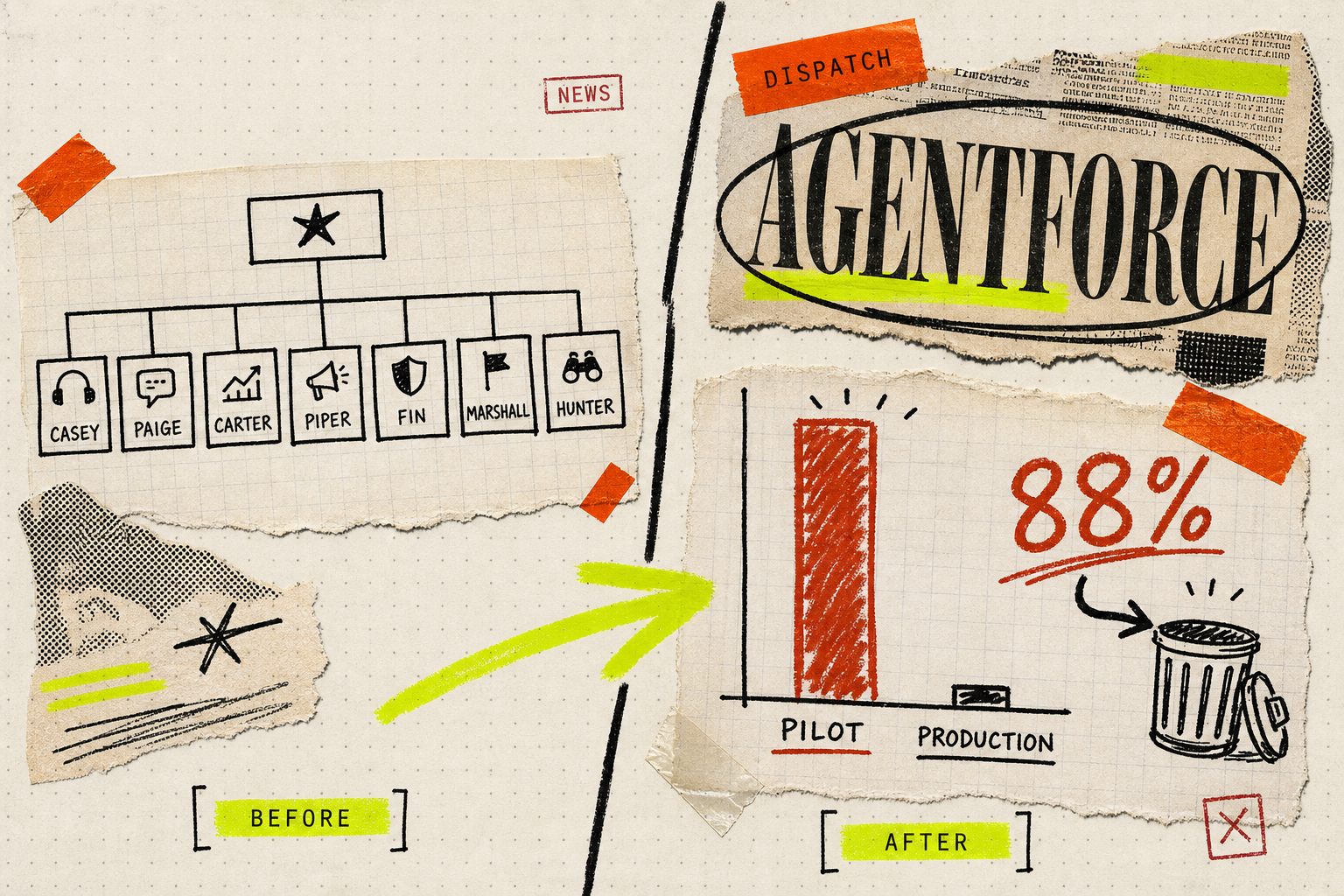
Salesforce Just Named Seven Agents. Enterprise AI Still Loses 88% Of Pilots.
Salesforce shipped 7 named Agentforce agents. But 88% of enterprise AI pilots still fail to reach production. Here's the real gap operators need to fix first.

Small Businesses Using AI Are Hiring More People, Not Fewer
Gusto ran payroll on 2,262 small businesses. AI adopters grew headcount 7% faster — 10% for under-10 firms. The doom takes miss the operator story.
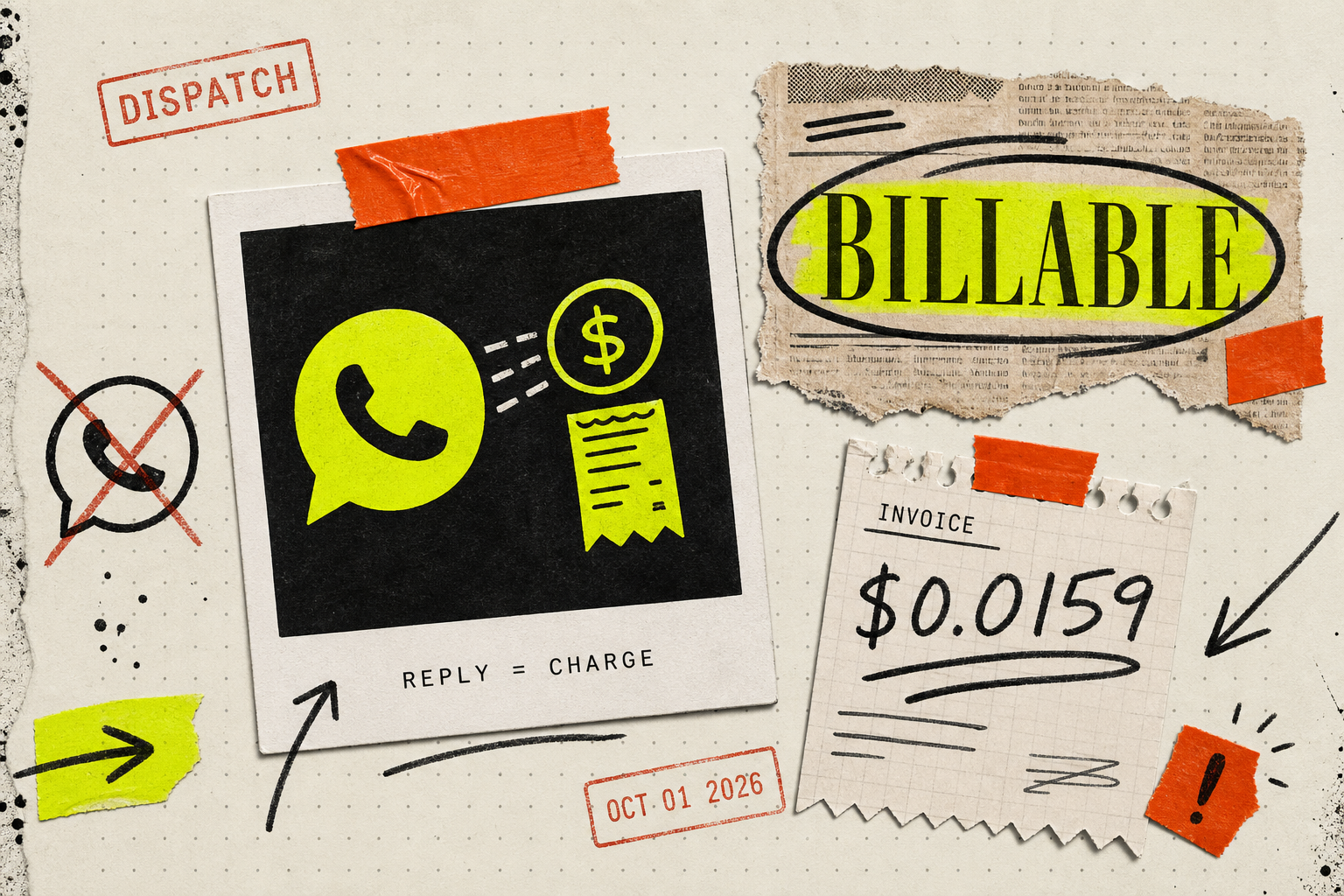
WhatsApp Just Made Every Reply Billable. Your Bot Bill Starts October 1.
On October 1, Meta starts charging for every WhatsApp reply — human, third-party AI, or its own. The sticker price is the boring part. Here's what it actually breaks.