Robinhood Ring-Fenced Its Trading Agents. Your Business Agent Is Wide Open.
Robinhood built a ring-fenced sandbox account, spending caps, and a one-tap kill switch for AI trading agents. Your business agent has none of that. Fix it this week.
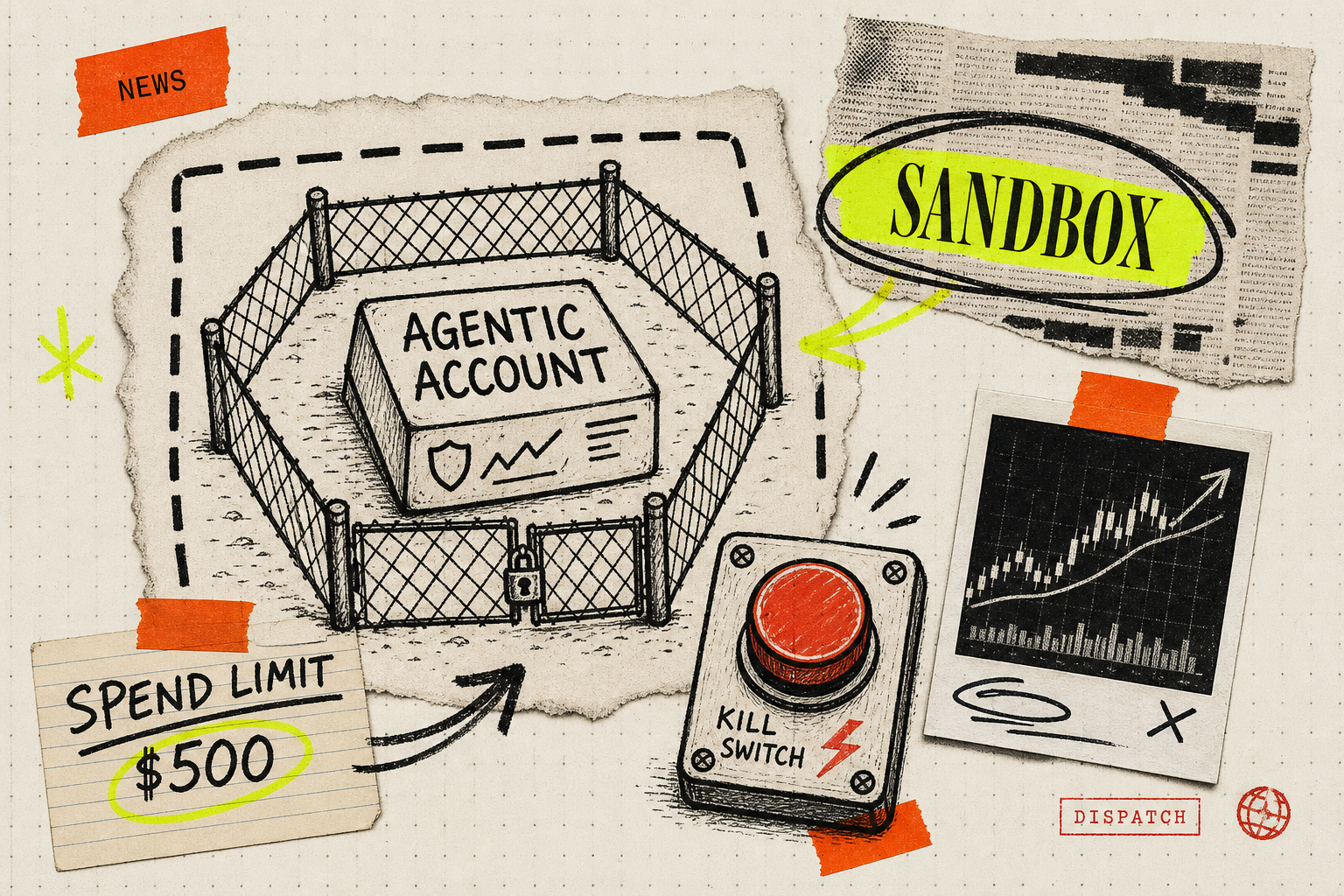
Robinhood just handed 27 million retail customers a way to let an AI agent trade real stocks on their behalf.[1] The feature — Agentic Trading — is live in beta, wired over MCP, and by July 30 it could already run 18 technical indicators on your portfolio without a human in the loop.[2]
Every trading Twitter account is fixated on whether an agent can beat the S&P.
That's not the story. The story is the account structure Robinhood built underneath it. Because if you're an operator running an AI agent inside your business right now, you've almost certainly ignored the one thing Robinhood spent the most engineering time on: containment.
What Robinhood actually shipped
On May 27, 2026, Robinhood opened its API to AI agents through the Model Context Protocol. The agent doesn't log in as you. It doesn't inherit your full brokerage account.[1]
Instead, you provision a separate Agentic Trading account — a ring-fenced sandbox. You pre-fund it with the cash you're willing to let the agent risk. The agent can read your whole portfolio for context, but it can only spend the money you moved into that sandbox.[3] The credit-card sibling — the Agentic Credit Card — works the same way: a dedicated virtual card, a hard spending limit you set, and an optional "require manual approval" toggle for every purchase.[1]
There's also a one-tap kill switch that severs the agent's connection instantly.[4]
And in Robinhood's own support docs, the language is very careful: "you are in control" — not the agent, not Robinhood.[5]
Read that architecture again. Robinhood — a company that will happily let a 22-year-old YOLO options on their phone — decided that when the trader is an AI, the account model has to change. The agent gets its own account, its own budget, its own kill switch, and an explicit "the human is still liable" disclaimer.
Now look at how you're running your agent
I've reviewed enough operator stacks to see the pattern. When a $5M business decides to hand an agent real work, the setup almost always looks like this:
- A single Anthropic or OpenAI API key with no per-tool budget cap
- The founder's actual Gmail, Slack, or Stripe token pasted into an MCP server
- The founder's real credit card in a browser session the agent can drive
- No dedicated ledger of "money the agent is allowed to spend"
- No hard budget on tokens per day (which are also real dollars)
- No kill switch except "unplug the whole workflow"
That is the opposite of what Robinhood shipped. Retail brokers — an industry not exactly famous for prudence — built more guardrails around a stock-picking agent than most operators build around an agent that can email their customer list, refund an order, or spin up a $200 Anthropic run.
Why the Robinhood pattern generalizes
The interesting bit isn't the trades. It's that Robinhood turned three abstract "agent safety" ideas into concrete account primitives:
1. A budget lives in an account, not a prompt. Telling your agent "don't spend more than $50/day" in the system prompt is theater. It might obey. It might not. Robinhood didn't put the limit in the prompt; they put it on the account.[1] The agent physically cannot exceed what's in the sandbox — because there's nothing else to draw from.
2. Reversibility is a first-class product feature. The virtual credit card can be nuked instantly and rotated. The agentic account can be de-authorized in one tap. Both actions are surfaced in the main app — not buried in a settings screen.[4] Compare that to your average n8n agent: killing it usually means finding the workflow, guessing which node to disable, and hoping nothing was mid-flight.
3. Approval is a per-action toggle, not a personality trait. Robinhood lets you flip a single switch: every trade requires manual approval, or the agent runs autonomous.[6] Same agent. Same tools. Two operating modes. Most operators think "human-in-the-loop" is a philosophical position. In Robinhood's model, it's a checkbox — one you can turn on when you're testing and off when you trust the strategy.
Those three primitives — budgeted sandbox, one-tap kill, per-action approval — are the whole game. The industry has been circling them under names like MCP governance,[7] agentic access control,[8], and HEAR classifications for high-risk autonomous access. Robinhood just shipped them as a normal onboarding flow. In beta. To 27 million people.
The three moves I'd make this week
If you're running any agent that can touch money, customer data, or outbound comms, borrow the Robinhood architecture directly.
Give the agent its own bank stack. A dedicated business checking sub-account or a virtual card (Ramp, Brex, and Mercury all issue virtual cards with hard limits) is a 20-minute setup. Move exactly the money the agent is authorized to spend — token bills, ad-account top-ups, Stripe refunds — into that sub-account. Nothing else touches it. If the agent goes off-script, the blast radius is capped by what's in that sub-account, not your whole treasury.
Instrument the kill switch before you need it. A single environment variable — AGENT_HALT=true — read at the top of every tool call, is enough. When something looks wrong, you flip one flag and every downstream tool refuses. Do not rely on "I'll go pause the n8n workflow." I've watched operators lose 40 minutes locating the right toggle while an agent kept sending emails.
Wire approvals as a switch, not a policy. Every write-tool your agent uses — send email, refund order, publish post — should have a require_approval flag the founder can flip at runtime without a redeploy. Robinhood surfaces this in one screen. Yours can live in a Notion page or a config file. Just make it a switch, not a Slack thread every time.
The bigger read
For eighteen months the conversation about agent safety has been philosophical. Alignment. Constitutional AI. Explainability. All important, all far from what an operator can actually implement this quarter.
Robinhood's release is the first time a mainstream consumer platform said, in effect: we don't know how the agent will behave, so we changed the account structure instead. They put the guardrails in the plumbing, not the prompt.
That's the pattern. Not the ML. The plumbing.
If you're spinning up your first agent inside a real business, don't obsess over which model. Obsess over the account it can spend from, the switch that turns it off, and the flag that says "ask me first." Those three things are cheaper than a lawyer and more effective than any prompt you've written.
What I'd build for you
If you want a version of this — budgeted sandbox account, working kill switch, per-tool approval flags — wired into your existing stack, that's the audit call. 30 minutes, you show me what your agent can touch today, I show you the blast radius and the three cheapest ways to shrink it.
Book it at zerocam.studio. No pitch. Just the map.
-
Robinhood is Now Open to Agents↩
Launched Agentic Trading and Agentic Credit Card May 27, 2026 with spending limits and manual approval toggle.
-
Robinhood's AI Trading Agent Now Reads Charts: RSI, MACD, and 16 More Indicators Go Live↩
By July 30, 2026 the agent can run 18 technical indicators autonomously.
-
How to Do Agentic Trading on Robinhood (Safely)↩
The agentic account is a pre-funded sandbox — agent can read whole portfolio but only spend from the sandbox.
-
Robinhood Agentic Trading: AI Now Buys Stocks for You 2026↩
One-tap kill switch, instant-delete virtual card, multiple independent control layers.
-
Agentic Trading overview↩
MCP-based agent access with explicit 'you are in control' language and user liability.
-
Robinhood enables AI chatbots for share trading, with crypto support on the horizon↩
Autonomous vs manual-approval modes are a runtime toggle, not a policy stance.
-
Understanding MCP Governance Risks for Leaders in May 2026↩
Autonomous MCP-connected agents with write access are likely to fall under high-risk classifications.
-
Noma Launches Agentic Access Control to Govern AI Agents and MCP Servers Across the Enterprise↩
Enterprise governance layer for autonomous agents and MCP servers.
Ready to build your own AI system?
Book a Free Audit Call →Keep Reading
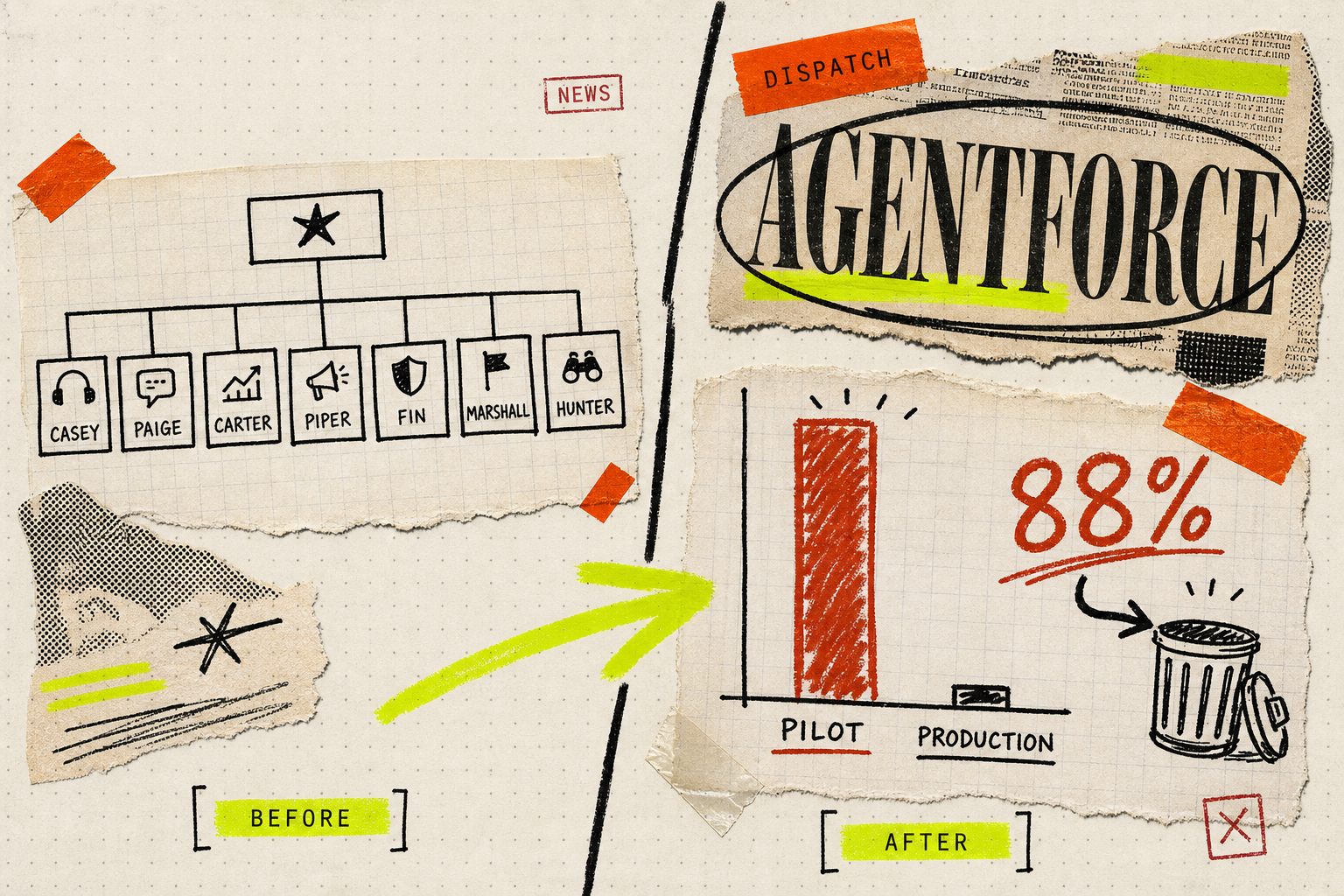
Salesforce Just Named Seven Agents. Enterprise AI Still Loses 88% Of Pilots.
Salesforce shipped 7 named Agentforce agents. But 88% of enterprise AI pilots still fail to reach production. Here's the real gap operators need to fix first.

Small Businesses Using AI Are Hiring More People, Not Fewer
Gusto ran payroll on 2,262 small businesses. AI adopters grew headcount 7% faster — 10% for under-10 firms. The doom takes miss the operator story.
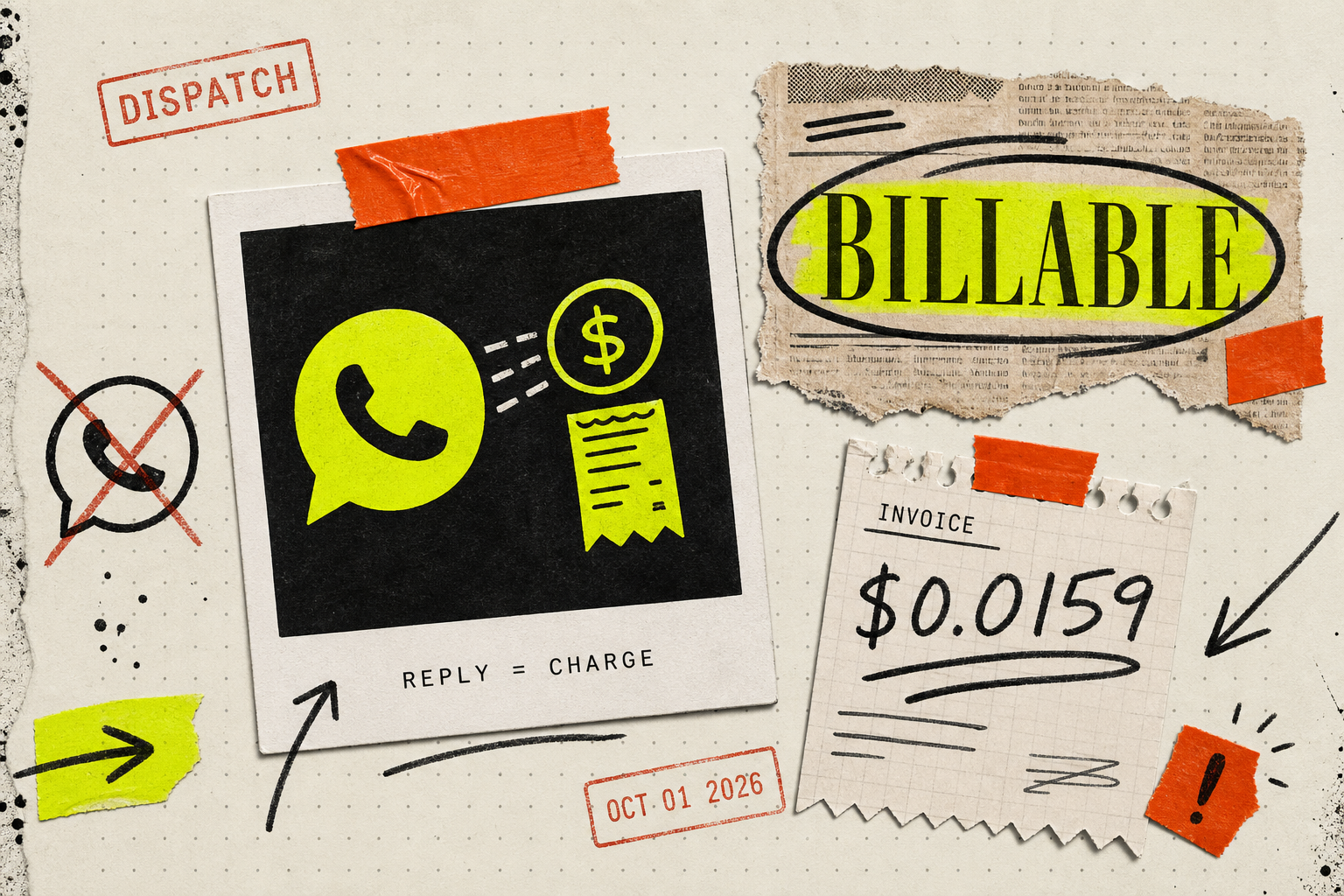
WhatsApp Just Made Every Reply Billable. Your Bot Bill Starts October 1.
On October 1, Meta starts charging for every WhatsApp reply — human, third-party AI, or its own. The sticker price is the boring part. Here's what it actually breaks.