One Agent Task = 41x The Tokens Of A Chatbot
AI agents burn 5–50x more tokens than a chat call, and cheaper models won't fix it. It's your architecture. Four moves that actually cut the bill this quarter.
Search interest in the phrase "agentic AI token usage crisis" was up 4,300% in the last 90 days on Google Trends. It's not a marketing term. It's the sound of every operator who shipped an agent to production checking their invoice at the end of the month.
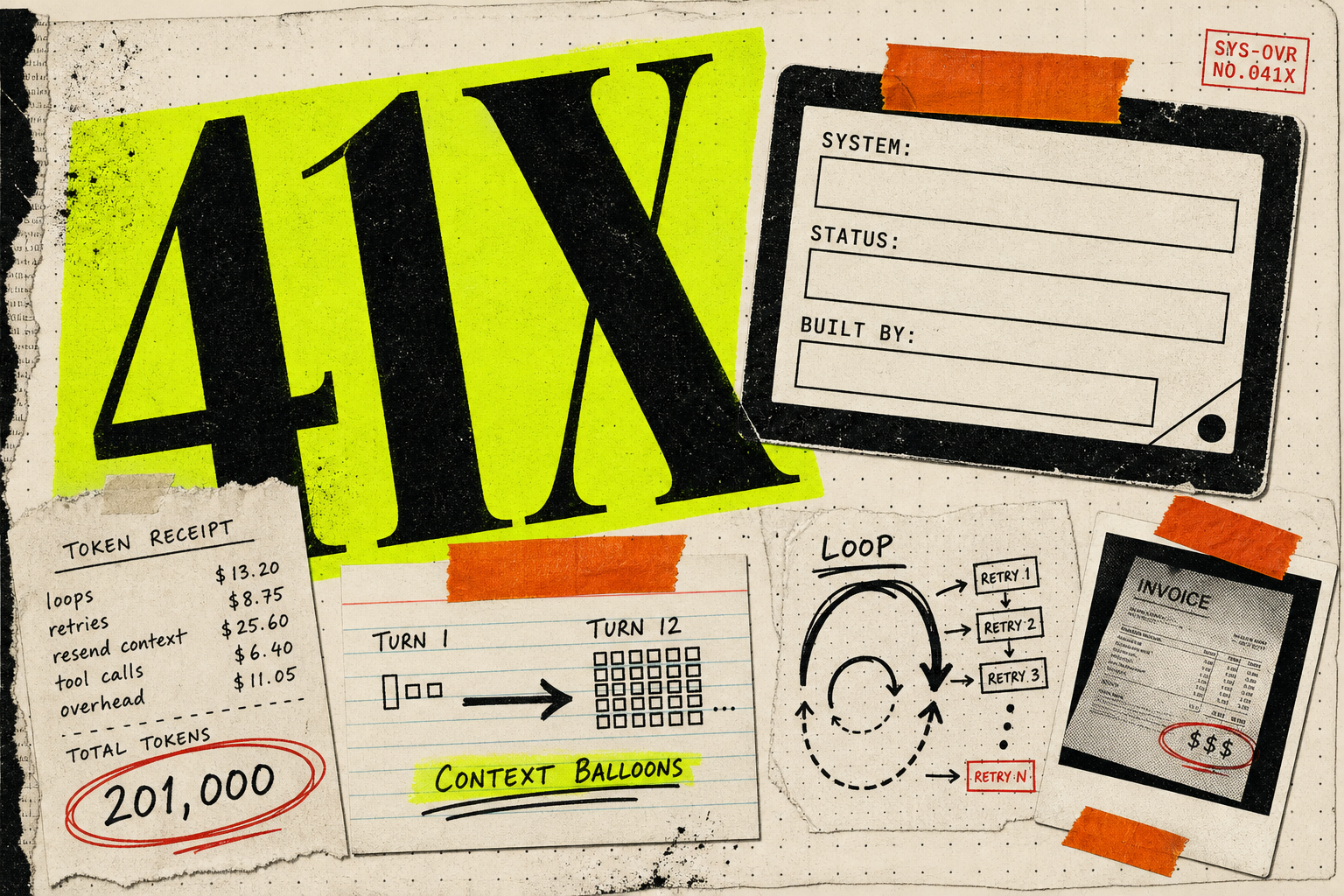
Here's the pattern that broke it wide open. In April 2026, an arXiv paper ran the first systematic study of token consumption on agentic coding tasks[1]. The finding: agentic runs consume orders of magnitude more tokens than single chat calls, and prediction is hard because usage varies wildly across identical tasks. In field reports, one developer benchmarked the same task through a plain chat call vs a tool-using agent: ~5,000 tokens vs 201,000 — a 41.2x increase in token consumption and an 11.2x jump in total cost, for the same output[2]. One task. One agent. Same model.
Multiply that by a workflow you run 200 times a day, and you understand why Gartner's March 2026 analysis pegs the agentic multiplier at 5x to 30x per task[3] and why LeanOps audited 30 teams and found the average developer burning 50x more tokens running agents than the same person running chatbots — with one user hitting $4,200 in three days[4].
This isn't a "we need cheaper models" problem. It's an architecture problem. And most teams shipping agents in 2026 don't know it yet.
Why agents burn tokens like this
A chat completion is one request. You send a prompt, you get a completion, you're done.
An agent isn't a request. It's a loop. Every turn, the model sees:
- The system prompt (usually 5,000–15,000 tokens of tools, instructions, examples)
- Every previous message in the conversation
- Every tool call it made and the JSON that came back
- The current user turn
Turn 1 might be 8,000 tokens in and 300 out. Turn 12 is often 80,000 tokens in — because the model is re-reading its own history plus every tool result it produced along the way. Run a 50-turn coding agent with a 10K-token system prompt and you have silently paid for 500,000 tokens of the same instructions, one turn at a time — exactly the problem prompt caching was introduced to fix[5].
Then agents retry. A tool call fails, the model tries again. A validation check rejects the output, the model backs up and rewrites. Iternal's 2026 usage guide reports that agentic coding workflows average 1–3.5 million tokens per task including retries and self-correction loops[6]. One task. Millions of tokens.
Compare that to a chatbot exchange: 500 tokens in, 300 out, done.
The EY number that should scare your CFO
EY's June 2026 analysis put a dollar figure on it. A simple chatbot interaction costs ~$0.04. A more complex orchestrated system involving tools, reasoning, and iterative loops costs $1.20 per interaction — roughly 30x higher[7]. Same underlying model. Different architecture.
If you're running an agent 500 times a day, that's $600/day — $18,000/month — for a workload that would have cost you $20/day as a chatbot. That's the number nobody put in the pilot slide.
And it gets worse: Forbes reported this month that cheaper AI tokens do not guarantee cheaper enterprise agents, because agentic per-task usage is "orders of magnitude above simple chat" and varies wildly between repeated runs of the same task, so you can't even forecast the spend reliably[8].
Optimum Partners' May 2026 write-up frames it right: enterprise AI has moved from "fixed-cost labor comparison" (a $5K/mo SaaS seat) to "token-based, consumption-driven, architecturally volatile"[9]. Your finance team has never priced a system like this.
What actually fixes it (that isn't "switch models")
Every AI cost consultant on LinkedIn will tell you to swap to a cheaper model. That's the wrong lever. You'll save 30% and still be spending 20x more than you should. The real fix is architectural. Four moves, in order of impact:
1. Prompt caching. Biggest lever in 2026.
Anthropic's Claude API caches static parts of your prompt — system instructions, tool definitions, few-shot examples — so you pay for them once, not every turn. Their docs describe automatic caching and explicit cache_control breakpoints with 5-minute or 1-hour TTLs[5]. Independent write-ups put realistic savings at up to 90% on cached input tokens for long prompts, with OpenAI's automatic caching landing around 50%[10]. Technspire's field testing pegs the honest per-workflow number at 30–50% cost cut on agent loops and RAG pipelines — when it's implemented correctly, and zero when it isn't[11]. Most teams have it available and don't use it because their prompt structure changes every turn, which invalidates the cache. Fix the prompt structure first.
2. Instrument per-workflow before you optimize.
Hatchworks' guide says it clean: instrument your spend by workflow first, then add tool-call budgets and retry caps to your highest-volume workflows[12]. If you don't know which of your five agents is burning 80% of the tokens, you're optimizing blind. Log input/output tokens per turn, per tool call, per workflow. Reasoning agents don't just send a prompt and receive a completion — they iterate, and you need per-iteration visibility, not just prompt/completion tracking.
3. Cap the loops. Hard.
A max-turn budget is not optional. If your agent hasn't finished in 8 turns, it's stuck — let it fail loudly instead of chewing another 400K tokens looking for an answer that isn't there. Same for tool retries: 3 attempts, then escalate. This one change alone typically cuts the top-1% cost outliers by more than half.
4. Split the workflow. Don't hand one agent five jobs.
The teams burning the most tokens have one giant "do everything" agent with 40 tools and a 20K system prompt. That agent re-reads all of it every turn. Break it into 3–4 smaller agents with 5–8 tools each, hand off between them, and each one's context stays tight. This is the single change that stops the context balloon that drives the 41x multiplier.
What this means for a $5M operator
If you're running a $1M–$20M business and you just shipped your first agent — SDR, support triage, ops automation, whatever — check three things this week:
- Pull your API invoice. Divide monthly cost by number of completed workflow runs. That's your true unit economics. If it's above $1/run for anything short of complex research, you have an architecture problem.
- Ask whoever built it: "Are we using prompt caching, and can you show me the cache-hit rate?" If the answer is a shrug, that's your first fix. Free 30–50% saving.
- Ask: "What's our per-agent max turn count?" If it's unbounded, that's the outlier that will eventually produce a five-figure surprise.
Cheaper models will keep shipping. But token efficiency at the architecture layer moves the number by 10–20x, not 20%. That's where the real money is.
If you're not sure whether your agents are architected for this — or you're staring at a bill that doubled last month and can't figure out why — that's what a free audit call is for. 30 minutes. I look at your stack, tell you where the tokens are going, and give you the top three fixes. No pitch, no follow-up sequence.
The agents that survive 2027 are the ones running on architectures where every token gets counted before it gets spent. Everyone else is going to learn the word "runaway" from their CFO.
-
How Do AI Agents Spend Your Money? Analyzing and Predicting Token Consumption in Agentic Coding Tasks↩
First systematic study: agentic coding tasks consume orders-of-magnitude more tokens than chat, with wide variance.
-
AI Agent Cost Optimization: Token Economics and FinOps in Production↩
Field benchmark: agents consume 3-10x more tokens than chat completions; extreme runs hit 41.2x tokens / 11.2x cost.
-
The Bill Arrives: How to Manage Agentic AI Costs at Scale↩
Gartner March 2026: agentic models require 5-30x more tokens per task than standard chatbots.
-
AI Agents Burn 50x More Tokens Than Chats↩
Audit of 30 teams: avg developer burns 50x more tokens; one user hit $4,200 in 3 days.
-
Prompt Caching — Claude Platform Docs↩
Claude API supports cache_control with 5-minute or 1-hour TTLs for cost/latency reduction.
-
Token Usage Guide 2026: How Many Tokens AI Really Uses↩
Agentic coding workflows average 1-3.5M tokens per task including retries and self-correction.
-
Agentic AI Enterprise Token Cost↩
Chatbot interaction ~$0.04 vs orchestrated agentic system $1.20 — 30x higher per interaction.
-
Cheaper AI Tokens Do Not Guarantee Cheaper Enterprise Agents↩
Agentic per-task usage is orders of magnitude above chat and varies wildly between runs.
-
AI Token Costs: Why Enterprise AI Bills Keep Rising in 2026↩
Enterprise AI moved from fixed-cost labor comparison to token-based consumption-driven volatile costs.
-
Context Caching: Make AI Agents Faster and Cheaper (2026)↩
OpenAI reports prompt caching reduces input token costs by up to 90% and latency by up to 80%.
-
Prompt Caching in 2026: Anthropic, OpenAI, Azure Compared↩
Honest per-workflow prompt caching savings: 30-50% cost cut on agent loops and RAG pipelines.
-
AI Agent Cost Optimization: How to Run Agents Like a Business↩
Instrument spend by workflow first, then add tool-call budgets and retry caps.
Ready to build your own AI system?
Book a Free Audit Call →Keep Reading
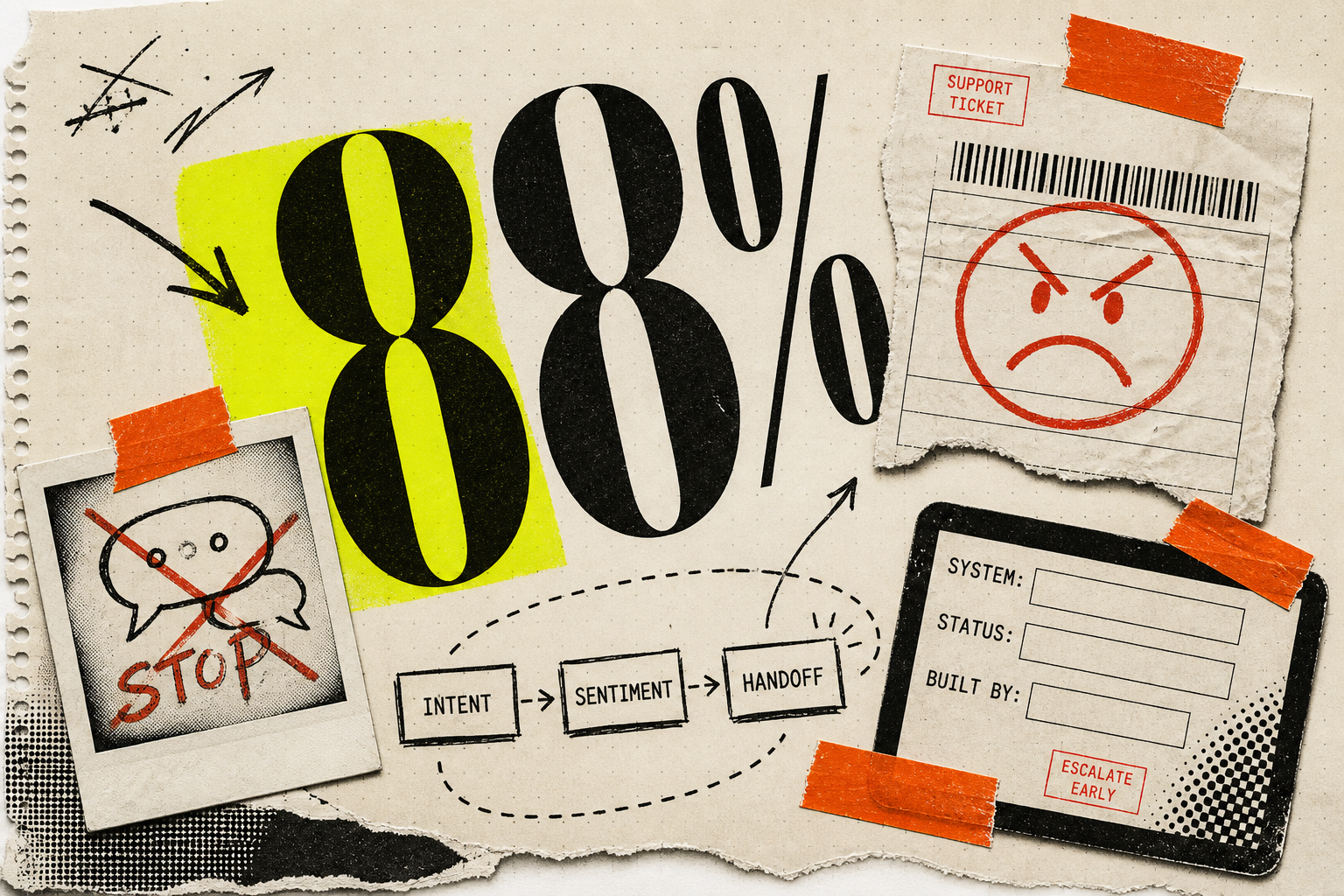
Never Put An AI Agent In Front Of An Upset Customer
AI-handled support hits 4.10/5 CSAT vs 4.30 for humans — and the gap is entirely emotional tickets. Here's the four-gate escalation design that closes it.
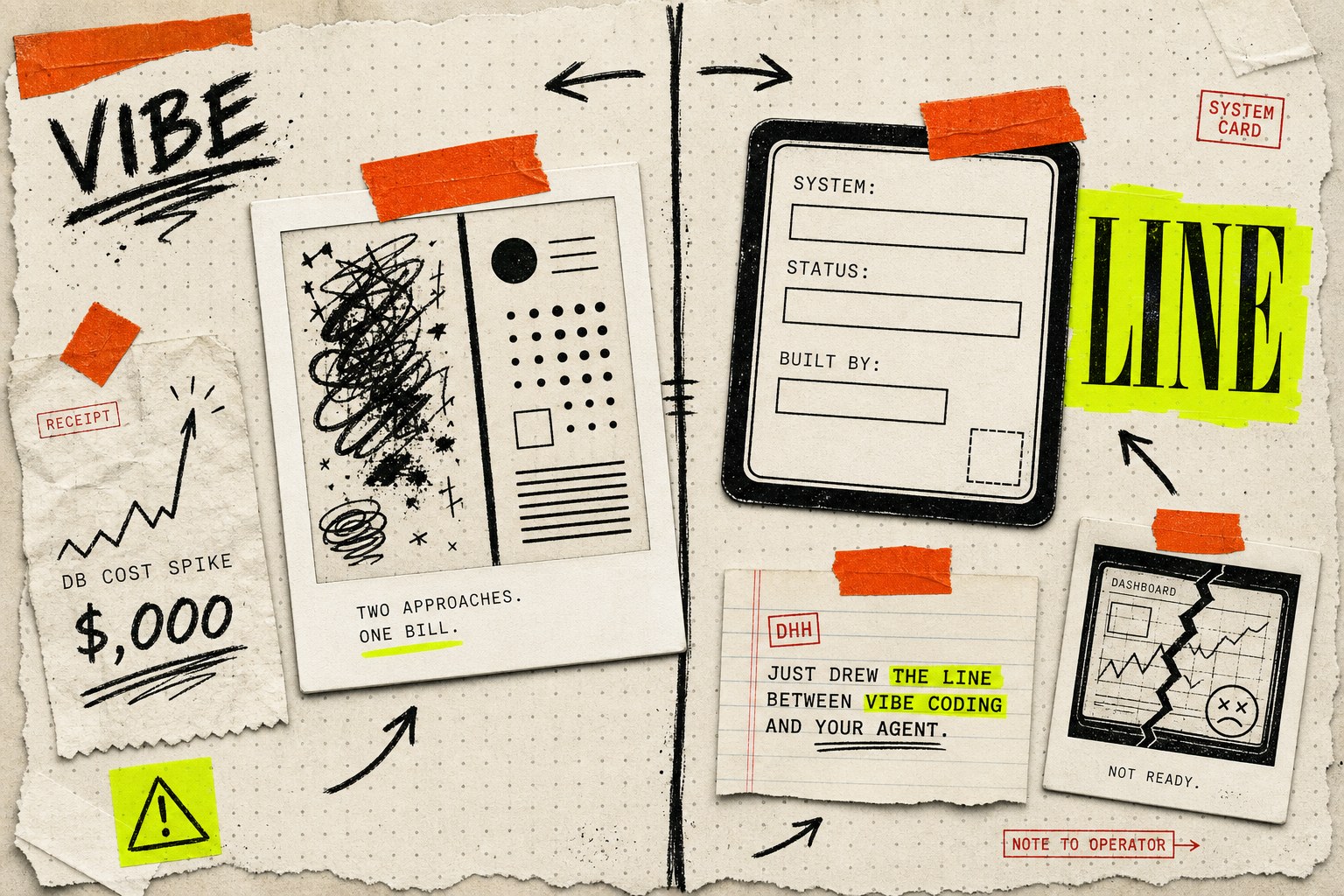
DHH Just Drew The Line Between Vibe Coding And Your Agent
DHH split vibe coding from agentic engineering on Lex Fridman. The same wedge is coming for every operator running AI agents in 2026.
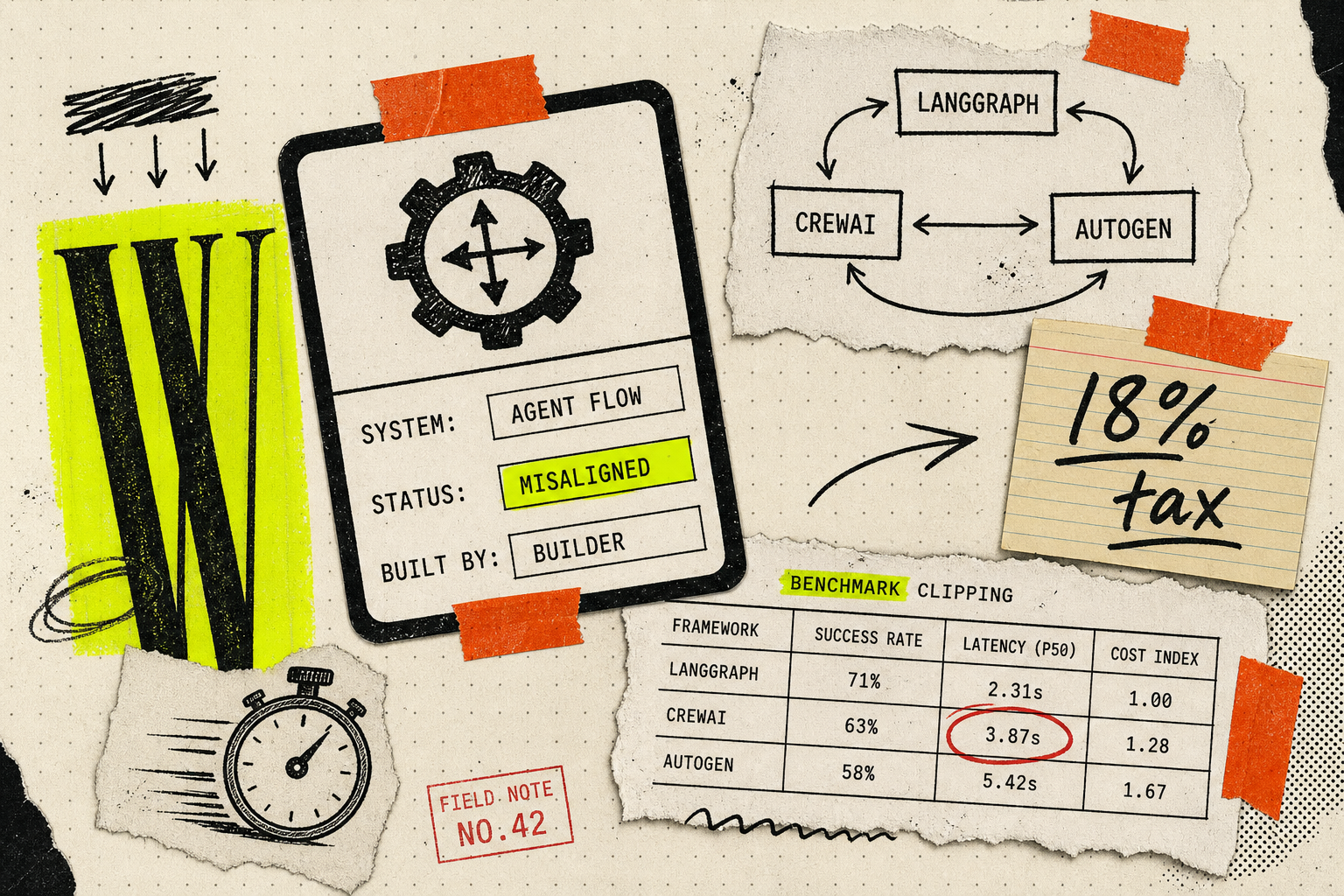
You Picked The Wrong Agent Framework. Benchmarks Say So.
You picked the framework off a listicle instead of a benchmark. Here's how LangGraph, CrewAI, AutoGen actually stack up — and the picking rule I use.