Klarna Just Rehired The Humans It Replaced. Read The Bill.
Klarna reversed its AI-only customer service play and is rehiring humans. The story most operators are telling about that reversal is wrong — here's the bill.
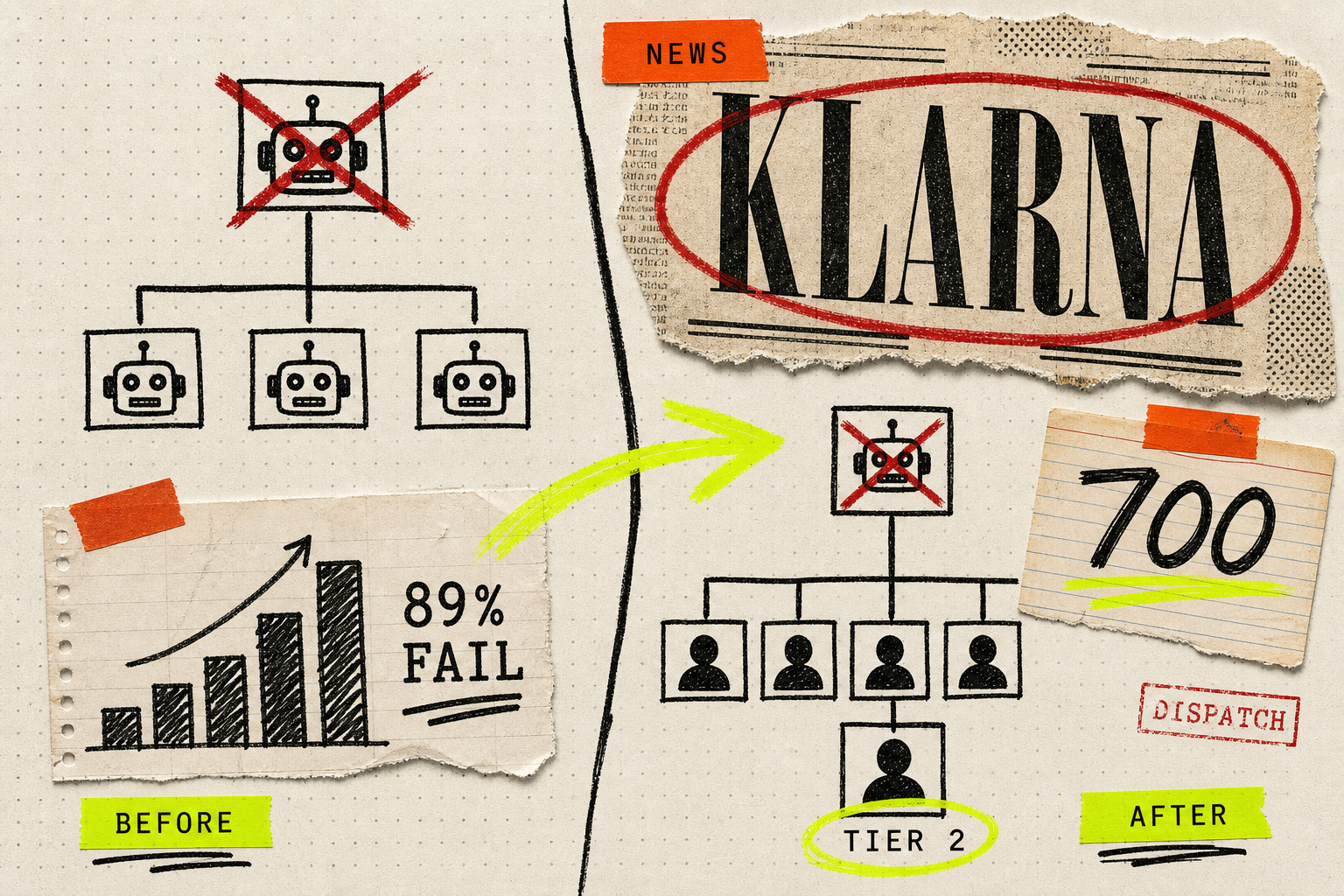
Klarna spent 18 months as the poster child for "AI replaces workers." In 2024 they announced their assistant was doing the work of 700 customer service agents. Sebastian Siemiatkowski went on every podcast that would have him. The stock press ate it up.
Then in May 2025 Klarna quietly reversed course and started hiring humans back[1]. By 2026 the walk-back was fully public. The AI didn't get fired. But the "AI-only support" narrative did.
Now the same operators who saw that headline in 2024 are staring at the 2026 reversal wondering: was the whole thing a lie? Is AI customer service dead? Should I cancel my Agentforce pilot?
No. But the story most people are telling about Klarna is wrong, and if you build off the wrong story you're going to burn six figures learning the right one.
What Actually Happened At Klarna
Klarna didn't fire the AI. In the CEO's own words to Bloomberg in May 2025, they "cut human support too aggressively" and are reopening hiring for premium and complex-case roles[2]. The AI still handles a majority of low-tier tickets. Humans are back on the escalation path.
That's not a reversal of AI. That's the correction of a bad org design.
The mistake wasn't automating. It was removing the human tier entirely, so when the AI hit its 15-20% "I can't solve this" wall — and every AI hits that wall — there was nobody to catch the ball. Customer satisfaction on complex service interactions tanked[3].
You can't build an escalation path if you fired the people who were supposed to catch escalations.
The Numbers That Actually Matter In 2026
Here's the counter-intuitive part. While Klarna was reversing, adoption of AI service agents was doubling.
Salesforce's 2026 State of Service data: adoption of AI agents in customer service teams jumped from 39% in 2025 to 66% in 2026 — a 1.7x increase in a year[4]. Agentforce alone went from 5,000 deals in Q4 FY25 to 29,000 in Q4 FY26, with paid deals up 50% quarter-over-quarter[5].
Adoption isn't slowing. It's accelerating. And 70% of teams running an AI agent report "measurable improvements" in service metrics.
But — and this is the bill Klarna paid publicly so you don't have to — Gartner also predicts that 50% of the companies that cut customer service staff because of AI will rehire for similar roles by 2027[6]. Same firm, same year, same research direction: agents work, but "AI-only" doesn't.
Half the CS-layoff crowd is coming back to hiring. That's not a bug in AI. That's a bug in how the ROI math was sold.
Where AI Customer Service Actually Breaks
Every operator I talk to who deployed a support agent hit the same wall: it's not the AI's accuracy that kills you. It's the handoff.
When the AI can't resolve something and has to hand off to a human, three things go wrong at once:
- The customer has already typed their problem twice — once to the AI, once to the human. They're pissed.
- The human agent gets zero context and has to start from scratch.
- The AI usually escalates the wrong ticket to the wrong person, because it doesn't know your org chart.
Gartner's 2025 customer service technology research: human agents receiving escalations with full context attached resolve them 35-45% faster than agents starting from scratch[7]. That's a huge lever, and almost nobody is pulling it.
The rule of thumb I use with anyone building a CS agent: if your AI's handoff-to-human failure rate is above 5%, you're actively destroying customer relationships at scale[8]. That's not a "tune the prompt" problem. That's an architecture problem.
The 89% Number Every Pilot Should Know
Now zoom out. Gartner's 2026 data on agentic AI projects: 89% of AI agent pilots never make it to production[9]. The 11% that do? 171% ROI on average.
Read that again. Not 89% work and 11% fail. Ninety percent die in the sandbox.
Why? Same reason Klarna's rollback happened. Most pilots are architected as "look, the AI can do this thing" demos. They never wire up:
- Governance (who owns the AI's decisions when they go wrong)
- Escalation paths (what happens on the 15% the AI can't handle)
- Guardrails (what happens when the AI answers something it shouldn't)
- Cost caps (what happens when token spend goes vertical)
Gartner separately projects that 40% of agentic AI projects will be canceled by the end of 2027[10] because the models don't yet have the "maturity and agency to autonomously achieve complex business goals." That's the polite way of saying: you can't hand an AI agent a P&L and walk away yet.
What I'd Actually Build Right Now
If I were running customer service for a $5M-$20M business today, I'd do the opposite of Klarna's 2024 mistake and the opposite of the "AI is dead" 2026 mistake.
The build:
- Tier 0 — AI first-touch. Handles FAQ, order status, refund status, basic troubleshooting. Optimized for speed and deflection. Owns roughly 60-70% of tickets.
- Tier 1 — Human handoff with full context. The AI writes a 3-line summary of the conversation, tags the ticket with intent + priority + customer LTV, and hands to a human. Human resolves in half the usual time because context is packaged.
- Tier 2 — Human ownership. Complex, high-value, or emotional cases route directly to a named human. AI stays out.
- Weekly ops review. Track handoff failure rate, CSAT delta between AI-resolved and human-resolved, and cost-per-ticket. If handoff failure is above 5%, freeze the AI tier until it's fixed.
None of this is exotic. It's the same three-tier setup mid-market support teams have run for 20 years. The only difference is Tier 0 is now an LLM instead of a scripted chatbot.
The 89% pilot-failure rate isn't a technology problem. It's an operator problem — nobody wants to spend three months designing the boring escalation layer when the flashy demo took two days.
The Signal Underneath The Klarna Story
Zendesk's 2026 research: 86% of consumers say responsiveness and accuracy strongly influence purchasing decisions, and 95% expect a clear explanation when AI makes a decision about them[11]. Read that as: your customers are not "AI-averse" as a group. They're outcome-averse. They don't care who solved their problem. They care that it got solved fast, correctly, and that someone answers when the AI can't.
Klarna didn't get punished for using AI. They got punished for using AI as a firing excuse. That's the story operators should be taking home from the 2026 reversal — not "AI in customer service failed," but "AI without a human tier fails, and the boardroom-friendly version of that story just cost Klarna a public U-turn."
If You Want This Done Right
I build AI-plus-human customer service systems for $1M-$20M operators — Tier 0 through Tier 2, handoff instrumentation, cost governance, the boring escalation layer that separates the 11% pilots from the 89%. If you're two months into a CS agent pilot and the numbers aren't moving, that's what the audit call is for. Thirty minutes, no pitch. I'll tell you where your version breaks and what it would take to fix it.
The 89% don't fail because the model isn't good enough. They fail because nobody built the second tier.
-
Klarna Reverses On AI, Says Customers Like Talking To People↩
Klarna started rehiring human agents in May 2025 after AI-only CX hurt satisfaction.
-
Klarna AI Customer Service: Replacing 700 Agents — A 2026 Case Study↩
Klarna CEO told Bloomberg they 'cut human support too aggressively' and are reopening premium/complex-case roles.
-
Klarna Reverses AI Layoffs: Why Replacing 700 Failed↩
Customer satisfaction on complex service interactions deteriorated after Klarna's AI-only rollout.
-
Two in Every Three Customer Service Teams Now Use AI Agents↩
Adoption of AI agents in customer service teams grew from 39% to 66% year-over-year (1.7x).
-
Agentforce Statistics and Trends (2025-2026)↩
Agentforce deal velocity: 5,000 (Q4 FY25) → 29,000 (Q4 FY26); paid deals up 50% QoQ.
-
What Klarna's 700-Worker AI Reversal Teaches Mid-Market Buyers About Going All-AI↩
Gartner: half the companies that cut CS staff for AI will rehire by 2027.
-
AI Customer Service in 2026: What Works and What Doesn't↩
Human agents receiving escalations with full context resolve them 35-45% faster.
-
AI Customer Service Metrics that Matter in 2026↩
Handoff rate tracks AI-to-human escalations; interpretation requires satisfaction data.
-
89% of AI Agent Pilots Never Scale: Gartner's 2026 Data↩
89% of AI agent pilots never reach production; the 11% that do deliver 171% ROI.
-
Agentic AI Adoption Statistics for 2026↩
Gartner projects 40% of agentic AI projects will be canceled by end of 2027.
-
AI Customer Service 2026: Cut Cost 45%, Up CSAT 30%↩
Zendesk 2026: 86% of consumers say responsiveness/accuracy strongly influence purchasing; 95% expect clear AI-decision explanations.
Ready to build your own AI system?
Book a Free Audit Call →Keep Reading
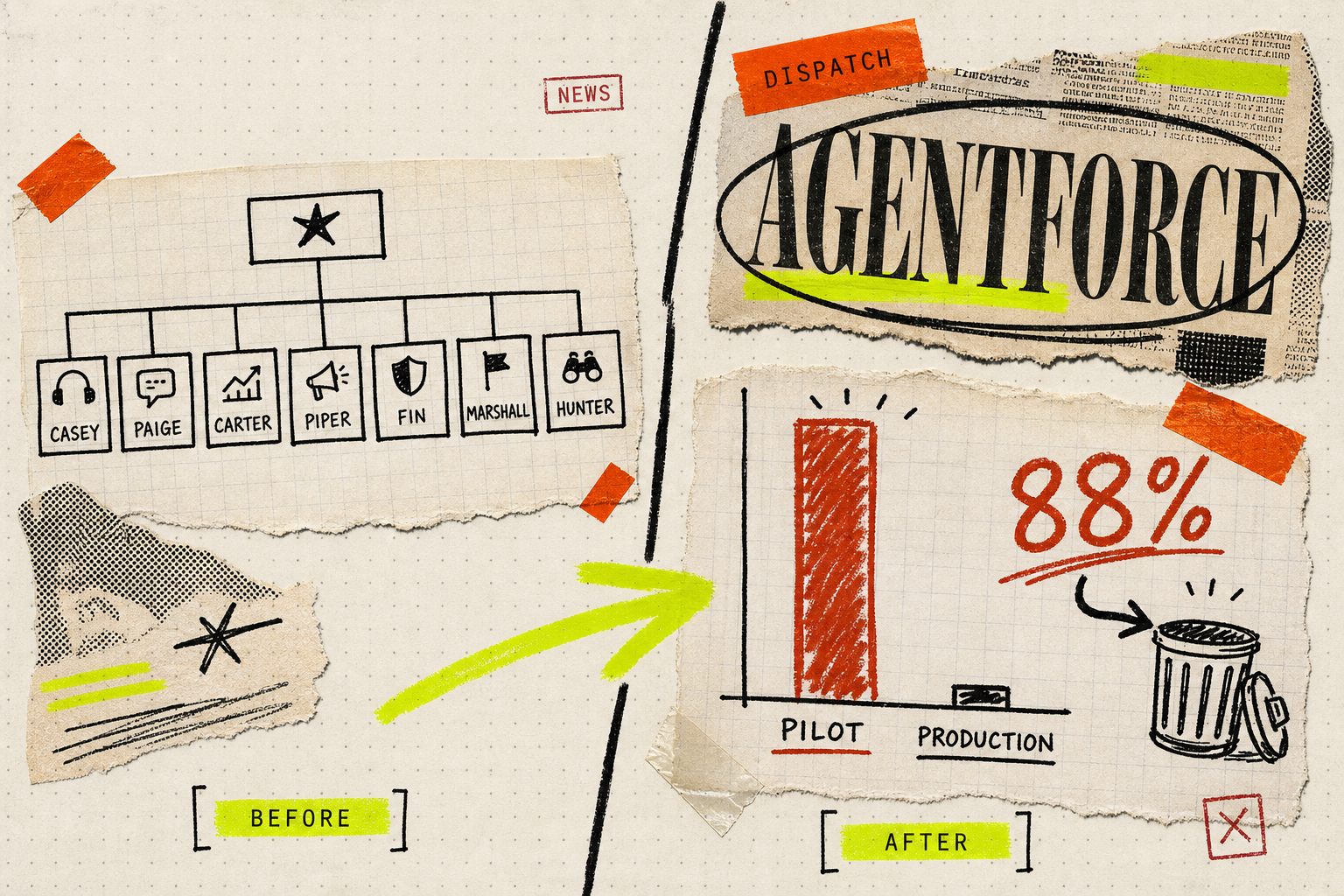
Salesforce Just Named Seven Agents. Enterprise AI Still Loses 88% Of Pilots.
Salesforce shipped 7 named Agentforce agents. But 88% of enterprise AI pilots still fail to reach production. Here's the real gap operators need to fix first.

Small Businesses Using AI Are Hiring More People, Not Fewer
Gusto ran payroll on 2,262 small businesses. AI adopters grew headcount 7% faster — 10% for under-10 firms. The doom takes miss the operator story.
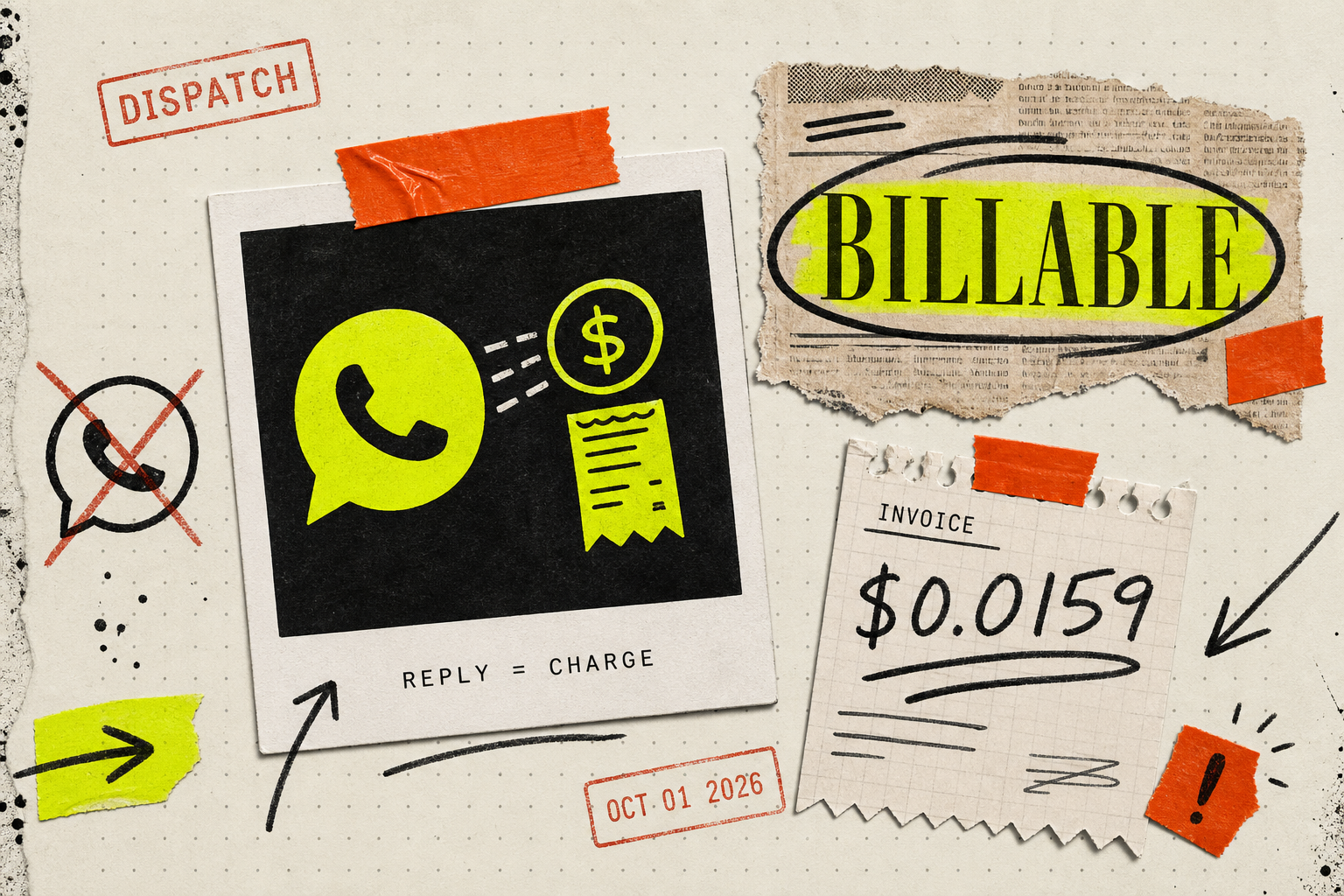
WhatsApp Just Made Every Reply Billable. Your Bot Bill Starts October 1.
On October 1, Meta starts charging for every WhatsApp reply — human, third-party AI, or its own. The sticker price is the boring part. Here's what it actually breaks.