Andrew Ng's OpenWorker Is Free. Deploying It Isn't.
Andrew Ng open-sourced OpenWorker — 10K GitHub stars in 9 days. It's real, it's MIT-licensed, and it's not the Zapier killer for your business. Here's why.
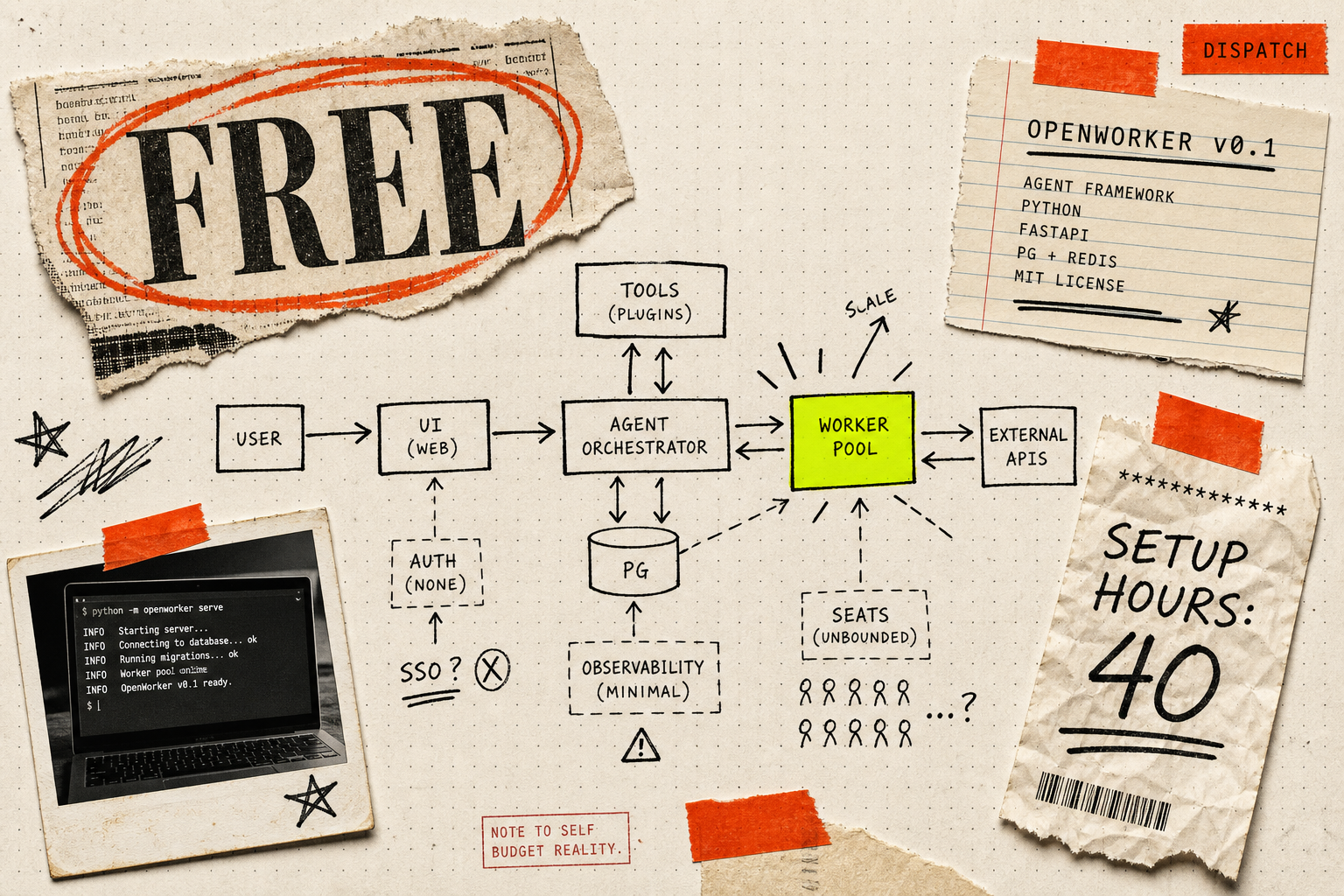
Andrew Ng open-sourced an AI coworker last month. It hit 10,347 GitHub stars in nine days.[1] The pitch is the cleanest one I've heard all year: an agent that lives on your desktop, plugs into 25+ apps you already use — Slack, Gmail, Notion, HubSpot, Google Calendar, GitHub — and hands you finished work instead of another chat transcript.[2]
Every AI newsletter I read this week called it a Zapier killer. Most of them are wrong.
OpenWorker is real, and for the right business it's a serious tool. But "free" and "open-source" are doing a lot of hiding in the marketing copy. If you run a $5M to $20M business and you're reading the hype thinking you can drop this on your team Monday morning, let me save you the weekend.
What Ng actually shipped
The technical story is impressive. OpenWorker is MIT-licensed, runs fully local through Ollama or points at whatever LLM API key you own, and works with any MCP server you connect.[3] It has an approval-gated action system — the agent asks before it sends an email, posts to Slack, or runs a shell command.[4] It has scheduled execution, so you can set up a morning briefing or a weekly report and let it run.[5]
The philosophy behind it is the part I actually care about. Ng and Rohit Prasad built this around one idea: an AI coworker returns deliverables, not conversation.[6] Your code, reviewed and patched. A drafted proposal. A Slack thread reply that already links the doc it wrote. That's the bar. That's the bar that most AI tools sold to operators still can't clear.
And the price is zero. The software itself is free. You pay for model tokens or you run local. That's it.
Why it's not a Zapier killer for your business
I run a studio that builds these systems for a living. When I read "MIT-licensed, local-first, 25+ connectors, works with any LLM," here's what I actually hear: this is a builder's tool, not a business tool.
Look at the prerequisites listed in the repo: Python 3.10+, Node 20+, the Rust toolchain via rustup for the desktop shell.[2] Your operations manager is not installing rustup. Your bookkeeper is not resolving Python venv conflicts. The install alone is a two-hour ticket for someone who already knows what they're doing.
Then there's the shape of the product. OpenWorker is a single-user, local desktop install. It doesn't have native SSO, SCIM, or centralized team administration.[7] Every seat is a separate install with separate connector credentials. If you want ten people on your team using it, that's ten machines to configure, ten sets of OAuth tokens to manage, ten places where sensitive data now lives.
The early developer coverage got to this within a week: the initial fit is solo founders, small technical teams, and individuals with the appetite to install and maintain a local stack.[8] Most businesses don't want their team running open-source apps that pull from company calendars, inboxes, and shared drives without a central admin console. That's the reality, not a knock on the project — it's the reality of every early-stage open-source tool.
The numbers nobody in the news cycle is showing you
Here's the context that matters. Gartner said in mid-2025 that over 40% of agentic AI projects will be canceled by the end of 2027 — not because the models are bad, but because of escalating costs, unclear business value, and inadequate risk controls.[9] Their newer number is uglier: 89% of AI agent pilots never scale to production.[10] The 11% that do deliver 171% ROI. That gap isn't a model problem. It's an operations problem.
RAND and Gartner data from earlier this year showed 28.4% of AI projects reach production but fail to deliver expected value, and another 18.1% run but never recoup their costs.[11] So the math on any new agent tool — free or paid — is that most attempts to deploy it die in the middle, not the ends.
OpenWorker doesn't fix any of that. If anything, it makes the failure modes worse, because when the tool is free and open-source the internal justification for spending real hours on setup, permissions, guardrails, and ongoing maintenance gets weaker. Nobody budgets 40 hours of a technical hire's time to configure a "free" tool. So it ends up half-installed on one laptop, doing 20% of what it could.
What it's actually good for right now
If you're the kind of operator who is going to try this — and there are three profiles where I'd say go for it — here's when OpenWorker actually earns its shelf space.
Solo founder or 1-3 person team, technical. You already run local dev tools. You already own an OpenAI or Anthropic key. You want an agent that reads your Slack, drafts your email replies, and pulls together a Monday morning brief without another SaaS subscription. OpenWorker is genuinely built for you. It'll pay for itself in a week.
Studio or agency piloting agent workflows for clients. Free, MIT-licensed, model-agnostic, connector-rich. It's a fantastic sandbox to prototype what a "finished-work" agent looks like for a specific client vertical before you build the production version on top of a managed platform. I'm going to use it exactly this way.
Engineering-heavy business (SaaS, dev tools) with 5-15 senior engineers. Every engineer on your team can install it themselves, connect it to their Jira and Linear and terminal, and get 5-10 hours a week back. No procurement cycle. No new vendor.
Outside those three, the honest answer is: keep watching. Wait for the managed hosted version. Wait for the SSO. Wait for someone to build the OpenWorker-for-hospitality or OpenWorker-for-ecommerce install script that turns 40 hours of setup into 40 minutes.
The pattern to notice
There's a bigger thing happening here that operators keep missing.
Every wave of open-source AI tooling — LangChain, AutoGen, CrewAI, now OpenWorker — arrives with a "you can replace [SaaS incumbent] for free" story. The story is technically true. It's also operationally misleading. The cost of the license was never the cost of the tool. The cost is the integration hours, the maintenance hours, the debugging hours when a connector breaks at 2am, the security review, the team training, the version upgrades.
Free is a great sticker price. It's a terrible business plan.
The businesses I've watched win with agents this year aren't the ones grabbing every open-source drop and hacking it in. They're the ones picking one narrow, expensive, repeatable workflow — one that costs them a real employee $2,000 to $8,000 a month right now — and building a specific agent to eat exactly that workflow. Whether the underlying tool is Zapier, n8n, OpenWorker, or a hand-rolled script matters less than whether the workflow itself is the right one to automate first.
That's the conversation I want to have with operators. Not "which agent framework do we bet on." That's the wrong question. The right question is which $60K/year seat becomes a $6K/year agent budget, and can we run that as a 90-day contained pilot with a real go/no-go decision at the end.
If you want help mapping which seat that is for your business, that's what the audit call is for. Thirty minutes. I'll tell you which workflow I'd target, which stack I'd build it on, and whether OpenWorker (or anything else) is actually the right base for your version. No pitch. Book at zerocam.studio.
The tools are getting better every month. Which one you pick matters less than whether you know what you're trying to replace.
-
OpenWorker: Andrew Ng's Open-Source Desktop Agent That Delivers Finished Work↩
OpenWorker reached 10,347 GitHub stars in nine days after launch.
-
andrewyng/openworker — official repository↩
OpenWorker prerequisites (Python 3.10+, Node 20+, Rust toolchain) and 25+ built-in connectors.
-
Andrew Ng open-sourced OpenWorker↩
OpenWorker runs fully local through Ollama or connects to your own API keys, supports 35 built-in connectors, and works with any MCP server.
-
OpenWorker — Open Source Local AI Coworker↩
OpenWorker has approval-gated actions that check in before sending emails, posting to Slack, or running commands.
-
OpenWorker: Andrew Ng's Local-First AI Coworker, Explained for Developers↩
OpenWorker supports scheduled automations such as morning briefs, weekly reports, and standing channel watches.
-
Andrew Ng Launches OpenWorker: An Open-Source AI Agent↩
Andrew Ng and Rohit Prasad launched OpenWorker on July 23, 2026 — free, open-source, local-first, delivers finished work not chat.
-
OpenWorker Review (2026): Andrew Ng Open-Source AI Coworker↩
OpenWorker does not include native SSO, SCIM, or centralized team administration since it is a single-user local desktop install.
-
Andrew Ng Just Released OpenWorker: An Open-Source, Local-First Desktop AI Coworker That Returns Finished Deliverables Instead of Chat↩
OpenWorker positioning and initial developer-community reception: local-first, model-agnostic, targeted at technical individual users first.
-
More than 40% Agentic AI projects will be cancelled by 2027: Gartner↩
Over 40% of agentic AI projects will be canceled by end of 2027 due to growing costs, elusive business value, and insufficient security.
-
89% of AI Agent Pilots Never Scale: Gartner's 2026 Data↩
89% of AI agent pilots fail to reach production; the 11% that survive deliver 171% ROI.
-
80% AI Failure Rate 2026: How RAND and Gartner Expose the AI Productivity Gap↩
28.4% of AI projects reach production but fail to deliver expected value; 18.1% run but never recoup their costs.
Ready to build your own AI system?
Book a Free Audit Call →Keep Reading
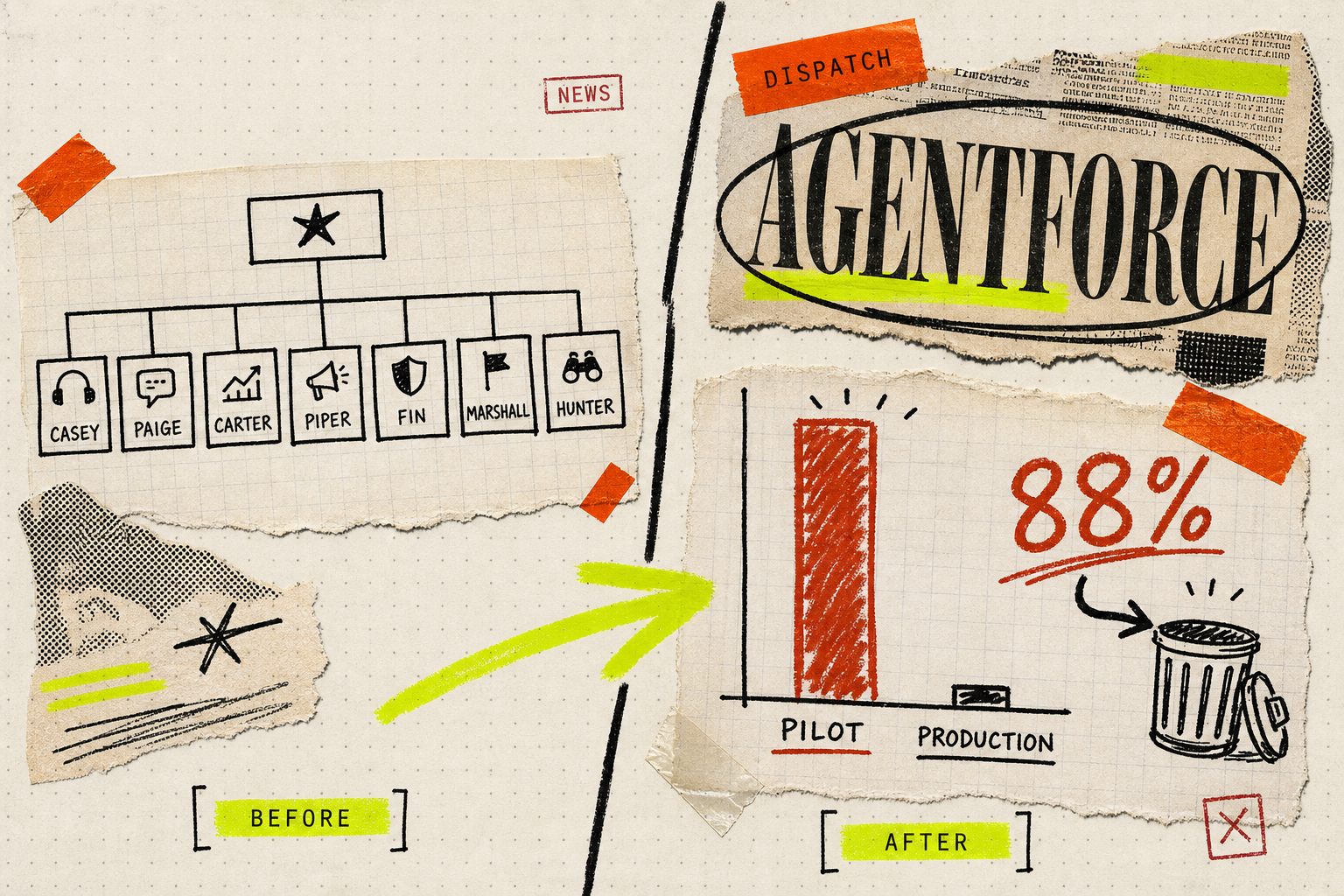
Salesforce Just Named Seven Agents. Enterprise AI Still Loses 88% Of Pilots.
Salesforce shipped 7 named Agentforce agents. But 88% of enterprise AI pilots still fail to reach production. Here's the real gap operators need to fix first.

Small Businesses Using AI Are Hiring More People, Not Fewer
Gusto ran payroll on 2,262 small businesses. AI adopters grew headcount 7% faster — 10% for under-10 firms. The doom takes miss the operator story.
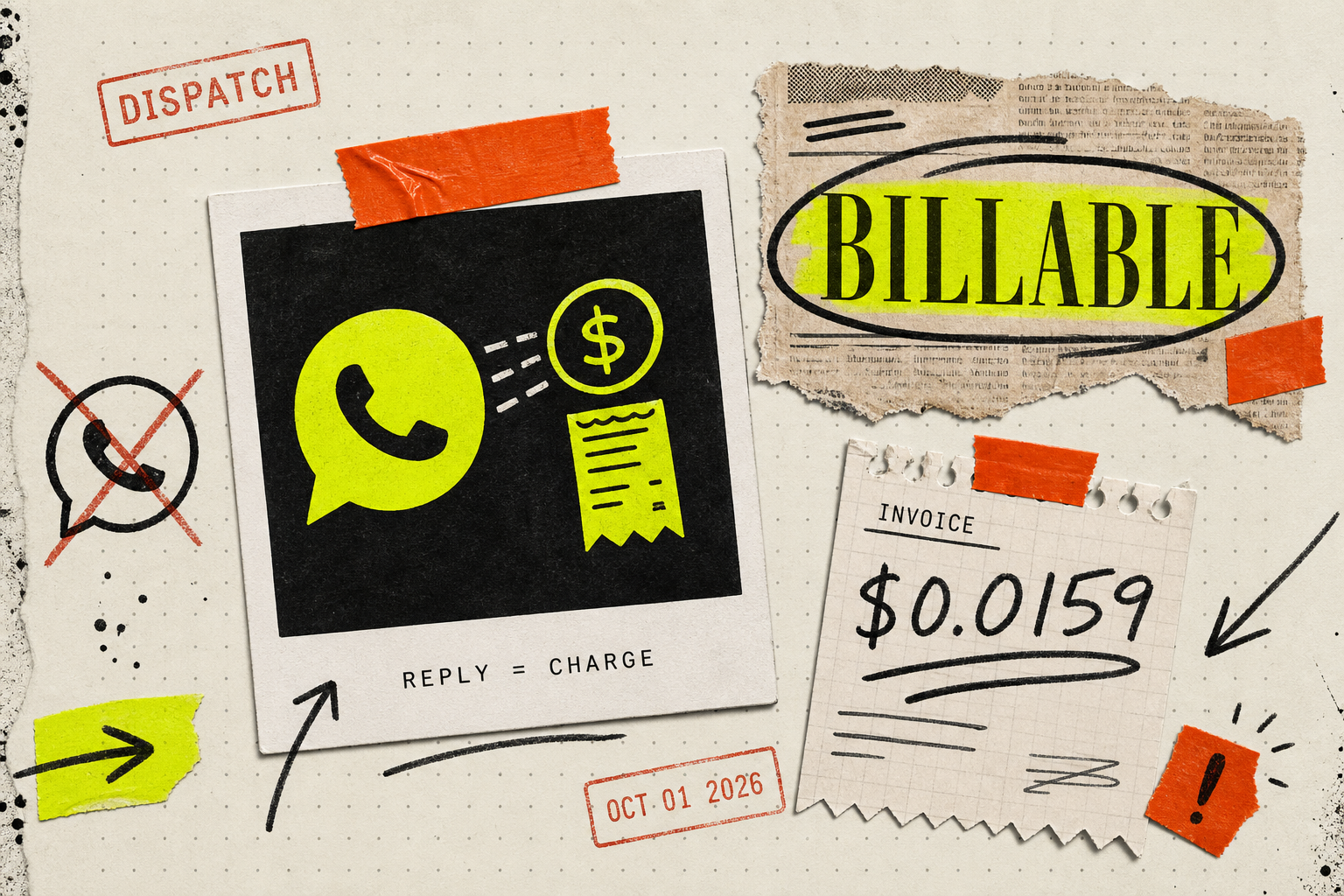
WhatsApp Just Made Every Reply Billable. Your Bot Bill Starts October 1.
On October 1, Meta starts charging for every WhatsApp reply — human, third-party AI, or its own. The sticker price is the boring part. Here's what it actually breaks.