AI SDRs Convert 40% Worse Than Humans. Here's Why.
AI SDRs convert booked meetings to qualified pipeline at 15%. Humans do it at 25%. Here's what the 40% gap actually means for your outbound stack.
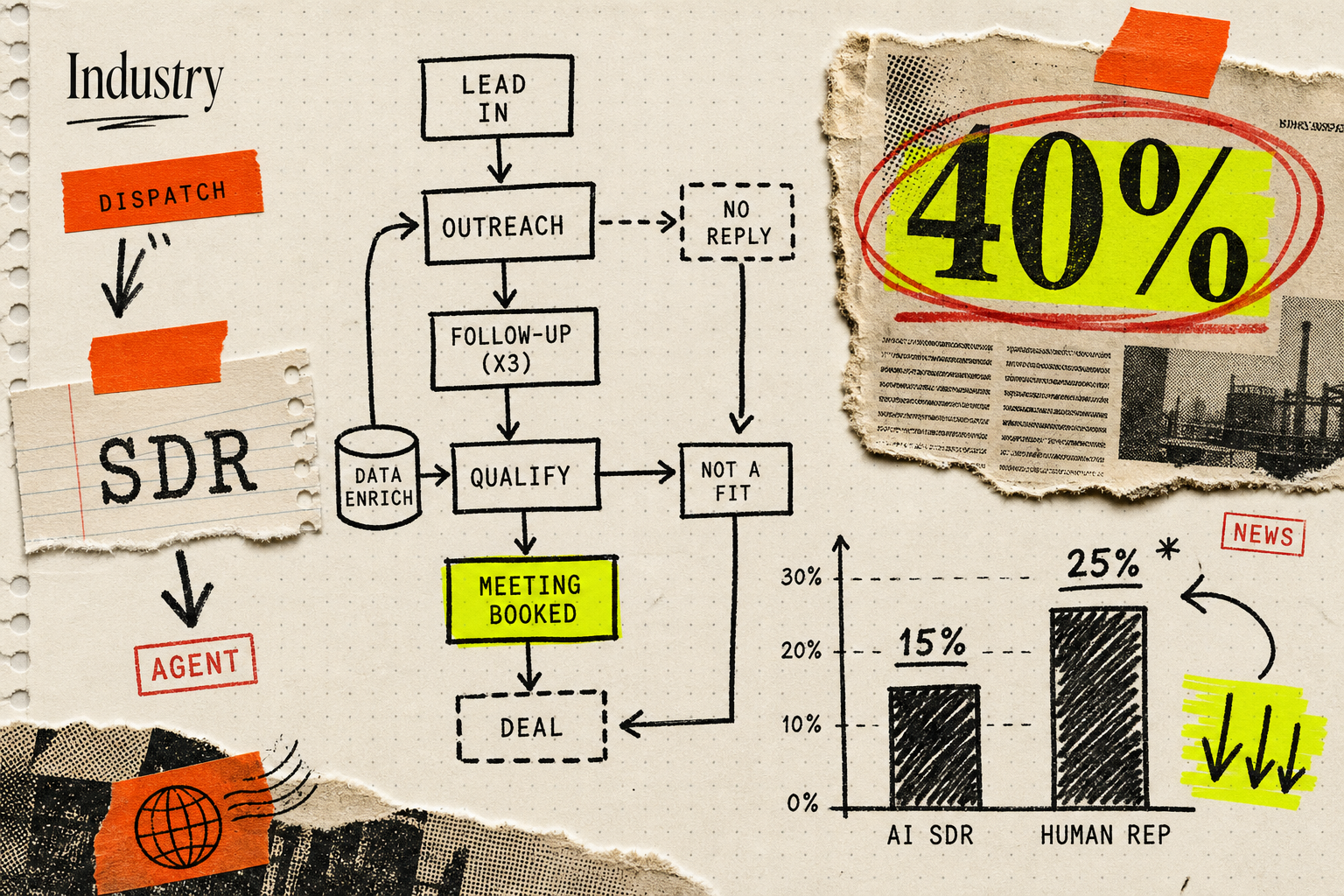
The AI SDR pitch was seductive: infinite scale, no headcount, hyper-personalized emails while you sleep. Two years and $4.4B of market spend later[1], the field data is in. AI SDRs convert booked meetings to qualified pipeline at roughly 15%. Human SDRs do the same job at 25%[2]. That's a 40% drop in downstream quality — and it's the number every operator planning to "replace their SDR team with AI" needs to see before they sign the contract.
I'll say the quiet part out loud: most companies that ripped out their human sales development team in 2025 are quietly rebuilding it in 2026.
The Numbers Nobody Wants To Show You
Let's stack them.
- AI SDRs vs human SDRs on meeting-to-opportunity conversion: 15% vs 25%. A 40% performance gap corroborated across independent 2026 deployment analyses and SuperAGI benchmarks[2].
- Fewer than 40% of sellers using AI report that it has actually improved productivity. Gartner's own 2026 seller-survey number[3]. This is the same Gartner that also predicts AI agents will outnumber human sellers 10-to-1 by 2028[4]. Both things are true at once. Read them together.
- AI-generated cold emails get flagged as spam at more than double the human rate, per SuperAGI's benchmark data reported alongside the conversion gap[1].
- Fully autonomous AI SDR annual churn: 50-70%[5]. Half to two-thirds of buyers cancel within a year.
- The AI SDR headcount trade: SDR roles down 22.7% in the year ending mid-2026, full-cycle AEs up 10.8% per Regie.ai's June 2026 workforce data[6]. Companies didn't just cut SDRs — they moved the work up the funnel, back to humans who close.
- 41% of enterprise B2B teams ran at least one AI SDR in production by Q1 2026. Only 22% fully replaced the human SDR function[7]. The gap between "tried" and "committed" is the story.
Now the cautionary tale everyone in the category is trying to forget. 11x — the most-funded AI SDR startup, $50M Series B from Andreessen Horowitz — was reported by TechCrunch to have claimed ZoomInfo as a customer; ZoomInfo publicly denied the relationship. Former employees told the outlet that annual churn was running 70-80% within months of signup. Inc. Magazine called it AI's potential "Theranos moment"[2]. Artisan's own CEO went on record admitting his product's early output had severe hallucination problems. That's the CEO. Saying that on the record.
Why AI SDRs Underperform (Even When The Model Is Fine)
The naive read is that the models are bad. They're not. GPT-5, Claude 4.6, Gemini Ultra — these can all write competent cold emails. The problem isn't the writing. It's everything around the writing.
Real targeting is elimination, not filtering. A good human SDR spends 60% of their day figuring out who NOT to email. They read a company's careers page, notice the marketing team just got laid off, and cross that account off. They see a founder posted on LinkedIn about a bad experience with the last vendor in your category and cross THAT one off. AI SDRs work the opposite direction — they filter INTO a list from firmographics and enrichment. The result is a list that looks precise on paper and is 80% garbage on the phone.
Generic messaging at volume trashes your domain reputation. Send 50,000 emails a month with the same intro sentence in a thousand disguises and the ISPs figure it out fast. One of the founder-forum posts Harbor BD documented put it plainly: "We're sending 50,000 emails a month. We've booked 14 meetings. Four showed up. One was real. Our domain reputation is in the tank."[2]
The "hallucination as feature" problem. AI SDRs sometimes invent context — a fake shared connection, a made-up product feature, a slightly wrong company detail — and the prospect notices. Human reps hallucinate too, but at 40 emails a day, not 40,000. The blast radius is different.
AI SDRs optimize for meetings booked, not revenue closed. This is the one that hurts. The vendor dashboards light up green: meetings up 3x, booked demos doubled. Meanwhile the AE calendar is packed with prospects who don't fit the ICP, don't have budget, or don't remember opting in. The 15% conversion number isn't the AI's fault. It's what happens when you optimize the leading metric and stop watching the lagging one.
What Actually Works Right Now
The teams getting real results in 2026 aren't the ones who fired their SDR team. They're the ones running a hybrid stack that looks something like this:
- AI does the research grunt work. Account scoring, contact discovery, intent signal aggregation, first-draft messaging. Tools like Clay, Common Room, and Cargo are useful here — they replace 60% of an SDR's manual list-building.
- Humans do the elimination. Every list AI produces goes through a human 10-minute pass to strip the 30% that shouldn't be contacted.
- AI drafts, humans edit and send. Every message gets a human eye before it leaves the outbox. This alone kills the spam-flag rate and the hallucination rate.
- AI handles the aftermath: enrichment, follow-up cadence timing, CRM logging. This is where AI is genuinely 10x better than a human — consistent, tireless, never forgets.
- Humans handle qualification calls and objection handling. The 15%-vs-25% gap disappears the moment a person joins the call.
Look at what the vendors themselves are quietly doing. Even AiSDR — an AI SDR vendor — is now on record saying the strongest sales teams "don't choose between humans or AI. They combine them"[8]. When the vendors selling autonomous replacement start writing "augment, don't replace" on their own site, the pivot is over.
What This Means If You're An Operator Right Now
If you're running a $1M-$20M business and evaluating AI SDR tools this quarter, three things:
One — stop optimizing for meetings booked. Start measuring booked-to-opportunity conversion and closed-won. If your AI SDR is booking 3x more meetings but your close rate is halved, you're not scaling. You're taxing your AEs and burning your domain.
Two — budget for a human in the loop. Every "fully autonomous" pilot I've seen or read about ends the same way: 6 months in, someone quietly gets added to review outbound before it sends. The $75K-$120K human SDR line item you thought you were eliminating comes back as a $60-90K sales ops or outbound manager role. Plan for it up front.
Three — treat AI SDRs like junior reps, not senior ones. Give them the grunt work (research, cadence, CRM hygiene). Keep the judgment work — targeting, messaging polish, objection handling — with humans. The teams that respect that split are the ones showing net positive ROI. The teams that don't are the ones writing the founder-forum post about their tanked domain reputation.
The AI-SDR-as-replacement story is over. The AI-SDR-as-copilot story is just getting started, and it's less flashy but it actually works. Pick the boring, working version.
If you want to figure out where AI fits in your outbound stack without buying the next Ava, Alice, or Piper on the market — that's what the audit call is for. Book one at zerocam.studio, and I'll tell you exactly what to keep, cut, or wire up in your current setup. Thirty minutes. No pitch.
-
AI SDRs in 2026: The Hype, the Gap & Where Data Still Wins↩
Global AI SDR market hit $4.39B in 2025, projected $5.81B in 2026; AI emails flagged as spam at more than double the human rate.
-
AI SDR Results 2026: Why Automated Outbound Is Failing B2B Pipeline↩
AI SDRs convert booked meetings to qualified opportunities at 15% vs 25% for human SDRs (40% drop); 11x cautionary tale with 70-80% churn.
-
Gartner Predicts AI Agents Will Outnumber Sellers 10 to 1 by 2028, Yet Fewer Than 40% of Sellers Will Say Agents Improved Productivity↩
Fewer than 40% of sellers report AI agents have improved their productivity (Gartner forecast).
-
Gartner: AI Agents Will Outnumber Human Sellers 10-to-1 by 2028↩
81% of B2B sales teams use AI in some capacity as of 2026, up from 50% in 2024; Gartner: AI agents outnumber human sellers 10:1 by 2028.
-
The Wave of AI Agent Churn to Come: Prompts Are Portable↩
Fully autonomous AI SDR deployments show 50-70% annual churn.
-
AI SDR Pricing Index 2026: What 5 Platforms Actually Cost↩
Regie.ai June 2026 workforce data: SDR headcount down 22.7% YoY while full-cycle AEs grew 10.8%.
-
Will AI SDRs Replace Sales Reps? 2026 Data↩
41% of enterprise B2B teams ran an AI SDR in production by Q1 2026 but only 22% fully replaced human SDR function.
-
State of AI SDR Industry 2026 Report↩
Vendor AiSDR positions strongest sales teams as ones that combine humans and AI, not replace one with the other.
Ready to build your own AI system?
Book a Free Audit Call →Keep Reading
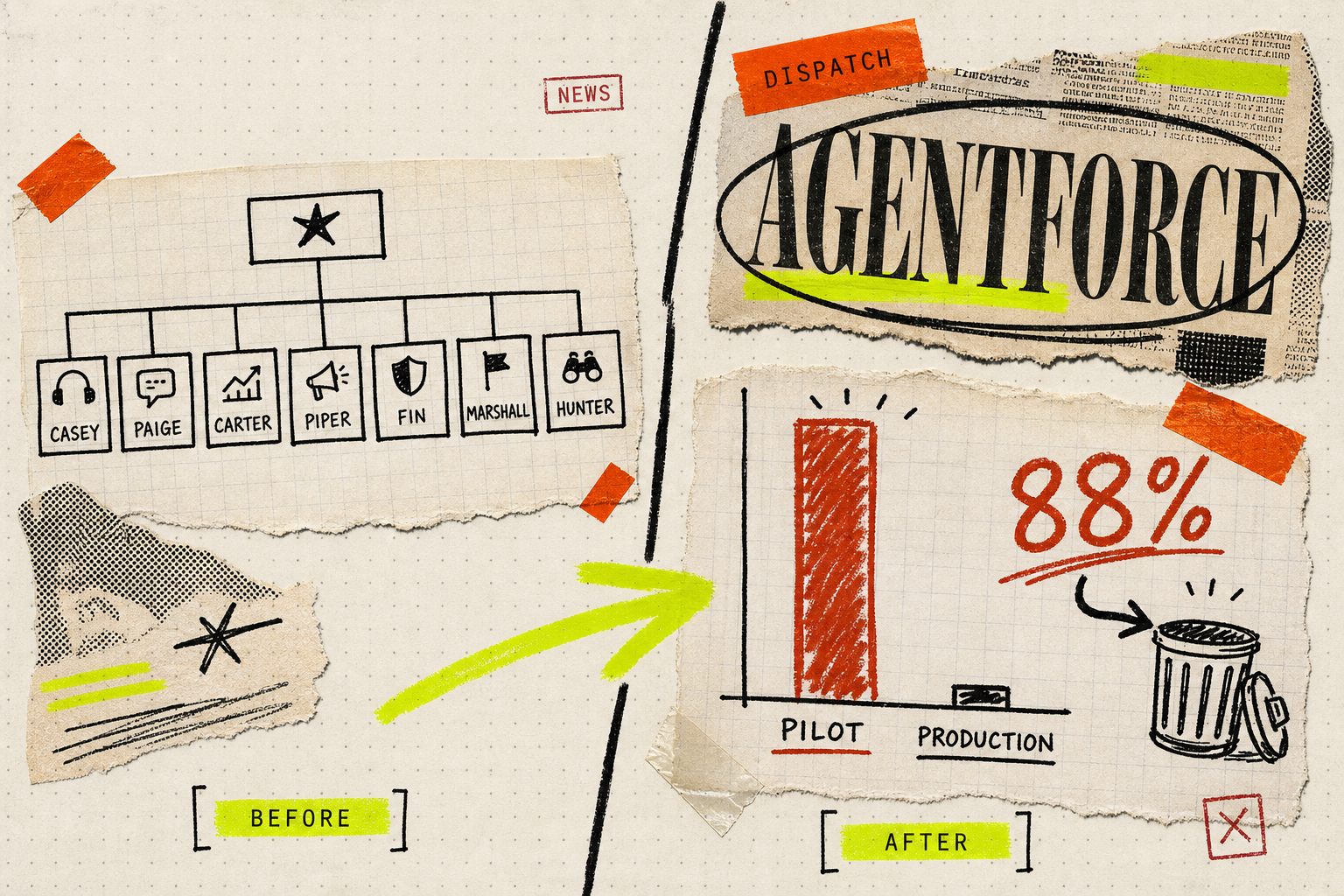
Salesforce Just Named Seven Agents. Enterprise AI Still Loses 88% Of Pilots.
Salesforce shipped 7 named Agentforce agents. But 88% of enterprise AI pilots still fail to reach production. Here's the real gap operators need to fix first.

Small Businesses Using AI Are Hiring More People, Not Fewer
Gusto ran payroll on 2,262 small businesses. AI adopters grew headcount 7% faster — 10% for under-10 firms. The doom takes miss the operator story.
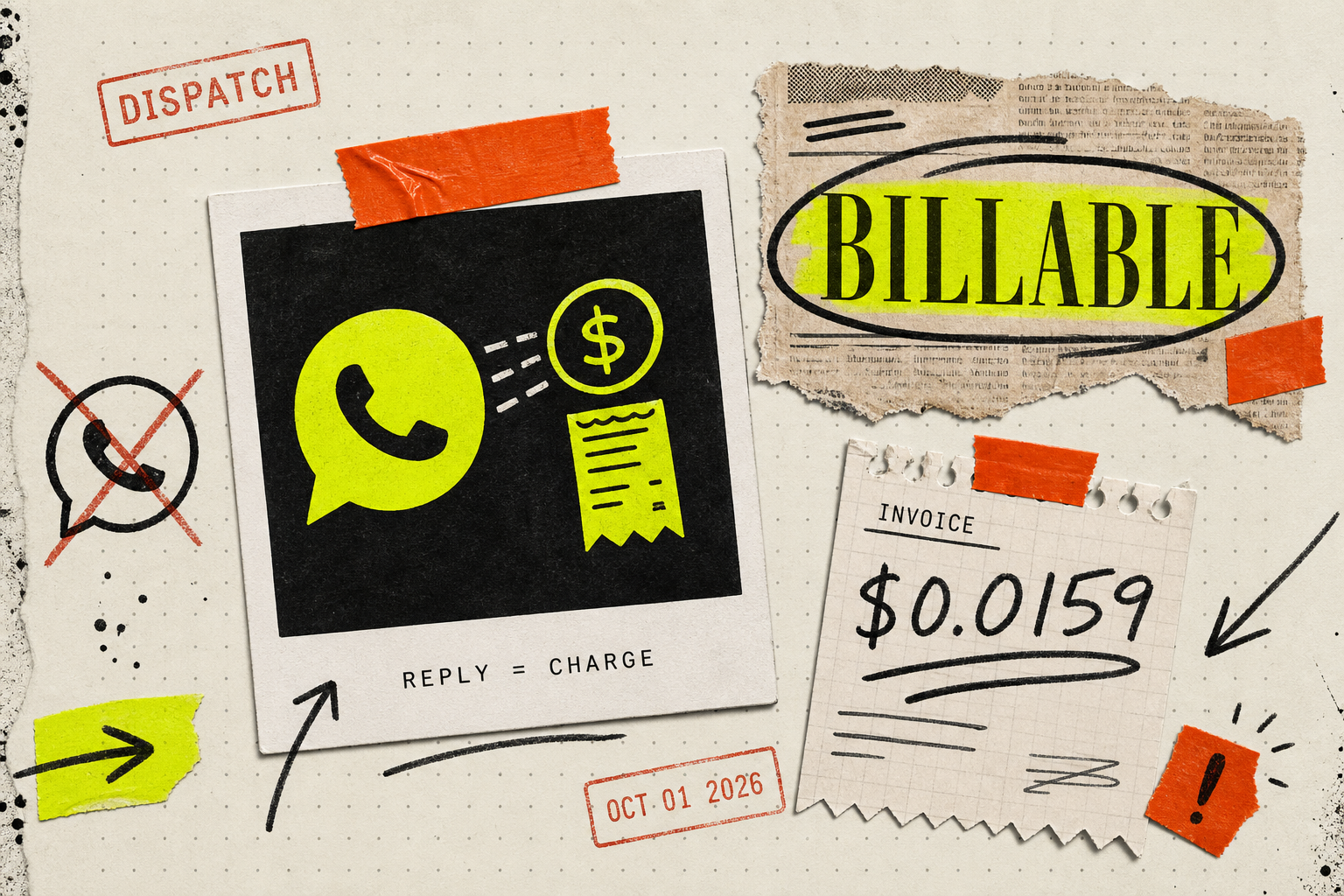
WhatsApp Just Made Every Reply Billable. Your Bot Bill Starts October 1.
On October 1, Meta starts charging for every WhatsApp reply — human, third-party AI, or its own. The sticker price is the boring part. Here's what it actually breaks.