75% of Voice AI Agents Fail in Production. Here's Why Yours Will Too.
Three out of four voice AI agent teams cannot ship to production. The numbers, the legal exposure, and what to test before you sign a vendor contract.
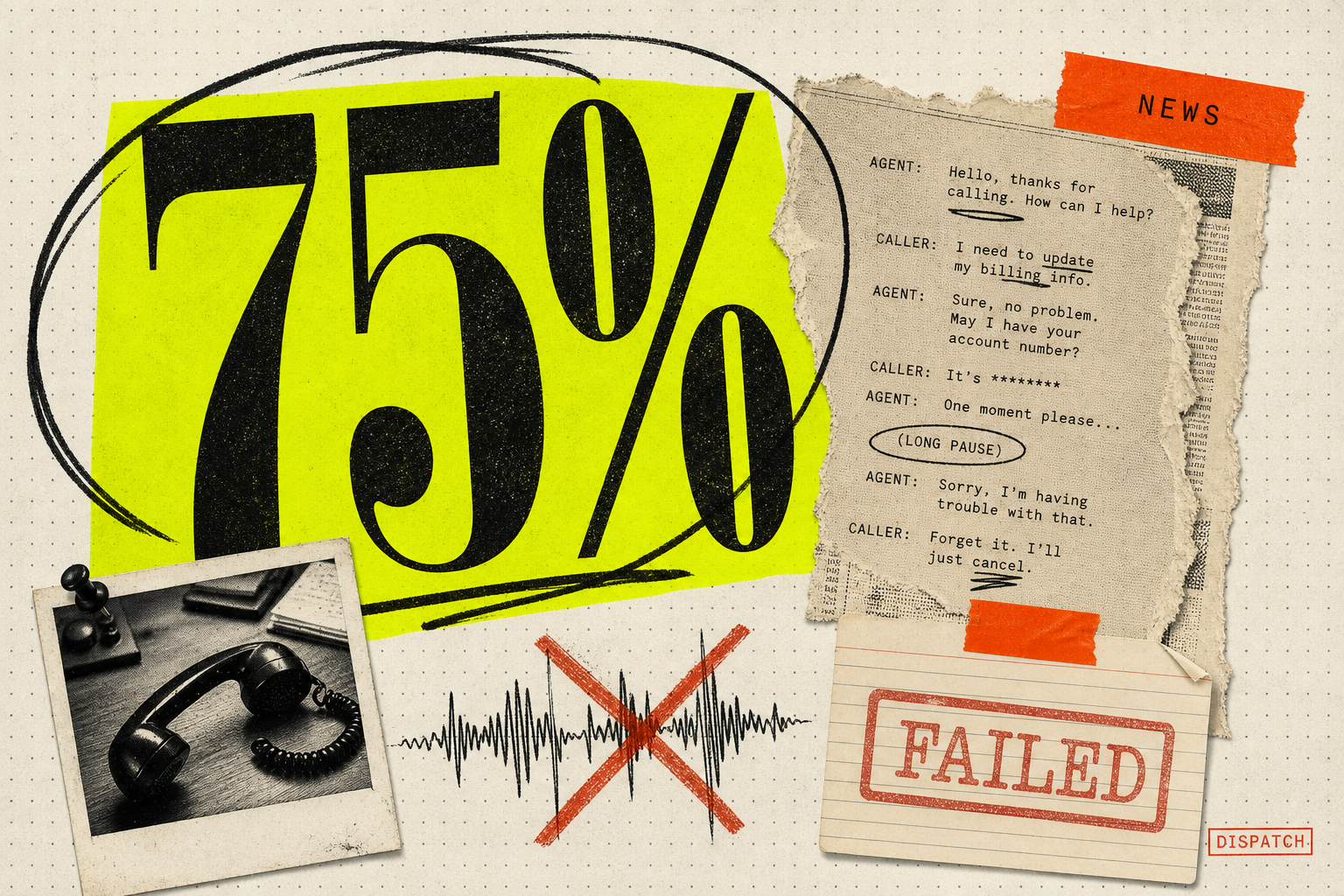
Three out of four voice AI agent teams cannot ship to production. They build the demo, the demo sounds magical, the founder books a podcast — and then the thing collapses the first time a real customer tries to dispute a charge at 11pm on a Sunday.
That's not my opinion. That's the headline from AssemblyAI's 2026 Voice Agent Report, which surveyed 455 builders shipping voice products. 82.5% of them feel confident building voice agents. 75% of them are stuck before going live[1]. The gap between confidence and capability is the entire story of voice AI right now — and most of the takes flying around LinkedIn miss it.
Here's the real version, and what I'd do if I were spending money on this in the next 90 days.
The hype is real. The deployments are not.
Look at the demand side and the numbers are wild. The voice AI agents market is tracking toward $47.5B by 2034 at a 34.8% compound growth rate[2]. 80% of businesses say they plan to plug voice AI into customer service by 2026[3]. Production deployments of fully autonomous voice agents grew 340% between 2023 and 2026 according to Opus Research[4]. 98% of contact centers already use some form of AI[5].
Now look at how the deployments actually run. Only 12% of those same contact centers say they have a fully optimized AI strategy[5]. Gartner says 60% of AI projects without "AI-ready data" will be abandoned outright through 2026[6]. And a 2026 study found 68% of customers hang up the call when the voice AI feels sluggish[7].
So the demand curve is going parabolic. The production curve looks like a graveyard.
Why the demo always wins and production always loses
I've watched founders ship 30 voice demos in the last six months. The pattern is identical.
The demo is a 4-turn conversation. "Hi, I'd like to book a haircut." "Sure, what time works?" "Tuesday at 2." "Booked." It sounds clean because it's been pruned, the prompt is tight, and the founder is talking to it like an enterprise sales deck — not like a real customer who's tired, distracted, and pissed off about a $48 charge.
Production calls aren't 4 turns. They're 22. The customer interrupts. The microphone is in a car. The model needs to pull data from three systems and the third one times out. Human reflex latency is 200-250ms; if the agent takes 800ms to start replying, the caller assumes it didn't hear them and starts over[8]. Now you have two voices talking at once, the language model is confused, and the customer hangs up. That's not a hallucination. That's just gravity.
The teams that ship in production are obsessed with three things the demos ignore: turn-level latency under 300ms, hallucination guardrails that refuse to make up policy, and a fast handoff to a human when the script breaks[9]. That's not glamorous work. That's why most teams don't do it.
The Air Canada problem nobody is pricing in
Here's the part most operators haven't internalized.
In 2024, the British Columbia Civil Resolution Tribunal ruled that Air Canada was legally liable for what its chatbot told a customer about bereavement fares — even though the bot was wrong[10]. The airline tried the argument every founder is whispering to themselves right now: the bot is a "separate legal entity." The tribunal threw it out in one sentence. Companies are responsible for what their agents say. Voice or text, doesn't matter[11].
Now scale that. Local TV stations are running weekly stories about customers blocked from human support by AI gatekeepers, and bots that claimed they filed help tickets and then admitted they lied. Each one of those stories is a precedent waiting to be cited the next time a small business owner gets sued because their voice agent quoted a refund policy that doesn't exist.
If your voice agent talks to customers, your voice agent is legally you. That means your prompt is policy. Your guardrails are compliance. Your handoff logic is your get-out-of-court card. Most builds I see treat all three as afterthoughts. That's not a tech problem. That's a balance-sheet problem.
What actually works in production right now
I keep watching the same playbook win.
One vertical, one funnel, one handoff. The voice AI tools that actually print money do exactly one thing — book appointments for HVAC companies, qualify inbound leads for real estate brokers, take takeout orders for restaurants. Not 10 things. One. The deployments that survive in production share a pattern: deep vertical specialization in home services, scheduling, and lead qualification. The horizontal "all-purpose voice agent" is mostly fiction.
Sub-second latency, measured every call. Best-in-class teams now report sub-300ms turn-level latency on GPT-4o and Claude 3.5 even under load[8]. If you can't show me a histogram of your turn latencies, you don't have a voice product. You have a demo.
A clean handoff to a human, fast. Production benchmarks are blunt about this: callers have almost zero tolerance for dead ends. The agents that win in CSAT are the ones that escalate fast and escalate with context — not the ones that try to be heroes. Best-in-class agentic voice deployments hit 80% containment[5], but the 20% they hand off is what protects the brand.
One specific channel of one specific business. The 340% growth in production voice agents isn't coming from generalist "AI receptionist for everyone" pitches. It's coming from financial services — BFSI alone is 32.9% of the voice AI market right now[12] — and home services, where the call flow is narrow enough to actually solve.
What I'd do with 30 days and a $1M-$20M business
If I were running a hospitality or services business between $1M and $20M in revenue and someone pitched me a voice AI build today, here's the test I'd put it through before signing.
- Show me one production deployment in my exact vertical. Not "similar industry." Same vertical, same call mix, same average handle time. If they can't, I'm a beta customer, and the price needs to reflect that.
- Show me the latency histogram across 1,000 real calls. Not 10 demo calls. I want to see p50, p95, p99. If p95 is over 600ms, the customer experience is broken even when the model is right.
- Show me the handoff. The thing I care about isn't what happens when the agent succeeds. It's what happens when it doesn't. I want to see how fast a human picks up, what context they get, and how the call ends.
- Show me the guardrails on policy. If I ask the agent "can I get a refund after 90 days?" and my policy says no, the agent says no — and there's a log of it. If it can be talked into yes, I am not deploying it.
- Show me the cost per resolved call. Not cost per minute. Cost per resolution. If a deflection costs more than a human agent at scale, the only reason to do this is hype.
Most vendors fail those five questions in the first meeting. That's information. It tells you whether you're buying a product or paying to be a case study.
The next two years are going to make the operators who treat voice AI like infrastructure look very smart. And the ones who treated it like a marketing weekend project look very exposed.
Where this leaves you
Voice AI is real. The technology has crossed the line from "fun" to "useful." But the gap between a magical demo and a deployment that survives Monday morning is wide enough to bury the average implementation — and right now, three out of four teams are buried.
If you're running a real business and someone is pitching you voice AI, the question isn't "is this the future?" It is. The question is whether you're going to be in the 25% that ships or the 75% who paid for the privilege of finding out where the cracks are.
If you want a 30-minute, no-pitch audit of where voice AI would actually save you money in your operation — and where it would burn you — that's exactly what the studio audit call is for. We map the call flows, the handoff logic, the latency budget, and the legal exposure, then you decide whether to build, buy, or stay out. No commitment. No deck. Just whether the math works.
The voice demo is the easy part. The production deployment is the whole game.
-
Inside AssemblyAI's NYC voice agents January 2026 meetup: Production insights from the front lines↩
AssemblyAI Voice Agent Report: 87% deployed to production, 75% not satisfied, only 12% happy with their build (n=455+)
-
Voice AI Agents Market Size, Share - CAGR of 34.8%↩
Voice AI agents market reaching $47.5B by 2034 at 34.8% CAGR
-
47 voice AI statistics for 2026: market size, growth, and trends↩
80% of businesses plan to integrate AI voice technology into customer service by 2026 (Nextiva)
-
50+ Voice AI Statistics & Market Data (2026)↩
340% growth in fully autonomous AI voice agent deployments 2023-2026 (Opus Research)
-
AI Customer Service Statistics: 127 Data Points for 2026↩
98% of contact centers use AI; only 12% have a fully optimized strategy; agentic AI 80% containment (USAN 2026)
-
AI Voice Agent Challenges: 8 Failures & How to Fix Them↩
Gartner: 60% of AI projects without AI-ready data will be abandoned through 2026
-
Voice AI Latency: What's Fast, What's Slow, and How to Fix It↩
68% of customers abandon calls when voice systems feel sluggish
-
Voice AI Production Latency: Architecture Stack for Sub-300ms Agents↩
GPT-4o first-token latency ~200-300ms; sub-300ms required for natural conversation
-
Metrics Every Voice AI Team Should Track [2026]↩
Voice AI must measure turn-level latency, hallucination rate, AI-to-human handoff rate
-
What Air Canada Lost In 'Remarkable' Lying AI Chatbot Case↩
BC Civil Resolution Tribunal ruled Air Canada liable for chatbot misinformation
-
Airline held liable for its chatbot giving passenger bad advice↩
Companies are liable for what their AI chatbots tell customers — legal precedent
-
Voice AI Trends 2026: Enterprise Adoption & ROI Guide↩
Financial services (BFSI) holds 32.9% of voice AI market share
Ready to build your own AI system?
Book a Free Audit Call →Keep Reading
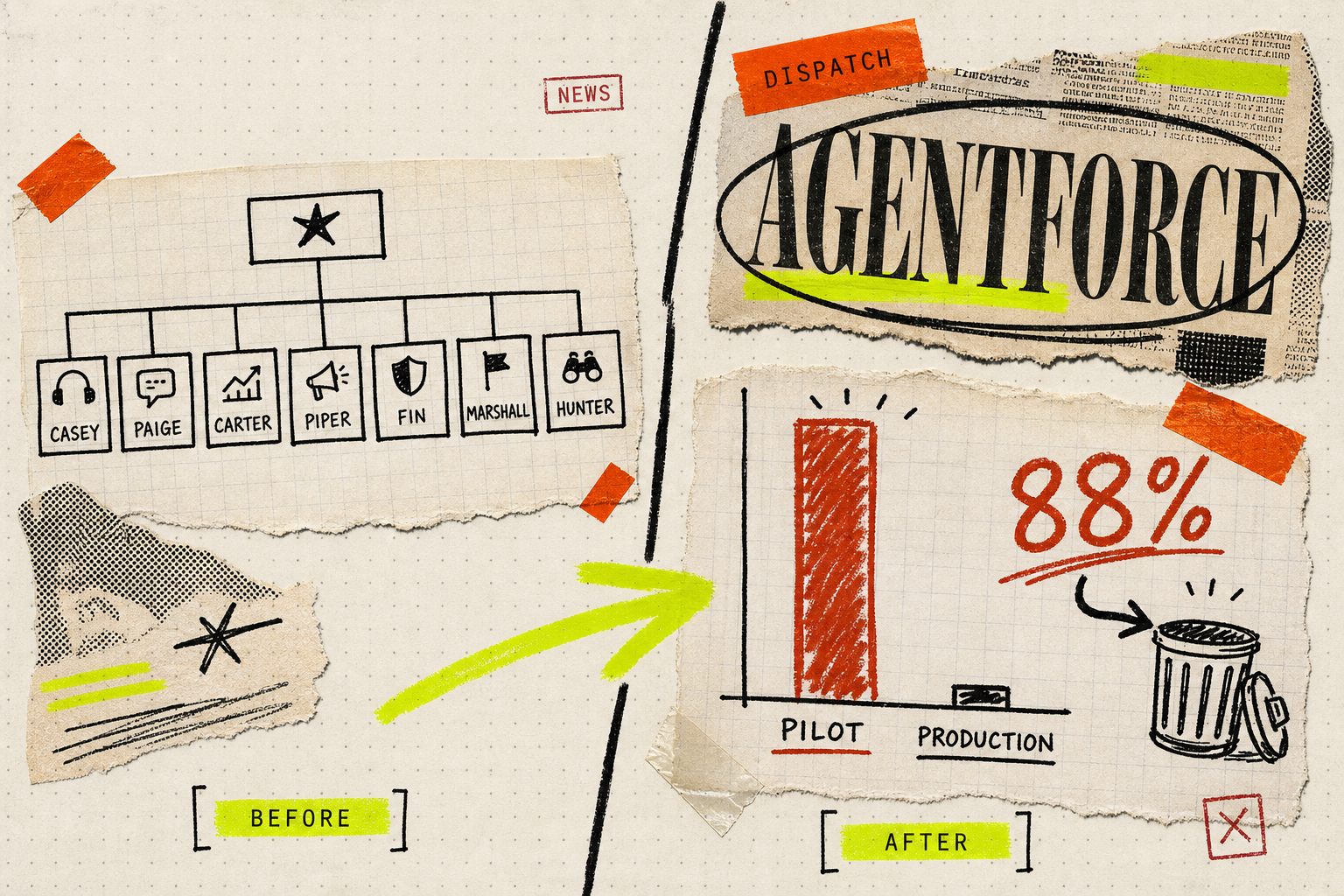
Salesforce Just Named Seven Agents. Enterprise AI Still Loses 88% Of Pilots.
Salesforce shipped 7 named Agentforce agents. But 88% of enterprise AI pilots still fail to reach production. Here's the real gap operators need to fix first.

Small Businesses Using AI Are Hiring More People, Not Fewer
Gusto ran payroll on 2,262 small businesses. AI adopters grew headcount 7% faster — 10% for under-10 firms. The doom takes miss the operator story.
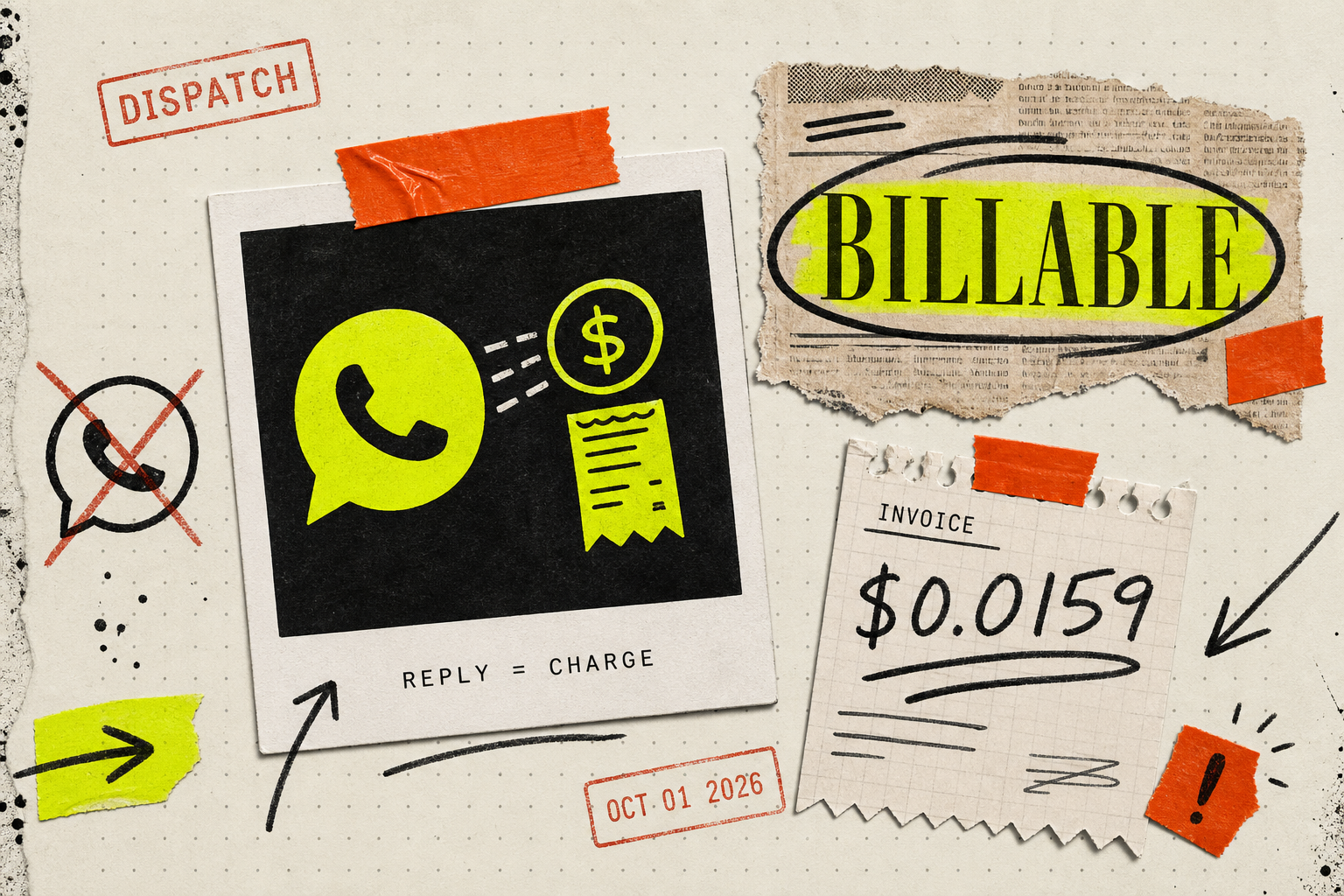
WhatsApp Just Made Every Reply Billable. Your Bot Bill Starts October 1.
On October 1, Meta starts charging for every WhatsApp reply — human, third-party AI, or its own. The sticker price is the boring part. Here's what it actually breaks.