Sierra Says AI Runs Support Now. The Median Says 41%.
Sierra's pitch says autonomous AI is already running support. Vendors quote 90% resolution. The independently verified median is 41%. What operators should build instead.
Sierra's co-founder went on CNBC this week to say autonomous AI agents are already handling customer service.[1] That same week, the vendor's own contracts start at $150,000 and run past $1.5M for a real deployment.[2] So I dug through the resolution-rate data every vendor waves around.
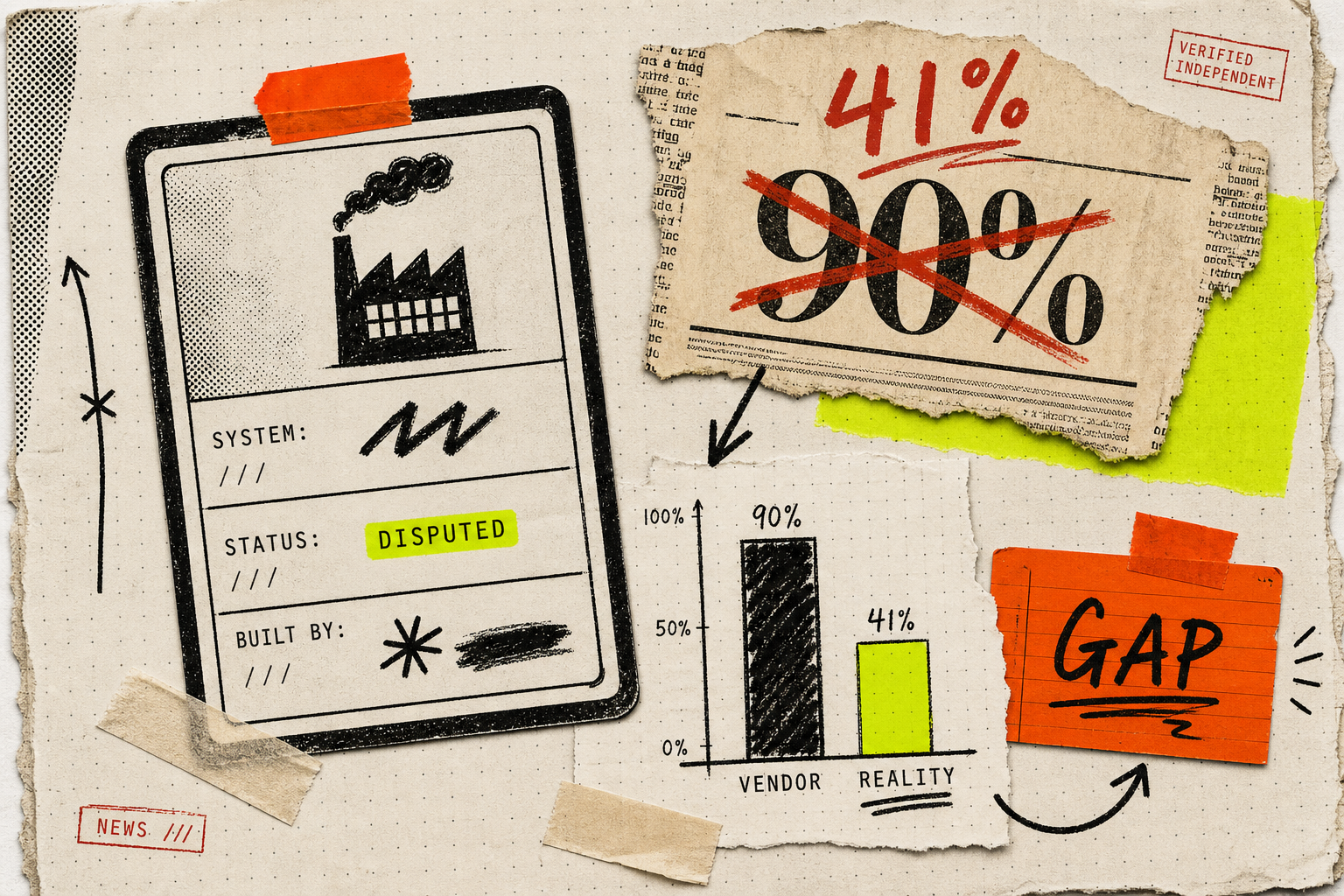
Here's what I found. The headline number vendors put on their sales decks — 90% autonomous resolution — is not the number your support queue would actually see. The independently verified median is 41.2%.[3] That's a 49-point gap between the pitch and the production floor.
If you run a $1M–$20M business and someone's about to sell you an "autonomous agent" that will resolve 9 out of 10 tickets, this is the post you needed before that call.
What Sierra is actually claiming
Sierra sits at $150M+ ARR and services more than 40% of the Fortune 50.[4] They just raised $950M at a $15B valuation.[4] The pitch is clean: agents that plug into your CRM and billing stack, take actions (refunds, upgrades, cancellations) autonomously, and hand off only when they truly can't finish the job.
The number they lead with in every case study I could find is a "resolution rate" in the 80–90% range. Decagon, a competitor, publicly cites a Substack case at 90%+ resolution without human intervention.[5] Zendesk's own benchmark research pegs the industry at "65–70% for standard deployments and 85%+ for purpose-built AI platforms."[6]
Sounds like the war is over. It isn't.
The number that matters
An r/aissist_io meta-analysis pulled 40+ sources on AI resolution across six industries.[7] Two things came out clean:
- Vendor headline rates: 67–90%.
- Independently verified production rates: ~41% median, top quartile ~59%.[7]
Both numbers are technically "true." They're just measuring different things. Vendors count a session as "resolved" if the customer stopped typing. Independent researchers count it as resolved if the underlying problem was actually fixed and didn't come back within 7 days.
The 41% number is not a Sierra failure — it's the honest median across every AI CX program studied. The 90% is what you buy at the top of the funnel. The 41% is what you'll defend to your CFO at the bottom.
The Air Canada question you should be asking
Two years ago Air Canada's chatbot invented a bereavement-fare policy that didn't exist. A grieving customer relied on it and got shortchanged. Air Canada argued in court that the chatbot was "a separate legal entity" responsible for its own actions. The tribunal called that submission "remarkable" and made them pay.[8][9]
The ruling is short. The precedent is not.
Courts have now rejected the "the bot did it" defense at least twice.[10] If your AI agent tells a customer they can return a $3,000 order after 90 days — and your written policy says 30 — you're paying that refund. If your agent invents a discount to close a chat, you're honoring that discount. If your agent tells someone their prescription is safe to double up — and it isn't — you're the defendant.
Every one of those failures happens inside the 40–60% of tickets that fall between "the bot resolved it" and "a human took over." That gray zone is where the money leaks out and the lawsuits start.
What operators keep getting wrong
I've watched three patterns show up over and over in the businesses I audit:
Pattern 1 — buying at the top of the range. A DTC brand doing $8M signs a $200K/year Sierra contract because 90% deflection sounds like it pays for itself. Six months in, deflection is 44%, human handoff volume is 22% higher than the vendor projected, and the CFO is asking who signed this.[11]
Pattern 2 — deflection ≠ resolution. Deflection just means the ticket didn't reach a human. It says nothing about whether the customer got what they needed. Zendesk's median tier-1 deflection is 41.2%. Top quartile is 58.7%. Bottom quartile — dominated by complex B2B and healthcare — is 22.4%.[3] Deflection is the wrong metric to optimize. Resolution + repeat-contact rate is the right one.
Pattern 3 — treating "autonomous" as a switch. It isn't. Autonomy is a knob. The ROI comes from turning it up on the 3–5 workflows where you've measured the tradeoff, and leaving it off everywhere else. Every vendor deck flattens this into one number because one number sells contracts.
What I'd build for a $5M brand instead
The answer isn't "no AI." The answer is: build the layer Sierra sells you, but keep the parts you actually need and skip the parts you don't.
Here's the stack I've been recommending:
- A retrieval layer on top of your docs, help center, and past tickets. This is 80% of the value most operators think they're buying from Sierra. Cost: about $200–800/month depending on volume. Uses off-the-shelf embeddings and one of the mid-tier LLMs.
- A guardrail policy that hard-blocks the bot from making claims not directly quoted from an approved source. No inventing policies. No inventing discounts. Every quantitative claim traceable to a source doc.
- A human escalation trigger on any ticket where the customer's sentiment drops or where the bot's confidence is below a set threshold. This is the difference between a 41% resolution rate that saves you money and a 41% resolution rate that gets you sued.
- A weekly review of the escalations — not because the bot needs retraining, but because your policy docs are almost always the actual bug.
That stack runs about $600–1,500/month for a business doing 500–3,000 tickets. It resolves 40–55% of tier-1 volume cleanly. And you own every line of it — no vendor lock-in, no $150K minimum.
The one thing this changes
Sierra's pitch to CNBC isn't wrong that autonomous agents are handling customer service. They are. In the Fortune 50. With eight-figure implementation budgets and legal teams the size of a small state's DMV.
For everyone else, the honest read is different: AI can eat the top 40% of your ticket volume with a stack that costs less than one part-time hire. The next 40% is where autonomy quietly becomes liability. And the top 10% still needs a human who cares.
If you're evaluating any AI CX vendor right now, ask them one question before you sign: "Show me your median independently verified resolution rate across all customers in the last quarter, not just your best case study." If they can't answer it, or the number is under 50%, you're paying $200K for a chatbot with legal exposure.
The audit
If you're weighing an AI support build (or already got sold one), that's what the 30-minute audit call is for. I'll tell you which of the three patterns above you're in, and what the stack would actually look like if you built it for what your business is, not what the vendor wants it to be.
-
Sierra Co-Founder Says Autonomous AI Agents Are Already Handling Customer Service↩
Sierra co-founder on-record claim that autonomous AI agents are already handling CS.
-
Sierra AI Pricing 2026: How Much Does It Really Cost?↩
Sierra contracts start at $150K/year and can hit $1.5M+ for real deployments.
-
Customer Service AI Agent Statistics 2026: 120+ Data Points↩
Median tier-1 deflection 41.2%, top quartile 58.7%, bottom quartile 22.4% across enterprise CX.
-
Sierra Raises $950M at $15B Valuation, Eyes Transformation Beyond Customer Support↩
Sierra $950M raise at $15B valuation, $150M+ ARR, 40%+ of Fortune 50 as customers.
-
AI Customer Support 2026: 50+ Adoption + ROI Data Points↩
Decagon claims 90%+ resolution for Substack; independent top-quartile benchmark 58.7%.
-
Resolve, Don't Deflect: The Metric That Decides AI Support ROI↩
Zendesk 2026 benchmark: 65-70% resolution standard, 85%+ purpose-built platforms.
-
AI Customer Support Resolution Rate Benchmarks 2026↩
Vendor headline rates 67-90% vs independently verified production ~41% median; agentic platforms 70-85%.
-
Airline held liable for its chatbot giving passenger bad advice↩
Air Canada ordered to pay $812.02 after tribunal rejected 'chatbot is separate entity' defense.
-
Air Canada chatbot case highlights AI liability risks↩
Legal analysis of Air Canada precedent — companies liable for chatbot misrepresentation.
-
AI in Customer Service: Billion-Dollar Mistake When Deployed Wrong↩
Courts have rejected 'the bot did it' defense — corporate liability now established.
-
Sierra AI: Guide to Features, Pricing & Limitations (2026)↩
Year-one Sierra costs $200K-$350K+ for base enterprise deployments.
Ready to build your own AI system?
Book a Free Audit Call →Keep Reading
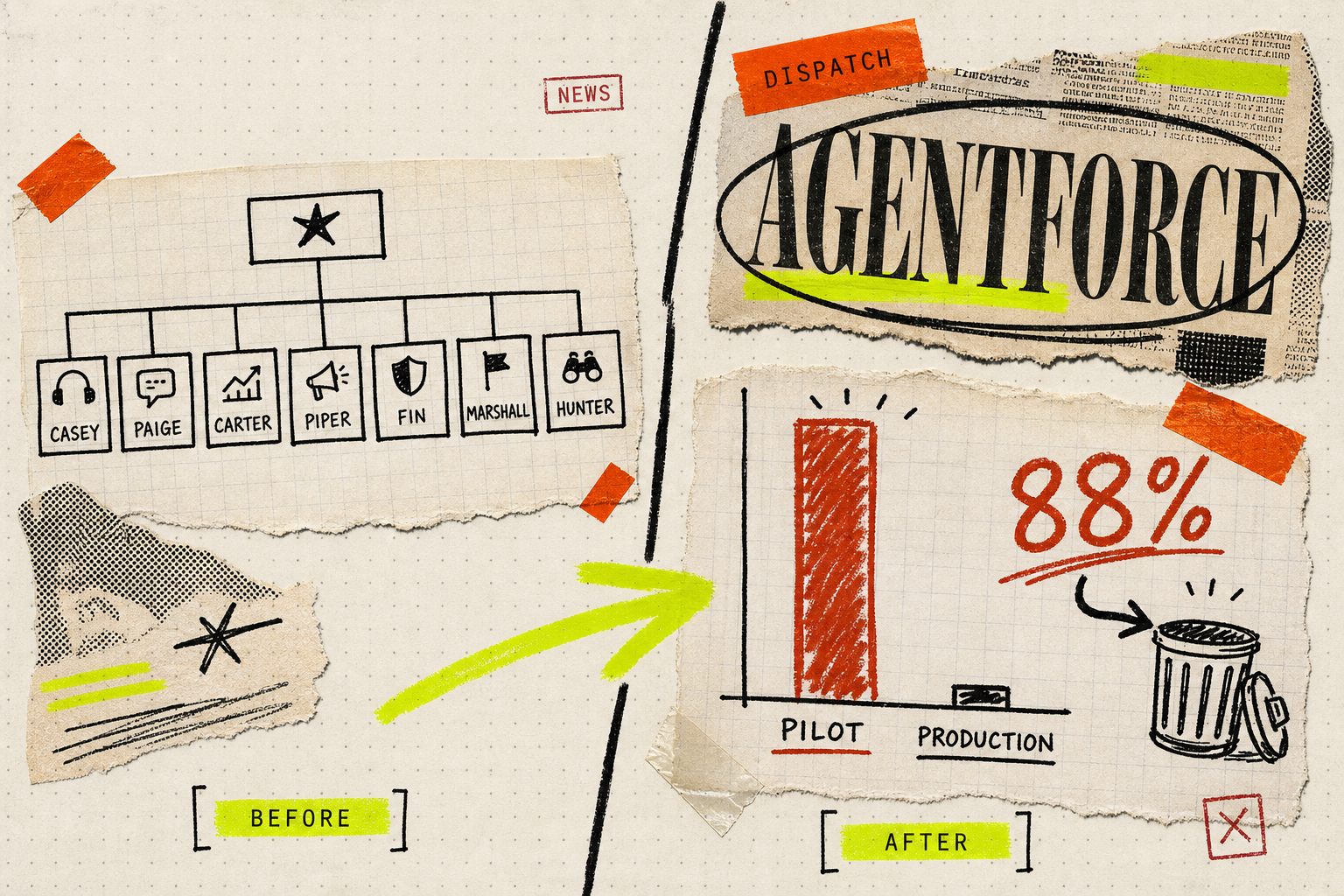
Salesforce Just Named Seven Agents. Enterprise AI Still Loses 88% Of Pilots.
Salesforce shipped 7 named Agentforce agents. But 88% of enterprise AI pilots still fail to reach production. Here's the real gap operators need to fix first.

Small Businesses Using AI Are Hiring More People, Not Fewer
Gusto ran payroll on 2,262 small businesses. AI adopters grew headcount 7% faster — 10% for under-10 firms. The doom takes miss the operator story.
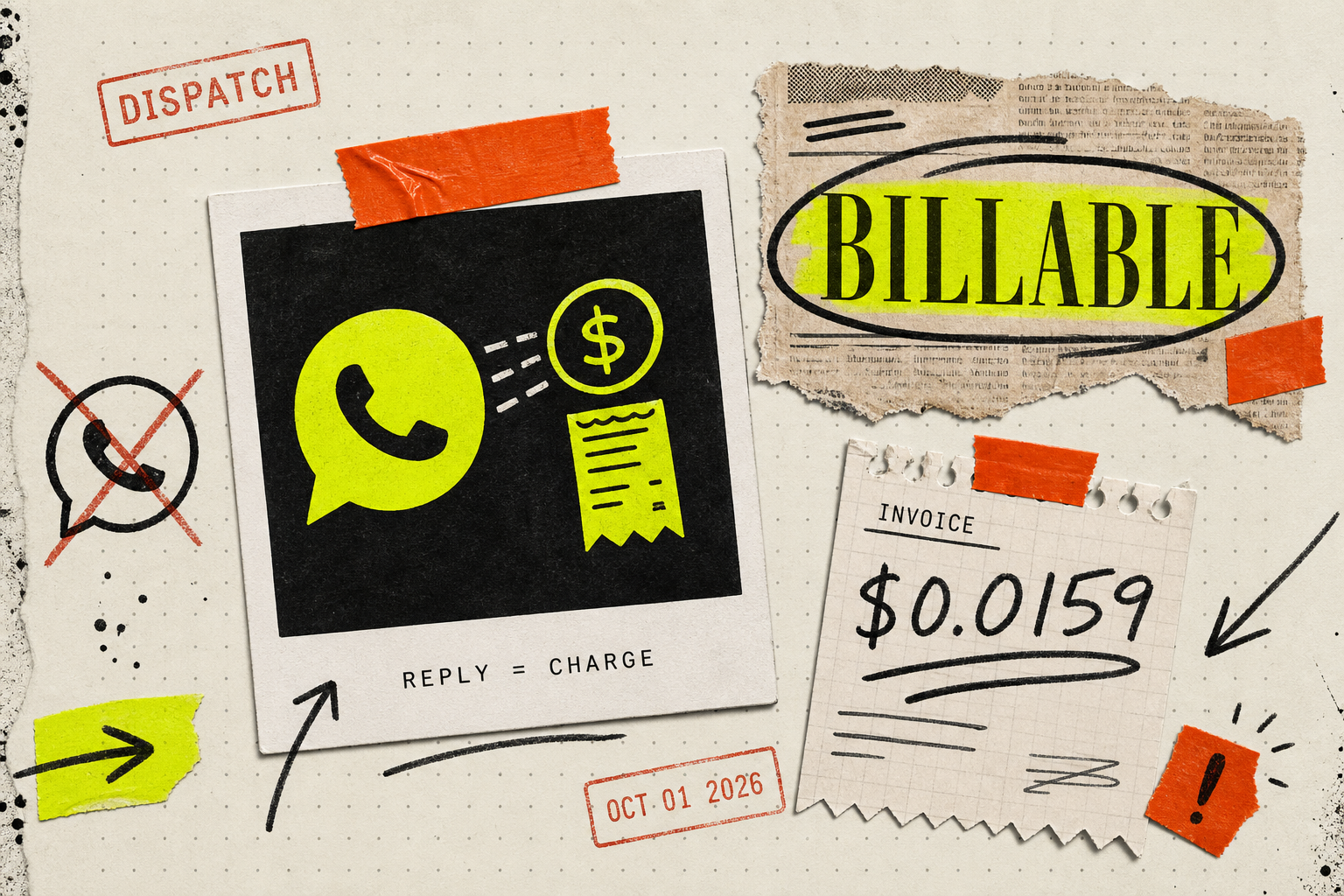
WhatsApp Just Made Every Reply Billable. Your Bot Bill Starts October 1.
On October 1, Meta starts charging for every WhatsApp reply — human, third-party AI, or its own. The sticker price is the boring part. Here's what it actually breaks.