Per-Seat SaaS Pricing Is Dying. Here's What's Replacing It.
Atlassian's first seat-count decline. $285B in SaaS market cap gone. Here's how AI agents are repricing your stack — and the double-charge trap most vendors are setting at renewal.
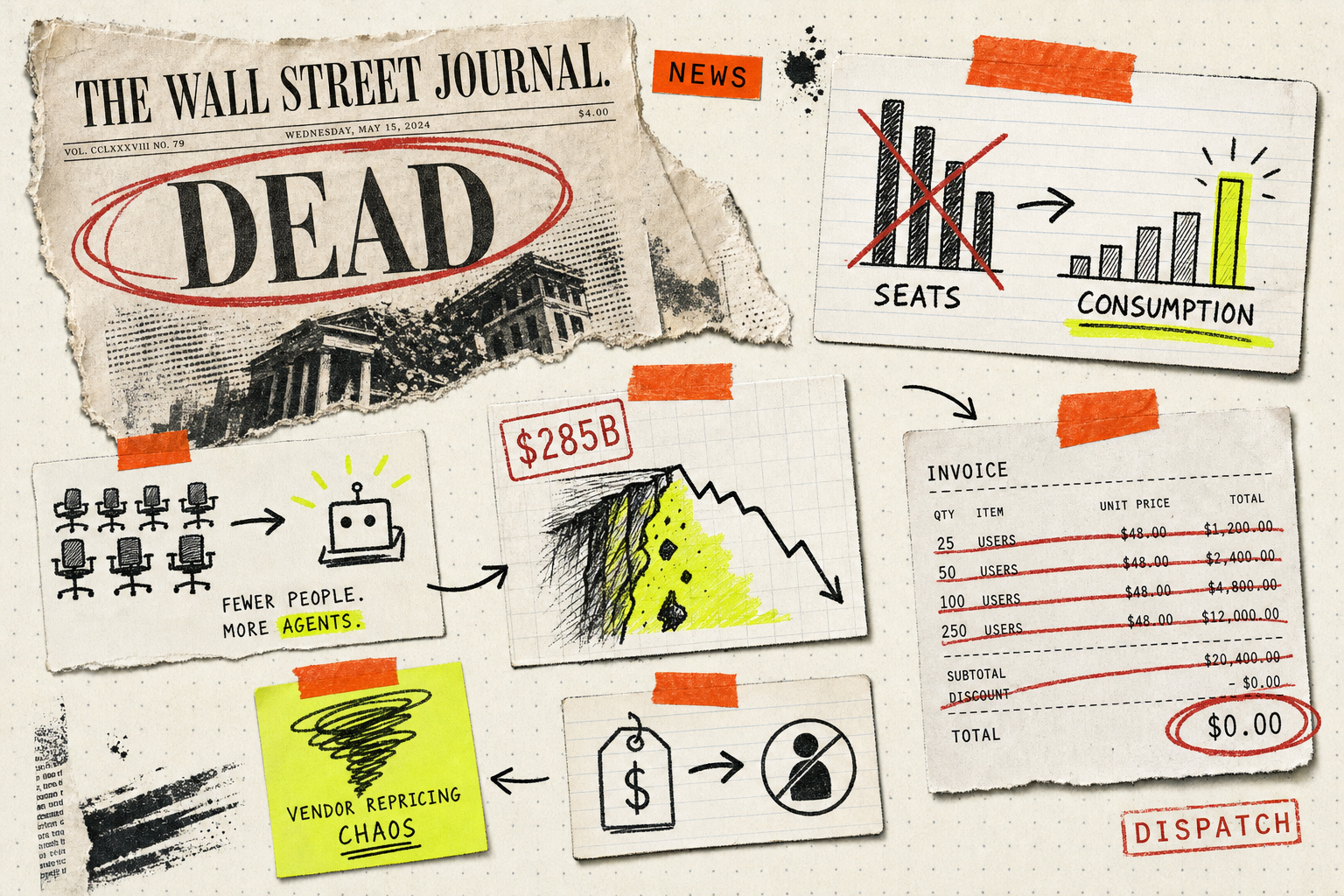
Atlassian just reported its first-ever decline in enterprise seat counts. The stock dropped 35% the next day[1]. HubSpot, Atlassian, and Figma each fell 70–80% from their 52-week highs by mid-April[2]. By late March, about $285B had evaporated from SaaS market caps[3]. The "200 seats at $20/month" model that printed money for a decade is breaking — and most operators I talk to are still budgeting like nothing's changed.
This is not a vibe. This is what's actually happening to your software bill in the next 12 months.
What's actually breaking
The per-seat model is simple: more humans on payroll, more software licenses, more vendor revenue. It worked because headcount and software usage tracked each other.
AI agents break that link.
Bessemer's 2026 monetization playbook puts it plainly: AI-native companies are abandoning seat-based SaaS in favor of usage-, output-, and outcome-based models[4]. The number isn't subtle. One analysis estimates AI agents are compressing seat counts by up to 90% inside the functions where they get deployed first — support, SDR, ops[5]. If your support team goes from 50 to 5 because an agent resolves 80% of tickets, your Zendesk bill doesn't just shrink 90% — Zendesk's whole revenue model on your account changes.
That's the actual story. The vendors who priced on humans are scrambling to reprice on machines, and they're not all going to figure it out in time.
Why every LinkedIn take is wrong
The dominant take is "outcome-based pricing wins, per-seat is dead, the end." That's lazy.
Here's what's actually happening, vendor by vendor, with the numbers:
Salesforce shipped three pricing models for Agentforce in 18 months. First, $2 per conversation. Then Flex Credits at $0.10 per action in May 2025. Now they sell consumption and per-user, side by side[6][7]. They don't know what works. They're testing it on customers.
Zendesk priced per Automated Resolution — $1.50 on committed volume, $2.00 pay-as-you-go[8]. Sounds fair until you read the fine print: each human agent still gets only 5–15 included resolutions per month, and the per-agent license stays. You're paying twice — once for the seats, once for the resolutions[9].
Intercom Fin came in at $0.99 per resolution. No conversation fee, no per-seat tax on the AI side. At 100,000 monthly resolutions, that's $51K/month — $612K/year — cheaper than Zendesk[10]. Same outcome. Different bill.
So the real question for an operator is not "is per-seat dead." The real question is: which of my vendors is priced on humans, which is priced on outcomes, and which is double-charging me during the transition?
What this actually changes for you
If you run a business between $1M and $20M, this hits you in three concrete places in the next 12 months.
1. Your renewal terms are now negotiable
A year ago, your CRM, support tool, and project management vendor all knew you'd take the seat bump. Atlassian's first seat-count decline tells them they can't assume that anymore. SoftwareSeni's renewal guidance is blunt: push for hybrid pricing with a hard consumption ceiling when AI adoption is early, move to usage-based once your patterns stabilize, and only commit to outcome-based when you have measurement in place[11]. If your account manager won't put a consumption cap in writing at renewal, that's a signal to start shopping.
2. You're going to overpay for 6–12 months unless you measure
Hybrid pricing — base subscription plus usage plus outcome components — is now the dominant model among AI companies, used by 43% of SaaS firms[12]. Hybrid means you're paying a floor and a variable. If you don't track the variable, you don't know what you're buying.
I'd build a simple usage log per vendor: month, base fee, variable units consumed, what those units actually delivered. Three months of that and you can renegotiate from data, not vibes.
3. Your own pricing is next
If you sell to anyone, your buyer is doing the same math on you. The Bessemer note is clear that AI-native buyers expect to pay for outcomes, not access[4]. A DTC operator I'd advise to ignore this is one who has zero agent exposure in their stack. There aren't many of those left.
How I'd think about it this quarter
The shift isn't binary. Per-seat won't die in 2026. But the negotiating leverage has flipped — and most operators haven't noticed.
Here's the move I'd make if I ran a 50–500 person business right now:
- List every SaaS vendor and tag the pricing model. Pure seat, pure consumption, hybrid, or outcome. Most stacks I see have 80% pure-seat exposure and no idea what their consumption usage looks like.
- Find the two biggest seat-priced vendors that have AI agents available. Those are your highest re-pricing risk. Ask the vendor in writing what your bill would look like if 30% of work moved to their agent. If the answer is "you still pay per seat, plus per action," that's the double-charge trap.
- Renegotiate at the next renewal with a usage ceiling. Don't sign a year of fixed-seat pricing in a market where seat counts are actively declining at public companies. Use Atlassian's number as a reference point. Vendors know.
- Track variable usage monthly from day one. Hybrid pricing is opaque on purpose. Make it transparent on your side.
The operators who do this in 2026 will save 20–40% on software bills going into 2027. The ones who don't will find out at renewal when the consumption invoice arrives with no ceiling.
The pricing reset is real. The question is whether you're a buyer who shows up to renewals with data, or one who shows up with hope.
If you want this audit done on your stack — every vendor mapped, every pricing model tagged, every double-charge surfaced — that's exactly what the 30-minute audit call is for. Book one. No pitch, no slides. Just the numbers your CFO is going to ask about in Q3.
-
The SaaSpocalypse of 2026: How Generative AI Broke the Software Growth Engine↩
Atlassian shares fell 35% after first systemic decline in enterprise seat counts in early 2026.
-
AI Agents Just Erased $2T in SaaS Value — Who Survives [2026]↩
HubSpot, Atlassian, and Figma each crashed 70–80% from their 52-week highs by mid-April 2026.
-
The Great SaaS Unbundling: How AI Agents Break Per-Seat Pricing↩
$285B evaporated from SaaS stocks as per-seat model collapsed.
-
The AI pricing and monetization playbook↩
AI-native companies are abandoning seat-based SaaS in favor of usage-, output-, and outcome-based models.
-
SaaS Pricing Is Breaking: Why Per-Seat Models Don't Survive the AI Agent Era↩
AI agents compress seat counts by up to 90% inside functions where deployed first.
-
Salesforce Now Has 3+ Pricing Models for Agentforce. And Maybe Right Now, That's The Way to Do It.↩
Salesforce shipped three Agentforce pricing models in 18 months: $2/conversation, $0.10/action Flex Credits, and per-user.
-
The Evolution of Salesforce Agentforce Pricing: What Changed and What It Means for You↩
Agentforce launched at $2 per conversation (per 24-hour chat window) before moving to consumption credits.
-
Per-Resolution vs Per-Conversation AI Pricing (2026)↩
Zendesk charges $1.50 per automated resolution on committed volume, $2.00 for pay-as-you-go overages.
-
Zendesk AI vs Intercom Fin AI: Full Comparison for 2026↩
Zendesk includes only 5–15 resolutions per human agent per month; per-agent license fee remains on top of per-resolution charges.
-
AI Agent Pricing Comparison 2026: Cost Guide↩
At 100,000 monthly resolutions, the gap between Fin ($0.99) and Zendesk ($1.50) is $51,000/month or $612,000/year.
-
SaaS Pricing Is Shifting from Per-Seat to Usage and Outcome — What Changes at Your Next Renewal↩
Renewal guidance: push for hybrid pricing with a hard consumption ceiling when AI adoption is early, move to usage-based once stable.
-
AI Agent Pricing Models Explained (2026)↩
Hybrid pricing is dominant — used by 43% of SaaS firms — combining base subscription with usage and/or outcome components.
Ready to build your own AI system?
Book a Free Audit Call →Keep Reading
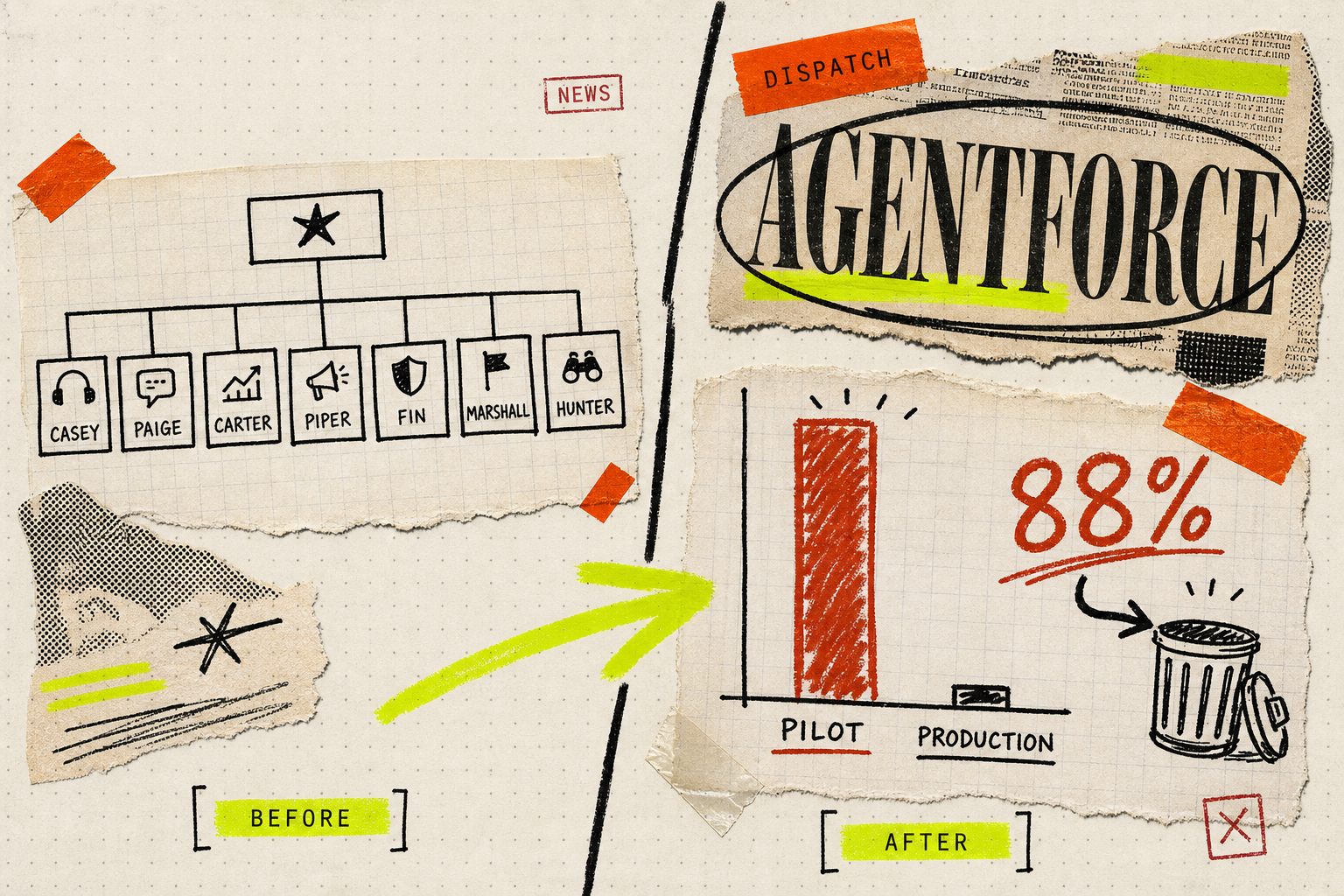
Salesforce Just Named Seven Agents. Enterprise AI Still Loses 88% Of Pilots.
Salesforce shipped 7 named Agentforce agents. But 88% of enterprise AI pilots still fail to reach production. Here's the real gap operators need to fix first.

Small Businesses Using AI Are Hiring More People, Not Fewer
Gusto ran payroll on 2,262 small businesses. AI adopters grew headcount 7% faster — 10% for under-10 firms. The doom takes miss the operator story.
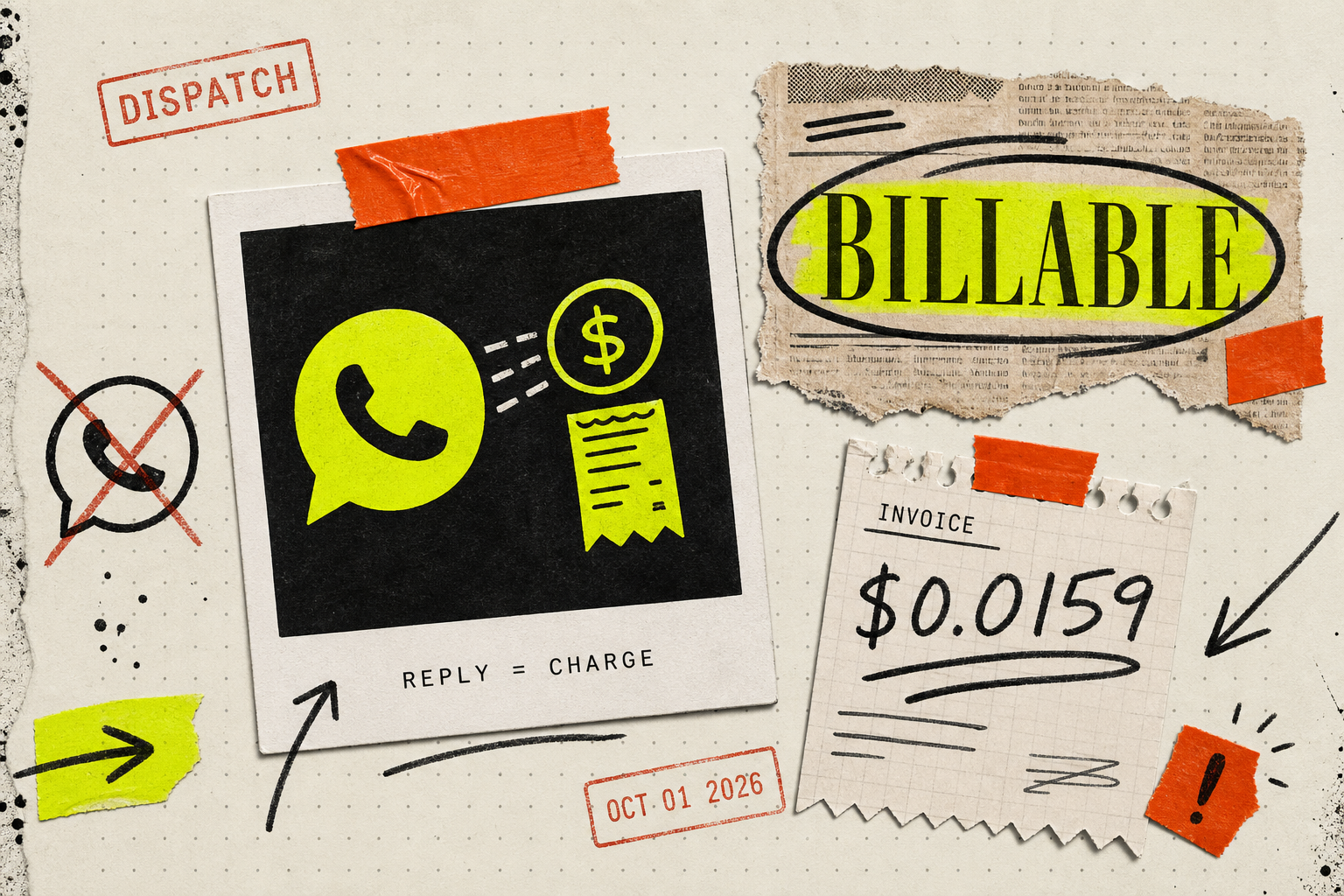
WhatsApp Just Made Every Reply Billable. Your Bot Bill Starts October 1.
On October 1, Meta starts charging for every WhatsApp reply — human, third-party AI, or its own. The sticker price is the boring part. Here's what it actually breaks.